
Syllabus: Urbanization, their problems and their remedies.
Context: Gig workers from Swiggy, Zomato, Blinkit, and Zepto held nationwide strikes during Christmas and New Year. Workers demanded a ban on 10-minute delivery models, citing safety, health, and labour concerns.
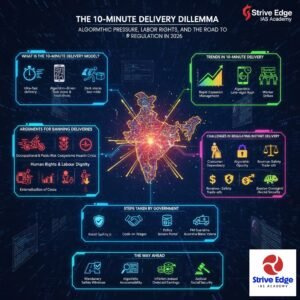
What is the 10-Minute Delivery Model?
- Promises ultra-fast doorstep delivery of food and groceries.
- Operates through algorithm-driven task allocation and real-time tracking systems.
- Relies on dense dark-store networks and high-speed last-mile delivery.
- Penalties and incentives are tightly linked to strict time targets.
Trends in 10-Minute Delivery
- Rapid expansion since 2021, with platforms competing primarily on delivery speed.
- Increasing dependence on algorithmic management to enforce tight timelines.
- Heavy reliance during festivals and late-night hours, intensifying work pressure.
- Rising worker mobilisation and strikes globally against hyper-speed delivery practices.
Arguments for Banning 10-Minute Deliveries
- Road Safety and Public Risk
-
- Compressed timelines incentivise traffic violations to avoid penalties and income loss.
- Bengaluru police reports show spikes in wrong-way driving during instant delivery hours.
- Occupational Health Crisis
-
- Algorithmic gamification creates prolonged high-stress work cycles for riders.
- Clinics near Delhi-NCR dark stores report injuries, exhaustion, and anxiety disorders.
- Human Rights and Labour Dignity
-
- Treating workers as time-optimised delivery nodes undermines dignified working conditions.
- Rider protests highlight absence of toilets, shade, and basic rest facilities.
- Externalisation of Costs
-
- Platforms retain speed-based profits while transferring fuel, repairs, and accident risks to workers.
- Riders report declining per-order earnings despite rising operational expenses.
- Regulatory Misalignment
-
- Platforms shift safety risks onto individuals, bypassing employer duty of care.
- Model conflicts with the Code on Social Security provisions for gig-worker protection.
Challenges in Regulating Instant Delivery
- Consumer dependency creates political resistance to regulating hyper-convenience services.
- Algorithmic opacity hides penalties through ranking and visibility controls.
- Policy arbitrage enables platforms to exploit uneven State-level labour regulations.
- Revenue–safety trade-offs make workers fear income losses from speed restrictions.
- Evasive business models rebrand speed promises without reducing delivery pressure.
The Way Ahead
- Introduce mandatory safety windows aligned with distance and traffic conditions.
- Enforce algorithmic accountability through disclosure and explainable AI audits.
- Implement inflation-indexed earnings linked to fuel and maintenance costs.
- Establish judicial oversight via dedicated grievance redressal mechanisms.
- Ensure universal social security through state-mandated welfare frameworks.
Conclusion
- The 10-minute delivery promise imposes a hidden time tax on worker safety.
- India must shift towards a safe delivery economy with enforceable protections and transparency.