
Syllabus: Comparison of the Indian constitutional scheme with that of other countries
Background and Nature of the 27th Amendment
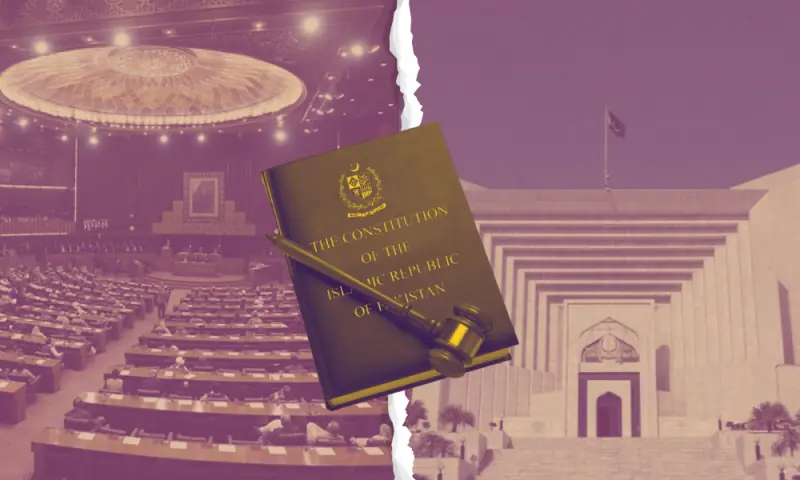
- Pakistan’s legislature passed the 27th Constitutional Amendment during November 12–13, last year.
- The amendment received presidential assent, formally altering the constitutional framework.
- Presented as military command reorganisation, it restructures constitutional adjudication authority.
Shift in Judicial Authority
- Original jurisdiction over constitutional interpretation transferred from the Supreme Court to “Federal Constitutional Court” (FCC).
- FCC now decides fundamental rights, federal–provincial disputes, and constitutional questions.
- Supreme Court’s role as final constitutional guardian is significantly reduced.
- Earlier jurisdiction enabled landmark rulings, including Panama Papers and Memogate cases.
Rule of Law and Institutional Balance
- Amendment weakens judicial independence by fragmenting constitutional adjudication.
- A.V. Dicey’s doctrine emphasises courts as sentinels against arbitrary executive power.
- Courts function as bridges between authority and liberty, not mere dispute-resolution bodies.
Federal Constitutional Court Concerns
- Specialised courts are not inherently problematic, but removal of Supreme Court primacy is destabilising.
- The earlier 18th Amendment strengthened judicial appointments through Judicial Commission of Pakistan.
- FCC structure risks greater executive influence over constitutional interpretation and composition.
- Judicial review may become extension of executive preferences rather than independent oversight.
Historical and Comparative Perspective
- Sir Edward Coke resisted King James I’s claim to personal judicial authority.
- This episode affirmed courts must remain insulated from political or royal interference.
- Judicial independence forms the foundation of modern constitutional democracies.
Regional and Indian Significance
- South Asia faces institutional strain, political instability, and security-driven governance choices.
- India, as the region’s largest constitutional democracy, has a normative stake in outcomes.
- The PCA reflects a trend of using formal legal changes to concentrate political power.
- Democratic erosion often occurs through gradual constitutional rewriting, not abrupt coups.
Core Democratic Lesson
- Constitutions survive through institutional restraint, judicial autonomy, and respect for boundaries.
- The amendment risks turning the Constitution from a shield of liberty into an instrument of control.
- The future of republics depends on preserving the spirit, not just the text, of constitutionalism.