

Why in News: India’s fastest supercomputer AIRAWAT-PSAI, developed under the National Supercomputing Mission, was recently ranked among the world’s top 100 systems, highlighting India’s growing capabilities in high-performance and AI-focused computing.
Difference from Normal Computers
- Normal computers perform general tasks (browsing, writing, games).
- Supercomputers solve large, complex, calculation-heavy problems like weather forecasting, nuclear simulations, drug discovery, astrophysics.
- Use parallel computing: thousands–millions of processors (CPUs + GPUs) working simultaneously.
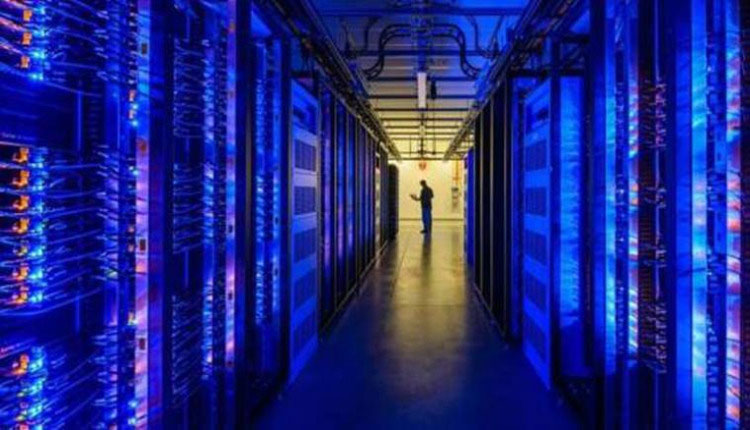
Architecture & Functioning
1. Processors (CPU & GPU): CPUs for general tasks; GPUs for repetitive scientific computations.
2. Nodes: Groups of processors with memory; supercomputers have thousands of nodes.
3. High-speed networks: Enable ultra-fast data exchange.
4. Storage: Petabyte-scale file systems for massive data handling.
5. Cooling & Power: Special cooling systems, power use equal to small towns.
6. Software: Parallel programming languages (MPI, OpenMP), job scheduling, load balancing.
7. Performance: Measured in FLOPS; laptops perform billions, supercomputers achieve exaFLOPS (10¹⁸ operations/sec).
Use & Access
- Housed in specialised facilities, accessed remotely via secure login.
- Users submit job scripts to schedulers; results downloaded for analysis.
India’s Supercomputing Journey
- 1980s: Western export restrictions spurred indigenous efforts.
- C-DAC (1988): PARAM 8000 (1991) first indigenous system.
- National Supercomputing Mission (2015): Build 70+ HPC facilities, indigenise hardware/software.
- Current leaders: AIRAWAT-PSAI (AI-focused, top 100 globally), Pratyush & Mihir for climate/weather, PARAM-series at IITs/IISc.
- Indigenous innovations: Rudra servers, AUM HPC nodes.
Future Trends
- Exascale systems (like JUPITER in Germany).
- Quantum computing for new problem-solving methods.
- Neuromorphic computing for energy-efficient processing.
UPSC Relevance
GS III: Science & Tech, Indigenisation, Applications in development, AI, climate, defence.
Mains Practice Question:
Q. Supercomputers are strategic assets for national development as well as security. Discuss India’s journey in high-performance computing, its applications, and future challenges. (15 marks)
