
Syllabus: Indian Economy and issues relating to planning, mobilization of resources, growth, development and employment.
Context
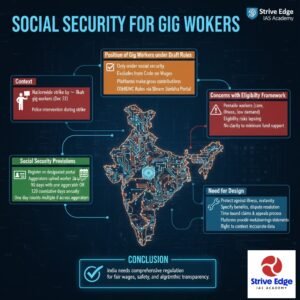
- Nationwide strike by around one lakh gig workers occurred on December 31.
- Strike followed publication of draft Rules to operationalise refreshed labour codes.
- Platforms relied on police intervention to meet service demand during strike.
Position of Gig Workers under Draft Rules
- Gig workers are included only under social security, not wages or working conditions.
- Code on Wages excludes gig work from an employment relationship.
- Platforms are obligated only to make gross contributions to a social security fund.
- Workers’ demands on algorithmic rate cuts and opaque incentives remain unaddressed.
- OSH&WC Rules rely on employer-centric compliance via Shram Suvidha Portal.
- App-mediated work concerns are not addressed by this conventional compliance model.
Social Security Provisions
- Gig workers must register on a designated portal to access benefits.
- Aggregators must upload worker details and update data quarterly.
- Eligibility requires 90 days with one aggregator or 120 cumulative days annually.
- One calendar day may count multiple days if earnings occur across aggregators.
Concerns with Eligibility Framework
- Thresholds may penalise workers facing care duties, illness, or demand slumps.
- Rules do not constrain platforms’ control over work allocation and availability.
- Eligibility windows risk lapsing due to temporary income disruptions.
Need for Redesign
- Eligibility thresholds must protect against illness, maternity, and demand collapses.
- Rules should clearly specify benefits, dispute resolution, and minimum fund support.
- A time-bound claims and appeals process is essential, independent of platform goodwill.
- Aggregators should provide periodic work and earnings statements to workers.
- Workers must have the right to contest inaccurate or irregular data.