

Prelims
Nilgiri Biosphere Reserve (NBR)

Location and Extent
- Located in the Nilgiri Mountains of the Western Ghats.
- Spans Tamil Nadu, Kerala and Karnataka.
- Covers an area of 5,520 sq km.
- It is the largest protected forest area in India.
Status and Recognition
- Established in 1986.
- India’s first Biosphere Reserve.
- India’s first Biosphere Reserve under UNESCO’s Man and the Biosphere Programme.
Protected Areas Within NBR
- Bandipur National Park.
- Nagarhole National Park.
- Mudumalai Wildlife Sanctuary.
- Wayanad Wildlife Sanctuary.
- Mukurthi National Park.
- Silent Valley National Park.
Vegetation Types
- Supports tropical evergreen forests.
- Includes montane sholas and grasslands.
- Contains semi-evergreen and moist deciduous forests.
- Also has dry deciduous and thorn forests.
Climate
- Annual rainfall ranges from 500 mm to 7,000 mm.
- Temperature ranges from 0°C in winter to 41°C in summer.
Tribal Communities
- Indigenous groups include Todas, Kotas, Irulas, Kurumbas and Paniyas.
- Also includes Adiyans, Cholanaickens and Edanadan Chettis.
Flora
- Hosts around 3,300 flowering plant species.
- About 132 plant species are endemic to the reserve.
Fauna
- Contains the largest known population of Nilgiri Tahr.
- Contains the largest known population of Lion-tailed macaque.
- Also supports large populations of elephant, tiger, gaur, sambar and chital.
Tex-RAMPS Scheme
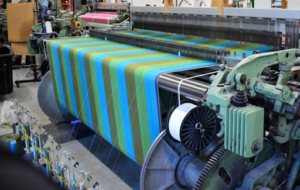
Context: The Ministry of Textiles has signed MoUs with 15 States as part of the ‘Textiles focused Research, Assessment, Monitoring, Planning And Start-Up’ (Tex-RAMPS) scheme.
About the Scheme
- Scheme Profile
-
- Tex-RAMPS is a Central Sector Scheme for the textiles sector.
- Implemented by the Ministry of Textiles, Government of India.
- Focuses on research, data systems, planning and start-up support.
- Approval and Funding
- Total outlay of ₹305 crore.
- Scheme period: 2025–2031.
- Fully centrally funded for uniform implementation.
- Core Components
-
- Supports research and innovation in advanced textile technologies.
- Builds data and analytics systems for employment and supply chains.
- Establishes Integrated Textiles Statistical System (ITSS).
- Promotes capacity development at State level.
- Encourages textile start-ups and incubators.
- Institutional Mechanism
-
- ITSS enables real-time monitoring and analytics.
- Focus on cluster- and district-level planning.
- Covers handlooms, handicrafts, apparel and technical textiles.
- State Participation
-
- MoUs signed with 15 States under the scheme.
- Each State/UT receives ₹12 lakh annually.
- Each district receives ₹1 lakh per year for action plans.
United Nations Framework Convention on Climate Change (UNFCCC)

Context: U.S. President withdrew the United States from the UNFCCC, a bedrock climate treaty, drawing strong condemnation from the European Union.
About UNFCCC
- Core Profile
-
- UNFCCC is the principal global climate treaty.
- Provides the framework for Kyoto Protocol and Paris Agreement.
- Adoption and Context
- Adopted at the Rio Earth Summit, 1992.
- One of the three Rio Conventions.
- Sister conventions include United Nations Convention on Biological Diversity (UNCBD) and United Nations Convention to Combat Desertification (UNCCD).
-
- Objective
- Aims to limit global temperature rise.
- Seeks to enable adaptation and protect food security.
- Membership and Process
- Has 198 Parties (197 States + European Union).
- Parties meet annually at the Conference of the Parties (COP).
- Science Interface
- UNFCCC relies on assessments by the Intergovernmental Panel on Climate Change (IPCC).
- IPCC established in 1988 by United Nations Environment Programme and World Meteorological Organization.
Bio-Bitumen

In News
- India became the first country to commercially produce bio-bitumen.
- Bio-bitumen production aimed at road construction.
What is Bio-Bitumen
- Bio-bitumen is a bio-based substitute for petroleum bitumen.
- Used as a binder in road construction.
- Produced mainly from agricultural residues, especially rice straw.
Key Features
- Can replace 20–30% of conventional bitumen.
- Successfully tested for rutting, cracking and durability.
- Helps reduce emissions from crop residue burning.
- Demonstrated on NH-40 (Jorabat–Shillong Expressway), Meghalaya.
Production Process
- Produced using pyrolysis of rice straw.
- Biomass heated at high temperature without oxygen.
- Generates bio-oil, later blended with petroleum bitumen.
Significance
- Reduces dependence on fossil-fuel-based bitumen.
- Converts agricultural waste into infrastructure input.
- Supports green and sustainable highway construction.
White Dwarf System

In News
- National Aeronautics and Space Administration’s IXPE mission probed a white dwarf binary system.
- Study focused on EX Hydrae using X-ray polarisation.
Basic Concept
- A white dwarf system contains a white dwarf and a companion star.
- White dwarf is a dense stellar remnant of a Sun-like star.
Formation
- Forms after a star exhausts nuclear fuel.
- Outer layers expelled as a planetary nebula.
- Core left behind becomes a white dwarf.
Binary Interaction
- White dwarf accretes gas from companion star.
- Gas transfer occurs due to strong gravitational pull.
Intermediate Polars
- EX Hydrae belongs to intermediate polar systems.
- White dwarf has a moderate magnetic field.
- Magnetic field partially disrupts accretion disc.
- Gas flows along magnetic field lines onto surface.
Physical Characteristics
- Mass comparable to the Sun.
- Size similar to the Earth.
- Matter supported by electron degeneracy pressure.
- Does not undergo nuclear fusion.
Radiation and Limits
- Accreting matter emits X-rays at very high temperatures.
- Chandrasekhar limit for white dwarf mass is ~1.4 solar masses.
Nagauri Ashwagandha

Context: Nagauri Ashwagandha received a Geographical Indication (GI) tag.
Geographical Identity
- Predominantly cultivated in Nagaur district, Rajasthan.
- Thrives in dry climate and sandy soils.
Distinctive Traits
- Possesses longer and thicker roots.
- Roots are rich in alkaloids.
- Berries show dark, bright red colour.
- Roots are brittle and starchy.
- Considered superior variety among arid-region Ashwagandha types.
Ashwagandha
- Botanical Identity
-
- Scientific name: Withania somnifera.
- Also known as Indian ginseng or Indian winter cherry.
- Agro-Climatic Requirements
-
- Grows in dry, sub-tropical regions.
- Soil preference: sandy loam or light red soil.
- Suitable soil pH: 7.5–8.0 with good drainage.
- Cultivated as a late Kharif crop.
- Rainfall requirement: 500–750 mm.
- Temperature tolerance: 20°C–38°C.
- Major Producing States
-
- Madhya Pradesh, Rajasthan, Punjab, Haryana.
- Uttar Pradesh, Gujarat and Maharashtra.
PSLV‑C62 Mission
Mission Overview
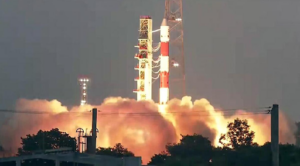
- PSLV-C62 is a multi-payload launch mission of Indian Space Research Organisation.
- It is ISRO’s first space launch of 2026.
- Launch scheduled from Sriharikota.
- Mission carries 1 primary satellite and 18 secondary payloads.
Primary Payload
- Primary satellite is EOS-N1, codenamed “Anvesha”.
- EOS-N1 is a hyperspectral Earth-observation satellite.
- Developed primarily for Defence Research and Development Organisation.
Satellite Capability
- Hyperspectral imaging captures data across hundreds of wavelengths.
- Enables precise material and object identification.
- Used for strategic surveillance and national security.
- Also supports agriculture, urban mapping and environmental monitoring.
International Payload
- Carries Kestrel Initial Demonstrator (KID) from Europe.
- KID is a small experimental re-entry capsule.
- Capsule expected to re-enter atmosphere and splash down in South Pacific.
Secondary Payloads
- Includes 17 commercial payloads.
- Payloads originate from India, Mauritius, Luxembourg, UAE, Singapore, Europe and USA.
Notable Indian Payload
- AayulSAT by OrbitAID Aerospace is onboard.
- It is India’s first on-orbit satellite refuelling payload.
Technology Demonstration
- Mission demonstrates in-orbit servicing and refuelling capability.
- Technology aimed at extending satellite operational life.
