

Context
- The Malayalam Language Bill, 2025, passed by the Kerala Assembly, has generated inter-State concerns.
- Leaders in Karnataka oppose the Bill, fearing adverse effects on Tamil and Kannada linguistic minorities.
- These concerns stem largely from misinterpretation of the Bill’s provisions.
Objectives of the Malayalam Language Bill, 2025
- To adopt Malayalam as the official language of Kerala for all official purposes.
- To promote the overall development, enrichment, and public use of the Malayalam language.
- To extend Malayalam usage across sectors, including administration, judiciary, education, and information technology.
Provisions Safeguarding Linguistic Minorities
- Tamil and Kannada minorities in notified areas may communicate with State authorities in their languages.
- Replies from the State Secretariat, Heads of Departments, and local offices must be issued in those languages.
- Students whose mother tongue is not Malayalam may study in other available languages in State schools.
- Educational choices will align with the National Education Curriculum framework.
- Students from other States or foreign countries are exempt from Malayalam examinations at Classes IX, X, and higher secondary levels.
Legislative Background
- An earlier version of the Bill, passed in 2015, remained pending with the Centre for nearly ten years.
- The Centre returned the Bill following a Supreme Court ruling against indefinite delays of State legislation.
- Kerala subsequently enacted the revised Bill addressing constitutional requirements.
Federal and National Language Policy Concerns
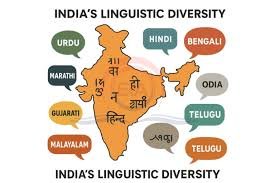
- The Centre and States officially support the promotion of all Indian languages.
- Such promotion must be balanced with constitutional protection of linguistic minority rights.
- Linguistic reorganisation of States was an approximation, now weakened by migration and mobility.
Way Forward
- Language policies must reflect India’s multilingual social reality, avoiding cultural imposition.
- All languages deserve space in administration and public life.
- Strengthening forums like the Inter-State Council, currently dormant, can prevent linguistic tensions.
- Dialogue and cooperative federalism are essential for linguistic harmony and nation-building.
