


Bagurumba Dance
Context
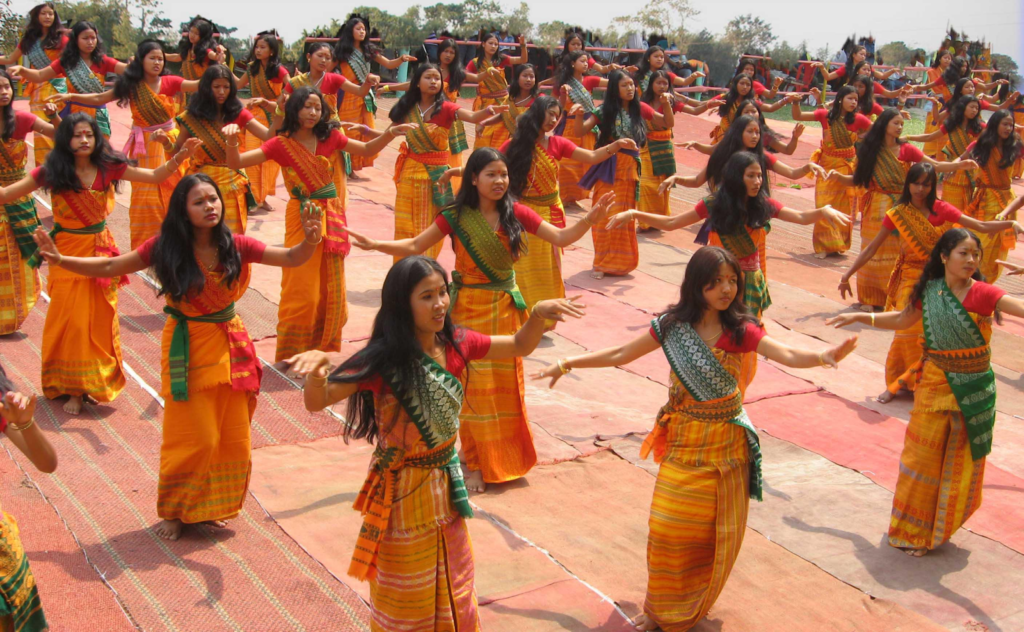
- Prime Minister witnessed a mass Bagurumba dance performance in Assam.
- Over 10,000 Bodo artistes participated, highlighting cultural heritage and community harmony.
About Bagurumba Dance
- Traditional folk dance of the Bodo community, inspired by nature and seasonal cycles.
- Represents peace, fertility, joy, and collective harmony within tribal cultural life.
- Associated Festivals
- Closely linked with Bwisagu, the Bodo New Year celebration.
- Also performed during Domasi and other community festivals.
- Key Features
- Symbolises blooming flowers and harmony between humans and the natural world.
- Movements imitate butterflies, birds, leaves, and flowing floral patterns.
- Performed in groups forming circles or lines, enhancing visual elegance.
- Traditionally performed by women, with men playing accompanying musical instruments.
- Dance Attire
- Dancers wear handwoven dokhna, jwmgra, and aronai in bright red, yellow, and green.
- Costumes reflect Bodo identity, vibrancy, and traditional weaving heritage.
- Musical Instruments Used
- Kham: Wooden drum with goatskin, providing rhythmic base.
- Sifung: Bamboo flute creating melodic accompaniment.
- Jota, Gongwna, Tharkha: Traditional wooden and percussion instruments.
- Significance
- Preserves Bodo tribal identity and intangible cultural heritage of Assam.
- Strengthens community bonding and intergenerational cultural transmission.
Sahitya Akademi Awards
Background and Purpose
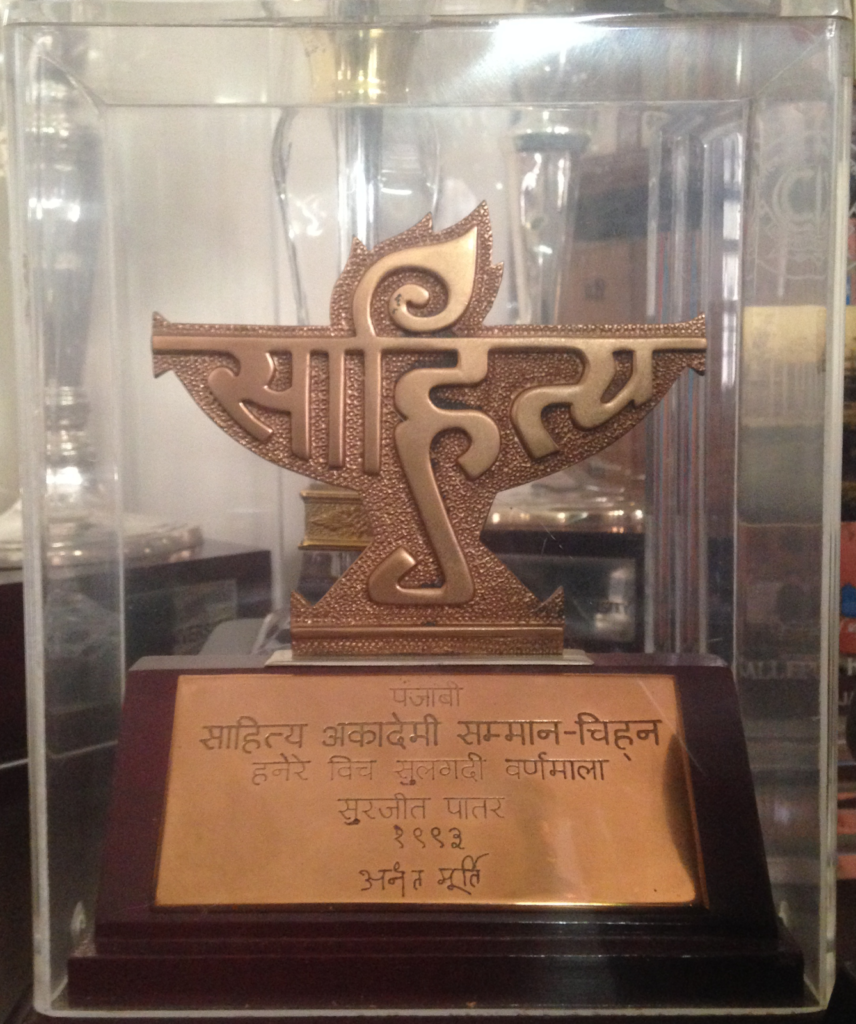
- The Sahitya Akademi Award honours outstanding literary works published in recognised Indian languages.
- The award promotes literary excellence, cultural dialogue, and multilingual literary development nationwide.
- It recognises books of high literary merit across constitutionally and institutionally approved languages.
Languages Recognised
- The Akademi covers 22 languages listed in the Constitution of India.
- It additionally recognises English and Rajasthani for implementation of its literary programmes.
- Literary activities are conducted across 24 Indian languages, ensuring inclusive cultural representation.
Nature of the Award
- Awardees receive a plaque, ceremonial shawl, and ₹1 lakh cash prize.
- The honour is conferred upon authors and poets for exceptional published literary contributions.
- The selection focuses on originality, literary quality, and cultural relevance of the work.
Institutional Profile of Sahitya Akademi
- The Sahitya Akademi was formally inaugurated on 12 March 1954 by the Government of India.
- It is registered under the Societies Registration Act, 1860, ensuring legal institutional status.
- The Akademi functions as the central institution for literary promotion and publication in India.
- It is the only national body undertaking coordinated literary activities in 24 languages.
Administrative and Organisational Structure
- The Akademi operates as an autonomous organisation under the Ministry of Culture.
- This structure ensures functional independence with institutional oversight from the central government.
- The head office is located in New Delhi, serving as the administrative and coordination hub.
Cultural and National Significance
- The Akademi strengthens inter-lingual literary exchange and national cultural integration.
- It supports preservation, promotion, and dissemination of India’s diverse literary heritage.
- The award enhances global recognition of Indian authors and multilingual literary traditions.
Sree Narayana Guru
Birth and Background
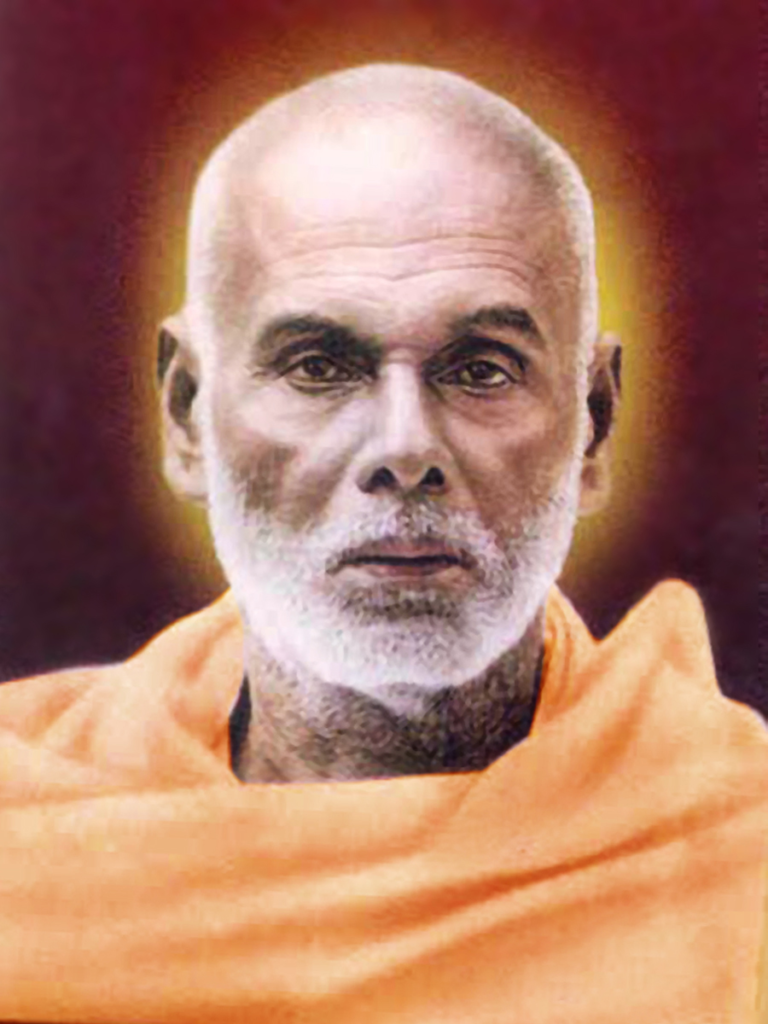
- Born on 22 August 1856 at Chempazhanthy, Kerala.
- Belonged to the Ezhava community, classified as avarna under prevailing caste hierarchy.
Philosophy and Ideology
- Advocated social equality, universal education, and spiritual humanism.
- Core slogan: “One Caste, One Religion, One God for All.”
- Prominent proponent of Advaita Vedanta, emphasising non-dualistic spiritual unity.
Social Reform Initiatives
- Led movements against caste discrimination and social exclusion.
- Founded Sree Narayana Dharma Paripalana Yogam (SNDP Yogam) for community upliftment.
- Promoted temple entry, education, and self-respect among marginalised communities.
Aruvippuram Movement (1888)
- Installed a Shiva idol at Aruvippuram, defying caste-based religious restrictions.
- Symbolised assertion of spiritual equality and challenge to social orthodoxy.
Institutions Established
- Founded Sivagiri Mutt in 1904 as a centre for spiritual learning and reform.
Literary Contributions
- Authored key philosophical and devotional works:
- Advaitha Deepika
- Atmavilasam
- Daiva Dasakam
- Brahmavidya Panchakam
Significance
- Pioneer of Kerala’s social renaissance and reform movement.
- Influenced later leaders and movements for social justice and inclusive spirituality.
Chang’e-6 Mission
Context
- Lunar samples returned by Chang’e-6 reveal evidence supporting the giant impact theory of Moon’s origin.
- Analysis suggests Moon formed from debris after an ancient Earth–protoplanet collision.
About Chang’e-6 Mission
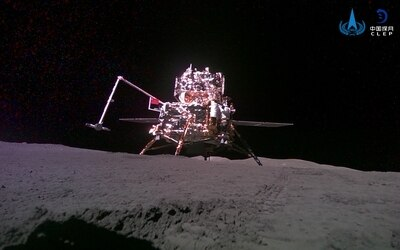
- World’s first successful sample return mission from the Moon’s far side.
- Part of China’s Chang’e Lunar Exploration Programme, named after the Moon goddess Chang’e.
- Launch and Timeline
- Launched: 3 May 2024.
- Launch Vehicle: Long March-5 rocket.
- Launch Site: Wenchang Space Launch Center, Hainan Island.
- Landed: 1 June 2024.
- Returned to Earth: Nearly one month after sample collection.
- Consists of four modules:
- Orbiter
- Lander
- Ascender
- Returner
- Landing Site
- South Pole–Aitken Basin, lunar far side.
- One of the oldest and largest impact craters, around 4 billion years old.
- Basin spans approximately 2,500 kilometres across the lunar surface.
- Sampling Methods
- Subsurface drilling to collect underground regolith.
- Robotic arm sampling to collect surface material.
- Scientific Instruments
- Equipped with microwave, laser, and optical imaging sensors.
- Measures terrain, distance, speed, and identifies surface obstacles.
- Technological Significance
- Second mission to reach Moon’s far side after Chang’e-4 (2019).
- Uses relay satellites for communication, as Earth signals cannot reach far side directly.
- Scientific Significance
- Samples may contain deep lunar interior material excavated by ancient impact.
- Strengthens evidence for the giant impact hypothesis of Moon’s formation.
- Enhances understanding of early Earth–Moon system evolution.
Guillain-Barré Syndrome (GBS)
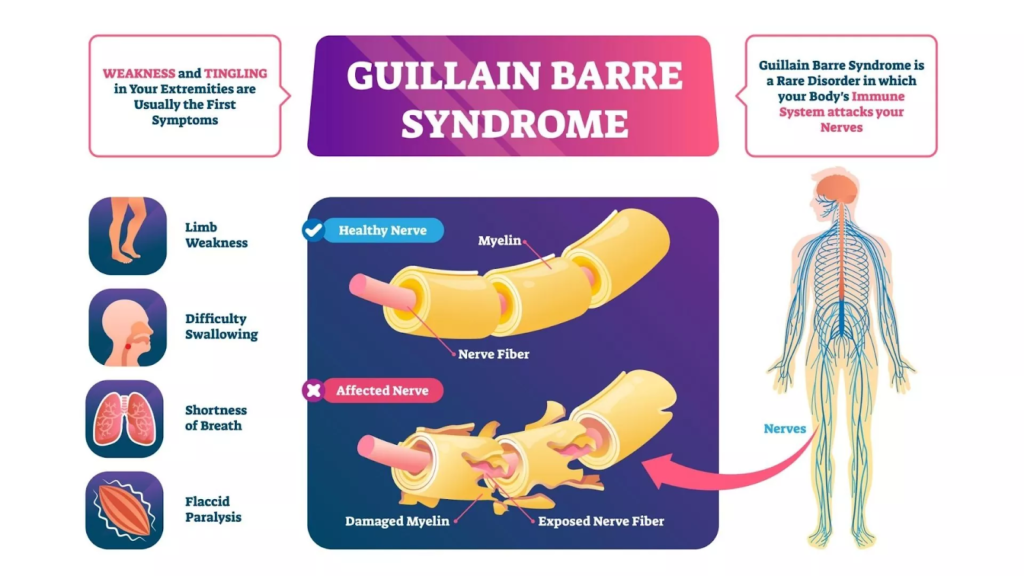
What it is?
- An autoimmune neurological disorder where the immune system attacks peripheral nerves.
- Leads to progressive muscle weakness, sensory disturbances, and potential paralysis.
Epidemiology
- Rare condition affecting 1–2 persons per 100,000 annually worldwide.
- More commonly reported among adults and male populations.
Triggers and Causes
- Often follows viral or bacterial infections affecting immune response.
- Common triggers include Campylobacter jejuni, influenza, Epstein-Barr, and Zika viruses.
- Rarely associated with vaccination-induced immune activation.
Pathophysiology
- Immune system produces antibodies that damage peripheral nerve myelin or axons.
- Results in disrupted nerve signal transmission and muscle control impairment.
Symptoms
- Early Signs
- Tingling and numbness starting in legs and progressing upwards gradually.
- Pins-and-needles sensation accompanied by lower limb weakness and back pain.
- Severe Manifestations
- Progressive paralysis affecting arms, facial muscles, and respiratory function.
- Difficulty in breathing, speaking, and maintaining vision clarity.
- Complications
- Involvement of autonomic nervous system causing irregular heartbeat and blood pressure fluctuations.
- Risk of respiratory failure requiring mechanical ventilation support.
Treatment and Management
- Plasma exchange therapy removes harmful antibodies circulating in the blood.
- Intravenous immunoglobulin therapy neutralises immune-mediated nerve damage.
- Supportive care includes ventilator support, physiotherapy, and long-term rehabilitation.
Recovery and Prognosis
- Most patients recover gradually over months to years with medical support.
- Early diagnosis and treatment significantly reduce severity and long-term disability.
Pratas Islands (Dongsha Islands)
Context
- A Chinese reconnaissance drone briefly flew over Taiwan-controlled Pratas Islands.
- Taiwan termed the move “provocative and irresponsible”, amid rising South China Sea tensions.
About Pratas Islands
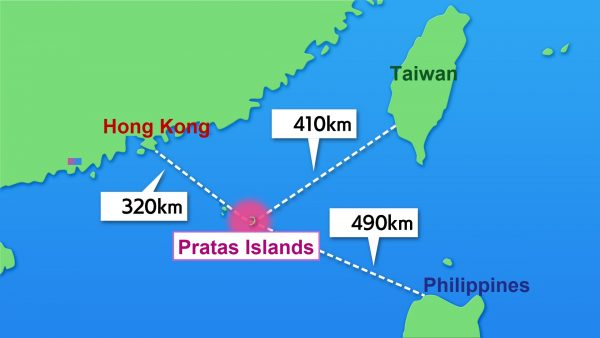
- A small group of three islands located in the northern South China Sea.
- Also known as the Dongsha Islands.
- Physical Geography
- Characterised by a circular coral atoll structure.
- Dongsha Island is the only island above sea level.
- Other two features remain submerged reef formations.
- Atoll diameter: ~24 km, enclosing a lagoon of ~16 km.
- Formed mainly of clastic coral and reef flats.
- Location and Connectivity
- Lies about 445 km southwest of Kaohsiung, Taiwan.
- Around 320 km southeast of Hong Kong.
- Located near routes connecting the Pacific and Indian Oceans.
- Close to Taiwan Strait and Bashi Channel maritime corridors.
- Historical Importance
- Known since the ancient Han Dynasty period.
- Historically used along trade and fishing routes in East Asia.
- Political Status
- Claimed by the People’s Republic of China.
- Administered and controlled by Taiwan.
- Declared part of Dongsha Atoll National Park by Taiwan.
- No permanent civilian population; Taiwanese marines are stationed.
- Ecological Significance
- Rich marine and coastal biodiversity hotspot.
- Supports coral reefs, diverse fish species, and migratory birds.
- Notable species include the Chinese Egret.
Strategic Significance
- Located along major international sea lanes in the South China Sea.
- Holds importance in regional security and power projection dynamics.
- Vulnerable to geopolitical tensions and climate change impacts.
