

Context and Strategic Significance
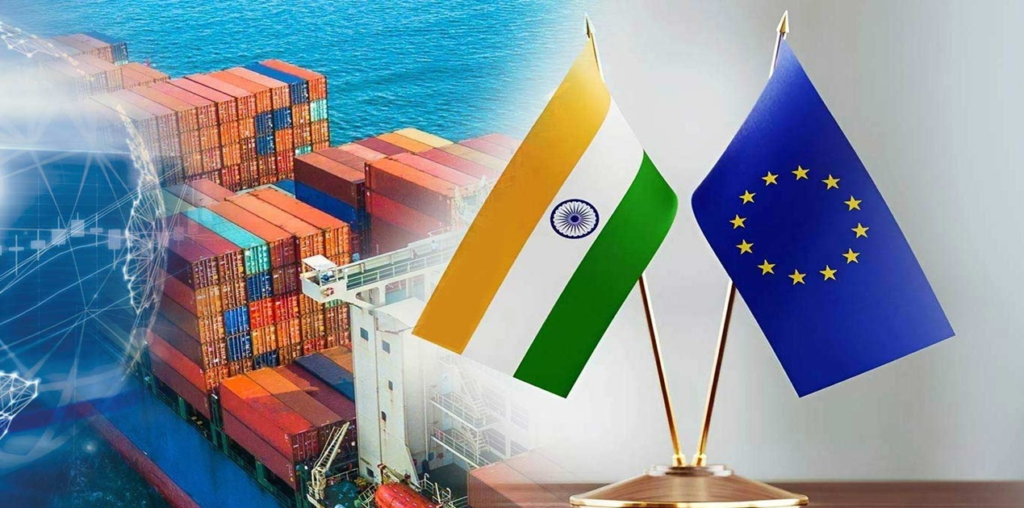
- European Commission President announced the EU is on the cusp of a historic trade agreement.
- The deal would connect two billion people, representing nearly one-quarter of global GDP.
- Europe expects a first mover advantage in one of the world’s fastest-growing regions.
- The announcement came amid uncertainty over India–U.S. trade negotiations.
Geopolitical and Economic Backdrop
- The EU faces renewed U.S. tariff threats linked to Greenland and trade policies.
- Indian goods have faced a 50 percent U.S. duty since August last year.
- Protectionist shifts in U.S. trade policy increased urgency for diversifying global partnerships.
- Europe signalled intent to engage growth centres from Latin America to the Indo-Pacific.
Diplomatic Engagements and Institutional Framework
- EU leaders will attend India’s Republic Day celebrations as chief guests.
- The leaders will co-chair the 16th India–EU Summit on January 27.
- Negotiations were re-launched in July 2022 after a long hiatus.
- Initial talks began in 2007 and were suspended in 2013.
Negotiation Status and Structural Progress
- India and the EU have signed 20 out of 24 negotiating chapters.
- Officials aim to finalise the agreement before the EU leaders’ visit.
- The proposed deal is described as comprehensive, balancing mutual interests and sensitivities.
- India’s Commerce Minister termed it the “mother of all trade deals”.
Sectoral Interests and Market Access
- India seeks improved access for labour-intensive sectors like textiles and footwear.
- Additional focus includes gems and jewellery exports to European markets.
- The EU aims for greater entry in automobiles and beverage sectors.
- Both sides view the agreement as boosting trade diversification and supply chain resilience.
China Factor and Strategic Alignment
- The EU remains concerned about China’s dominance in critical technologies.
- India faces pricing pressures in scaling solar energy manufacturing.
- Shared challenges encourage closer economic coordination between India and Europe.
Broader Global Implications
- The agreement could reshape global trade flows under rising protectionism.
- It positions the EU as an early economic partner in India’s expanding market landscape.
- The deal underscores trade diplomacy as a tool of strategic autonomy and resilience.
