

Adi Shankara

About:
- Known as Adi Shankara, born 11 May 788 AD at Kaladi, Kerala.
- Attained Samadhi at age 33 at Kedarnath (Kedar Tirth).
- Devotee of Lord Shiva.
- Propounded Advaita Vedanta (Non-dualism).
- Authored Sanskrit commentaries on Upanishads, Brahma Sutra, and Bhagavad Gita.
- Actively debated and opposed Buddhist philosophical schools.
Major Works:
- Brahmasutrabhashya: Commentary on Brahma Sutra.
- Bhaja Govindam: Devotional and philosophical hymn.
- Nirvana Shatakam: Verses on self-realisation.
- Prakarana Granthas: Introductory philosophical treatises.
Other Contributions:
- Revived Hindu philosophical traditions during Buddhist influence.
- Established four Mathas for Sanatana Dharma propagation:
- Sringeri (South)
- Puri (East)
- Dwarka (West)
- Badrinath/Joshimath (North)
Advaita Vedanta- Core Ideas:
- Philosophy of radical non-dualism.
- Ultimate reality is Brahman, derived from Upanishadic teachings.
- Atman (Self) is identical with Brahman.
- Brahman transcends individuality and material plurality.
- Reality is one, infinite, and without a second.
- Atman is pure, non-intentional consciousness.
Silver
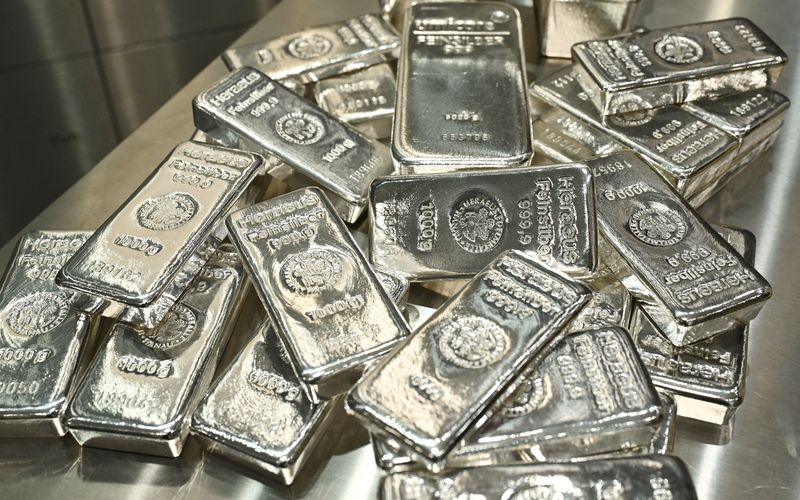
About Silver
- Nature: Precious, noble metal with high economic and industrial value.
- Role: Acts as a store of value and a critical industrial input.
- Appearance: Brilliant white lustre.
Key Characteristics
- Conductivity: Highest electrical and thermal conductivity among all metals.
- Physical properties: Highly malleable, ductile, and corrosion-resistant.
- Uses: Electronics, solar PV cells, jewellery, alloys, precision instruments.
Silver in India
- Production (2022–23): 7,13,768 kg, ~10% increase over previous year.
- Mining pattern: Mostly by-product of lead, zinc, copper, and gold ores.
- Native deposits: No major standalone silver deposits.
- Top Producing States:
- Rajasthan: ~99% output.
- Karnataka: Minor output (Hutti Gold Mines, Raichur).
- Andhra Pradesh: Limited associated resources.
- Reserves/Resources:
- Total: ~30,267 tonnes (metal content).
- Rajasthan share: ~86% of national ore resources.
Global Scenario
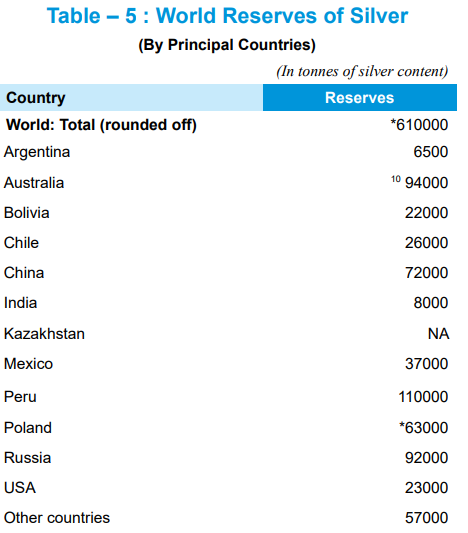
- Top producers: Mexico (≈26% share), China, Peru.
- Other major producers: Poland, Russia, Chile, Bolivia.
- India globally: ~1% of world reserves, but significant in refining and smelting.
Current Significance
- Demand driven by solar PV, electronics, and EV supply chains.
- Tight supply conditions increasing price volatility and strategic value.
Two-State Solution
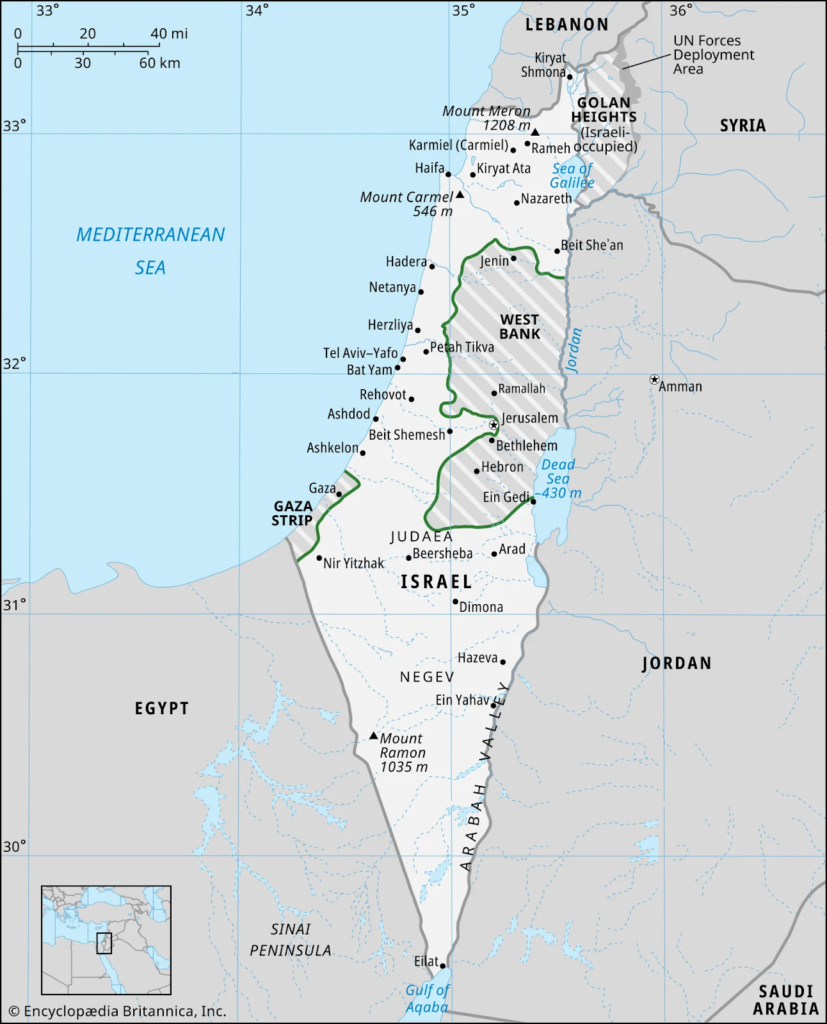
Meaning / Concept:
- A proposed framework to resolve the Israel–Palestine conflict.
- Envisions two sovereign states: Israel and an independent Palestine.
- Objective is territorial separation ensuring self-determination for both peoples.
Origins and Historical Evolution
- 1947 UN Partition Plan:
- United Nations proposed separate Arab and Jewish states.
- Jerusalem to be placed under international administration.
- Jewish leadership accepted; allocated about 56% of the land.
- 1948 Arab–Israeli War:
- Israel declared independence on 14 May 1948.
- Five Arab states launched a military attack.
- War ended with Israel controlling about 77% of the territory.
- Palestinian Displacement (Nakba):
- Around 700,000 Palestinians fled or were displaced.
- Refugees settled in Jordan, Lebanon, Syria, Gaza Strip, West Bank, and East Jerusalem.
- 1967 Six-Day War:
- Israel captured West Bank (including East Jerusalem) from Jordan.
- Captured Gaza Strip from Egypt.
- Israel gained control from the Mediterranean Sea to the Jordan Valley.
Current Status
- Palestinians remain stateless.
- Majority live under Israeli occupation or as refugees in neighbouring countries.
- Final status issues include borders, Jerusalem, refugees, and security.
Artemis II Mission

Context:
- NASA has fixed 6 February as the target launch date for Artemis II.
- It will be the first crewed lunar mission since Apollo 17 (1972), sending astronauts around the Moon.
Artemis II Mission
- Nature: First crewed mission of NASA’s Artemis programme.
- Mission type: Lunar flyby (no surface landing).
- Spacecraft: Orion crew module.
Organisations Involved
- NASA: Lead agency.
- Canadian Space Agency (CSA): International partner.
Objectives
- Validate human-rated deep-space systems in real mission conditions.
- Prepare for Artemis III lunar landing.
- Support long-term human presence beyond Earth orbit and future Mars missions.
Key Features
- Crewed far-side orbit: Four astronauts will travel around the Moon.
- Free-return trajectory: Uses Earth–Moon gravity for safe return.
- System testing: Life support, navigation, communications, radiation shielding, manual piloting.
- Distance milestone: ~230,000 miles from Earth, farther than any previous human mission.
- Mission duration: ~10 days.
- Recovery: Pacific Ocean splashdown.
Significance
- Bridges Artemis I (uncrewed) and Artemis III (landing).
- Marks return of human deep-space exploration after five decades.
- Strengthens international space cooperation.
C295 Transport Aircraft
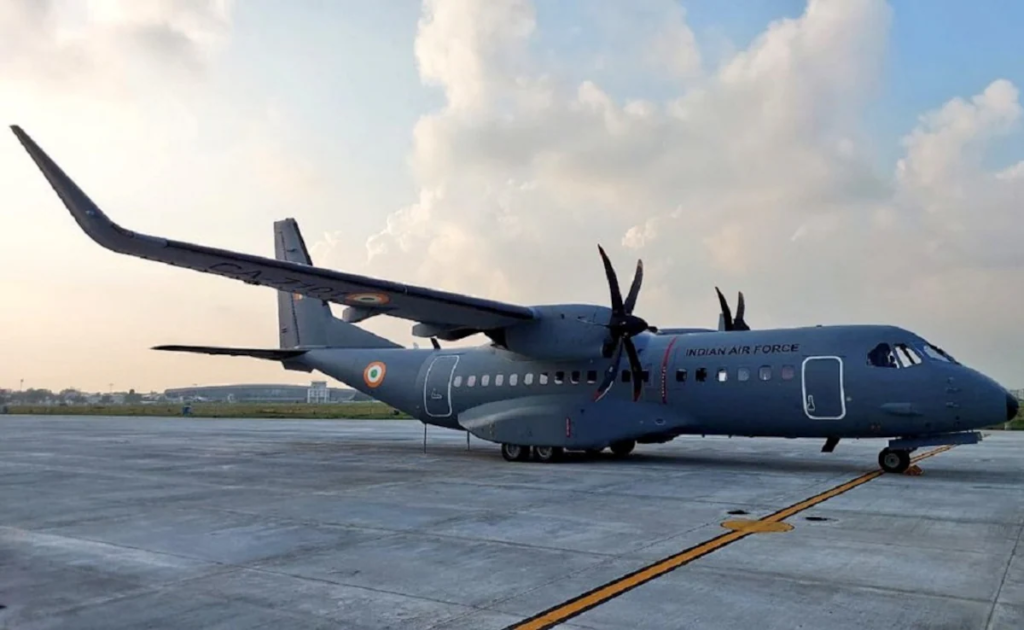
About:
- New-generation tactical transport aircraft in the light–medium airlift category.
- Designed and manufactured by Airbus (Europe).
- Multi-role platform for troop and cargo transport, ISR, maritime patrol, MEDEVAC, VIP transport, and airborne support missions.
Key Features:
- Payload capacity: Up to 9 tonnes or 71 troops.
- Endurance: Up to 13 hours.
- Cruise speed: Around 260 knots.
- Low-speed capability: Can fly at 110 knots for tactical operations.
- Engines: Twin turboprop configuration.
- STOL capability: Operates from short and unprepared airstrips.
- STOL (Short Take-Off and Landing)
- It refers to an aircraft’s ability to take off and land on very short runways or unprepared airstrips, making it suitable for remote, hilly, or battlefield conditions.
- STOL (Short Take-Off and Landing)
- Rear ramp door: Enables rapid loading, paradropping, and troop deployment.
- All-weather operations with strong low-level flight performance.
Steel Slag Technology
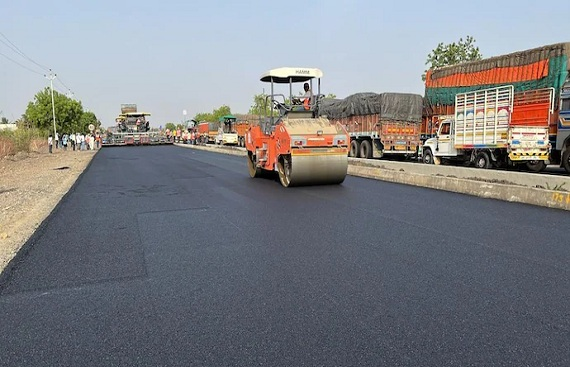
Context:
- Union Minister advocated wider use of steel slag–based roads, especially in hilly and Himalayan regions.
About Steel Slag Technology:
- Steel slag: Byproduct formed during iron and steel smelting at high temperatures.
- Processed slag is used as a substitute for natural aggregates in road construction.
- Converts industrial waste into construction material, supporting circular economy.
ECOFIX (Pothole Repair Mix):
- Developed by CSIR–Central Road Research Institute (CRRI).
- Uses processed iron and steel slag.
- Enables rapid, durable pothole repair in diverse climatic conditions.
Key Features:
- High strength and durability compared to conventional aggregates.
- Good skid resistance and surface stability.
- Faster setting time, suitable for emergency repairs.
- Performs well in high rainfall and temperature-variation zones.
Benefits:
- Reduces mining of natural stone aggregates.
- Lowers construction costs and waste disposal burden.
- Promotes sustainable and green infrastructure.
- Enhances road longevity in fragile terrains.
Significance:
- Supports waste-to-wealth and circular economy initiatives.
- Strengthens indigenous road construction technology.
- Improves connectivity in ecologically sensitive regions.
