
Global Future Councils (GFCs)
What are Global Future Councils (GFCs)?
- Flagship multistakeholder knowledge network of WEF.
- Invitation-only, time-bound expert think tanks generating forward-looking policy insights.
- Focus on emerging global risks, trends, and technologies.
Establishment & Partners
- Established: 2013
- Lead Organisation: World Economic Forum (WEF)
- Strategic Host (2026–2030): United Arab Emirates
Aim
- Identify future trends and systemic risks.
- Convert expert knowledge into actionable, policy-relevant outputs.
- Support resilient, inclusive, and sustainable governance models.
Key Features
- Tenure: Two-year terms (Current: March 2025–December 2026)
- Interdisciplinary composition: Policymakers, academics, industry, civil society.
- Evidence-based outputs: Research-driven, not opinion-led.
- Policy linkage: Feeds into WEF initiatives and Davos agenda.
Core Principles
- Systems thinking & cross-sector collaboration
- Innovation & future scanning
- Research-backed global policy guidance
PLI Scheme for White Goods (Air Conditioners & LED Lights)

Context: Five companies selected in 4th round; committed investment ₹863 crore.
Overview
- Type: Central Sector Production-Linked Incentive (PLI) Scheme
- Objective: Boost domestic manufacturing of key AC and LED components through incentives on incremental sales.
- Launch: FY 2021–22
- Tenure: Till FY 2028–29
- Implementing Ministry: Ministry of Commerce & Industry
- Monitoring Authority: Empowered Group of Secretaries (EGoS), chaired by Cabinet Secretary
Target Segments
- Air Conditioners (ACs)
- High-value intermediates: Compressors, copper tubes, aluminium foils
- Low-value intermediates: PCB assemblies, BLDC motors, service valves, cross-flow fans
- Sub-assemblies: Indoor Units (IDUs) and Outdoor Units (ODUs)
- LED Lights
- Core components: LED chip packaging, ICs, resistors, fuses
- Other components: LED drivers, engines, modules, mechanicals, wire-wound inductors
Key Features
- Incentive Rate: 4%–6% on incremental domestic sales
- Base Year: FY 2019–20 (benchmark for growth measurement)
- Incentive Window: 5 years + 1-year gestation
- Eligibility: Greenfield and brownfield manufacturing investments only
- Thresholds: Mandatory investment + sales targets
- Priority: Core components and large-scale investments
- Fiscal Cap: Incentives limited to Cabinet-approved outlay
Scale & Impact
- Total Outlay: ₹6,238 crore
- Beneficiaries: 85 companies (4 rounds)
- Expected Investment: ~₹11,198 crore
- Expected Production: ~₹1.9 lakh crore
- Employment: Significant direct and indirect job creation
Asiatic Wild Dog (Dhole)

Context: First camera-trap record in Ratapani Tiger Reserve, Madhya Pradesh, indicating improved habitat and prey base.
Overview
- Common name: Dhole
- Scientific name: Cuon alpinus
- Group: Wild canid (family Canidae)
- IUCN Status: Endangered (EN)
Habitat & Distribution
- Preferred habitat: Dense forests, forest–grassland mosaics, hilly and undulating terrain.
- India: Central Indian landscapes, Western Ghats, Eastern Ghats.
- Ecological need: Large, connected habitats with strong prey availability.
Key Characteristics
- Social predator: Hunts in cooperative packs.
- Diet: Medium-to-large ungulates (chital, sambar, deer).
- Morphology: Reddish coat, rounded ears, specialised carnivorous dentition.
- Coexistence: Shares range with tiger and leopard; niche separation via pack hunting.
Significance
- Indicator species: Presence reflects healthy prey base and habitat quality.
- Ecological role: Maintains trophic balance as a top/meso-level predator.
Tailings
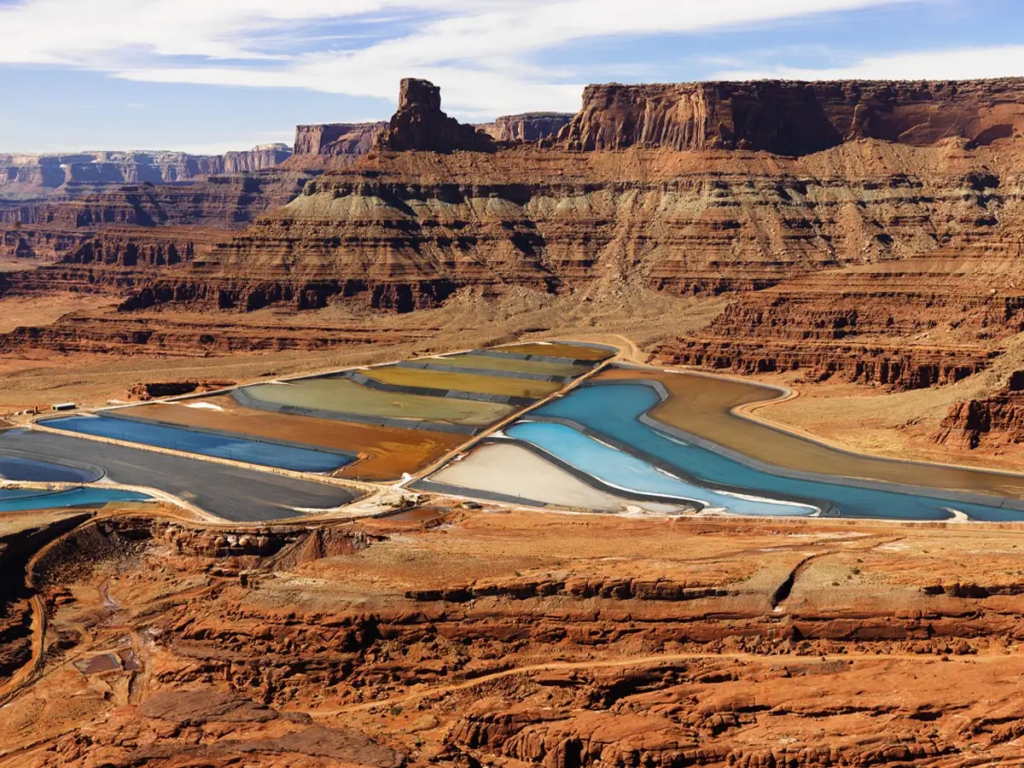
Context: The Union Government has announced India’s first Tailings Policy, setting guidelines to recover critical minerals from primary mining and secondary sources such as mine dumps and existing tailings.
Overview
- Tailings: Residual material left after processing mined ore.
- Composition: Finely ground rock, uneconomic metals, processing chemicals, organic matter, and liquid effluents.
- Form: Usually a liquid slurry of fine mineral particles produced during crushing, grinding, and extraction.
- Purpose of management: Ensures safe, sustainable, and environmentally responsible mineral production.
Storage & Management
- Storage facilities: Known as Tailings Storage Facilities (TSFs).
- Common methods: Dams, embankments, and surface impoundments.
- Design factors:
- Local topography
- Rainfall patterns
- Seismic activity
- Type of mineral mined
- Proximity to settlements
- Note: No standard model and each TSF is site-specific.
India’s First Tailings Policy (2026)
- Objective: Enable recovery of critical and companion minerals from:
- Primary ores
- Tailings
- Mine dumps
- Anode slimes, slags, and industrial residues
- Core idea: Promote secondary mining and resource efficiency.
Companion Metals Concept
- Copper tailings may contain: Selenium, Tellurium, Molybdenum, Cobalt, Rhenium, Gold, Silver.
- Zinc tailings may contain: Germanium, Silver, Cadmium, Indium.
Significance
- Strategic minerals access: Supports lithium, cobalt, nickel, and REE supply chains.
- Clean energy link: Inputs for solar panels, wind turbines, batteries, and EVs.
- Sustainability: Reduces waste, improves resource recovery, and lowers environmental footprint.
ASC ARJUN Humanoid Robot
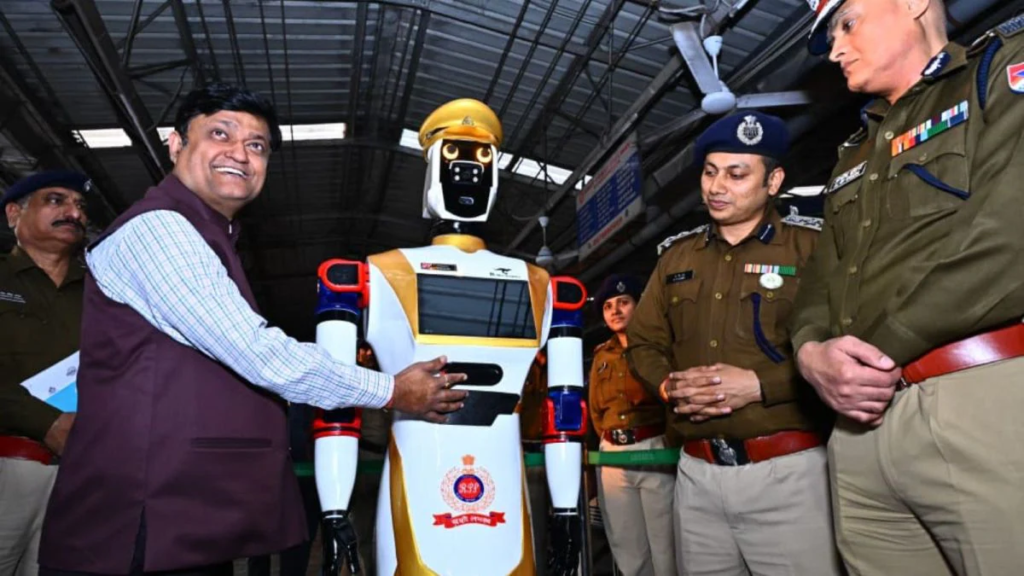
Context: Indian Railways has deployed a humanoid robot named “ASC ARJUN” at Visakhapatnam Railway Station to assist the Railway Protection Force (RPF) in passenger safety and station surveillance.
Overview
- ASC ARJUN: An indigenously developed humanoid robot for railway station security and passenger assistance.
- Developer: Designed and built in Visakhapatnam using home-grown technology.
- Role: Works alongside RPF personnel during peak passenger movement and routine patrols.
Key Features
- AI Surveillance: Face Recognition System (FRS) for intrusion detection and identity monitoring.
- Crowd Management: AI-based crowd analysis with real-time alerts to RPF control rooms.
- Public Communication: Automated announcements in English, Hindi, and Telugu.
- Navigation: Semi-autonomous movement with obstacle avoidance.
- Patrolling: 24/7 platform surveillance to optimise manpower deployment.
- Emergency Response: Built-in fire and smoke detection systems.
- Human Interaction: Passenger assistance interface; gestures like ‘Namaste’ and salutes for RPF staff.
Significance
- Enhances station security through continuous AI-assisted monitoring.
- Improves passenger experience with multilingual information and guidance.
- Promotes indigenous innovation in public-sector robotics and smart infrastructure.
Pandoh Dam
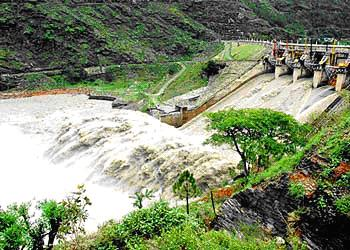
Context: The Bhakra Beas Management Board (BBMB) released silt-laden water from Pandoh Dam into the Sutlej River instead of the Beas, drawing objections from the Punjab Government.
Overview
- Type: Concrete gravity / embankment dam (run-of-the-river design)
- River: Beas River
- Location: Mandi district, Himachal Pradesh (~10 km from Manali)
- Completed: 1977 (Beas Project)
- Administered by: Bhakra Beas Management Board (BBMB)
Technical Features
- Height: ~76 m
- Length: ~492 m
- Power Design: Diverts Beas waters through ~38 km canals and tunnels
- Power Station: Dehar Power House
- Installed Capacity: 990 MW
- Discharge Basin: Sutlej River
Hydrology & Geography
- Reservoir: Pandoh Lake (tourism site, ~19 km upstream of Mandi)
- River System Link: Beas → diversion → Dehar Power House → Sutlej
- Connectivity: NH-21 passes over the dam
Significance
- Major inter-basin transfer within the Indus river system.
- Key hydroelectric node in northern India’s power grid.
- Environmental sensitivity: Silt discharge affects downstream river ecology and inter-state water concerns.
Anna Chakra
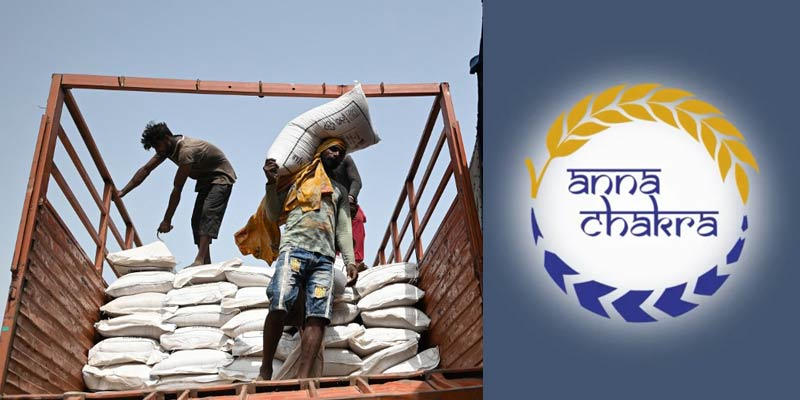
Context: The Department of Food and Public Distribution (DFPD) has been named a finalist for the 2026 Franz Edelman Award for its Anna Chakra initiative, recognising its impact on optimising India’s food grain logistics.
About the Initiative
- Overview
- Nature: Operations Research–based decision-support system
- Sector: Public Distribution System (PDS) logistics
- Purpose: Optimises state-wise movement and routing of food grains across supply-chain nodes
- Development & Partnerships
- Lead Agency: Department of Food and Public Distribution (DFPD)
- Collaborators:
- UN World Food Programme (India)
- IIT Delhi
- Model: Government–UN–Academia collaboration
- Key Features
- Advanced algorithms: Identify optimal transport routes and logistics plans
- Digital integration:
- PM Gati Shakti National Master Plan
- FOIS (Railways Freight Operations Information System)
- Connected via ULIP (Unified Logistics Interface Platform)
- Outcome: Faster, cost-efficient, and reliable grain movement under PDS
- Significance
- Improves last-mile food security delivery
- Reduces transport costs and delays
- Enhances data-driven governance in welfare logistics
About Franz Edelman Award
- Field: Operations Research, Analytics, Management Science
- Reputation: Often called the “Nobel Prize of Analytics”
- Focus: Real-world, high-impact analytical applications
- Prize: $10,000 for the winner
