

Syllabus: International institutions, agreements and conventions
Context and Emerging Challenge
- Sustained human presence in space demands continuous technological innovation for survival systems and infrastructure.
- Multinational crews collaborate across shared habitats, platforms, and digital systems in extraterrestrial environments.
- Innovation increasingly occurs beyond Earth’s sovereign boundaries, raising unresolved questions of legal ownership.
Territorial Basis of Patent Law
- Patent systems operate on territoriality, granting exclusive rights within defined national jurisdictions.
- Authorities determine infringement by locating where making, using, or selling occurred.
- This logic functions on Earth due to clear geographic boundaries and singular legal authority.
Outer Space Legal Framework
- International law prohibits national sovereignty over celestial bodies, including the Moon and Mars.
- Article VIII of the Outer Space Treaty links jurisdiction to the state of registry of space objects.
- The Registration Convention reinforces legal control by registry, not by physical location.
Jurisdiction-by-Registration Model
- Innovations aboard registered space objects are treated as occurring within the registering state’s territory.
- This model extends domestic patent laws into space through administrative registration choices.
- The approach functions in static, segmented environments, such as the International Space Station.
International Space Station Example
- ISS modules are allocated jurisdiction partner state by partner state under Article 21.
- Each module is treated as national legal territory for intellectual property purposes.
- This system relies on stable structures and clearly identifiable national zones.
Limits in Permanent Space Settlements
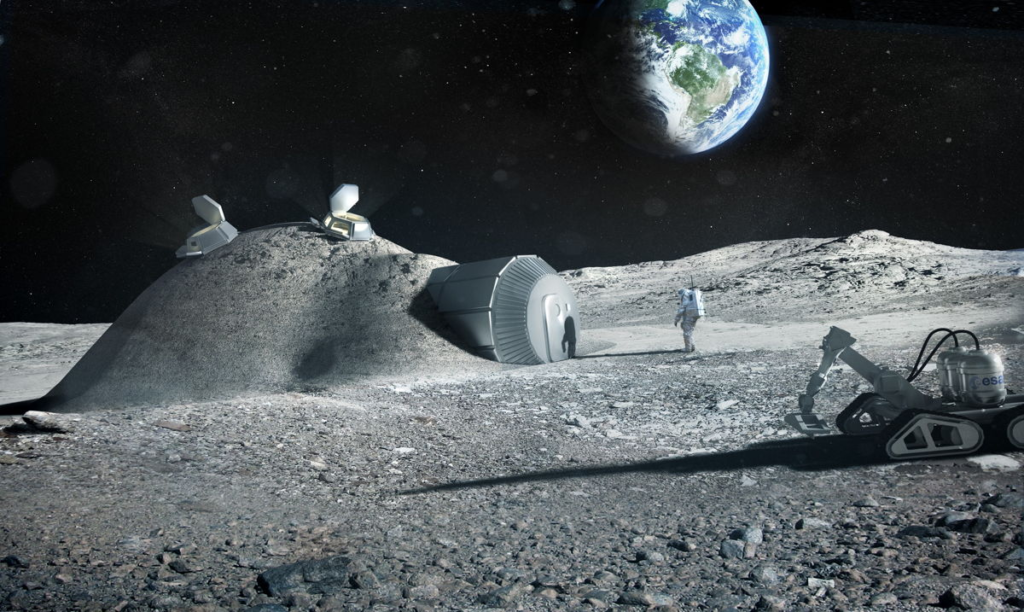
- Lunar and planetary bases involve shared infrastructure, remote software updates, and multinational operations.
- Innovations emerge through incremental, collaborative refinements rather than isolated acts.
- Determining where invention legally occurs becomes unclear and contested.
Non-Appropriation and Exclusivity Tension
- Article I of the Outer Space Treaty frames space as benefiting all humankind.
- Article II prohibits national appropriation of celestial bodies.
- Patents may create de facto exclusion over survival-critical technologies, challenging this principle.
Temporary Presence and Enforcement Gaps
- Article 5 of the Paris Convention limits patent enforcement for transiting patented articles.
- Its applicability to space platforms, docking stations, or registered objects remains undefined.
- Legal uncertainty enables regulatory arbitrage through selective registration strategies.
Global Governance and Institutional Response
- Over 110 states are treaty members, but few shape practical jurisdictional interpretations.
- Artemis Accords provide coordination mechanisms, not binding legal authority on ownership.
- Calls for specialised space intellectual property frameworks are growing but remain fragmented.
