

Index of Industrial Production (IIP)
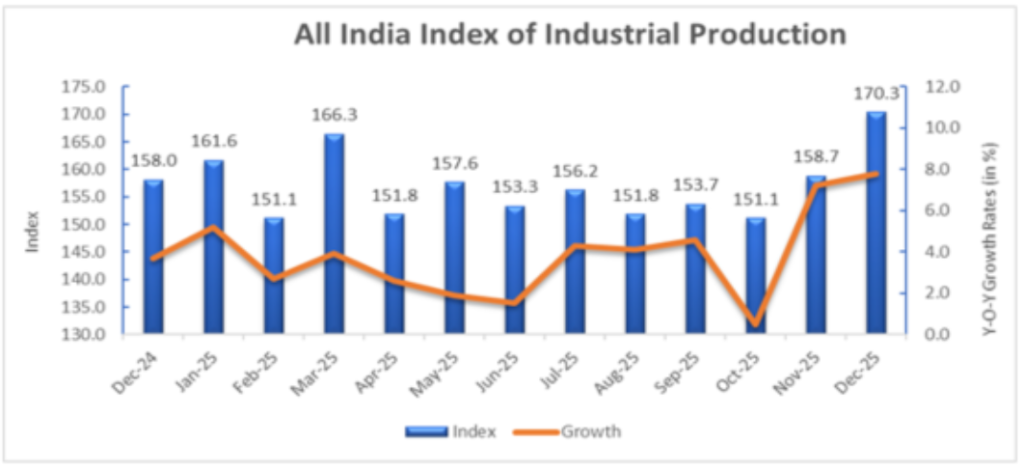
More in news:
- Manufacturing sector grew 8.1%, faster than 3.7% in December 2024.
- Capital goods sector expanded 8.1% following 10.1% growth in November 2025.
- Growth aided by low base effect and post-GST rationalization buoyancy.
- Infrastructure and construction goods showed healthy growth with sustained government capex.
What is IIP?
- Index of Industrial Production (IIP) measures short-term changes in industrial output volume.
- Acts as a key indicator of industrial growth or contraction in the economy.
- Reflects performance trends across core productive sectors.
- Publishing Authority
- Compiled and released by the Central Statistics Office (CSO).
- CSO functions under the Ministry of Statistics and Programme Implementation (MoSPI).
- Base Year of IIP
- Current base year is 2011–12, ensuring relevance to modern industrial structure.
- Base year revised periodically to capture structural economic changes.
- Earlier base years included 1937, 1946, 1951, 1956, and subsequent revisions.
- Sectoral Composition of IIP (Weight-wise)
- Manufacturing: 77.63% weight, covering 809 industrial items.
- Mining: 14.37% weight, represented by 29 items.
- Electricity: 7.99% weight, represented by 1 composite item.
- Eight Core Industries
- Constitute 40.27% weight within the overall IIP index.
- Represent foundational infrastructure and industrial inputs.
- Core Industries (Descending Weight Order)
- Refinery Products
- Electricity
- Steel
- Coal
- Crude Oil
- Natural Gas
- Cement
- Fertilisers
Buddhist Diamond Triangle – UNESCO Tentative List
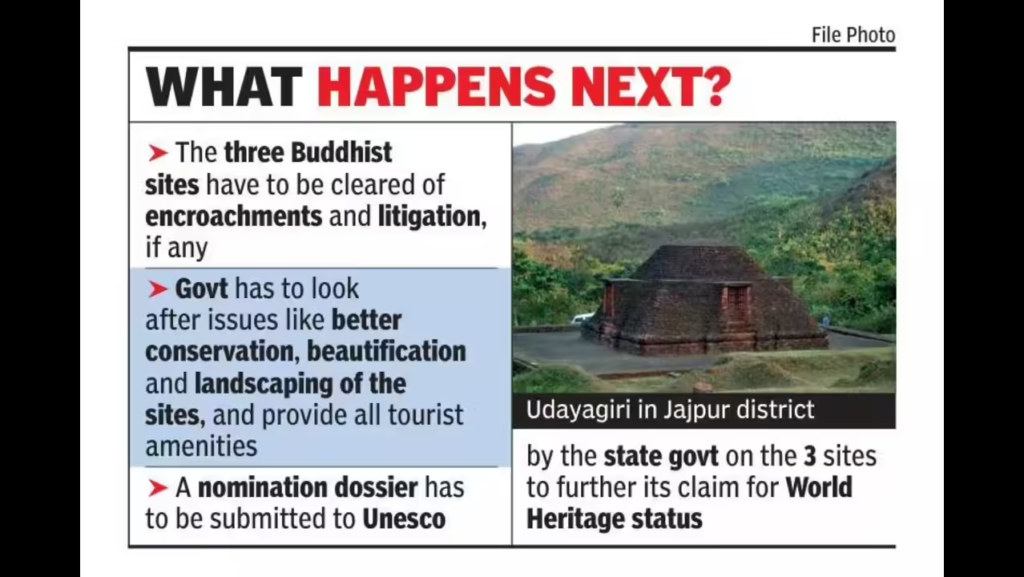
What is Buddhist Diamond Triangle?
- Serial cultural nomination of three Buddhist monastic complexes
- Located in Jajpur and Cuttack districts
- Represents 1,500 years of continuous Buddhist history
- Shows evolution of Theravada, Mahayana, Vajrayana schools.
- Three Component Sites
- Lalitgiri
- Udayagiri
- Ratnagiri
- Lalitgiri
- Located in Cuttack district
- Oldest site, dated to 2nd–3rd Century BCE
- Massive stupa with gold, silver, stone relic caskets
- Contains east-facing apsidal chaityagriha
- Inscriptions mention “Sri Chandraditya Vihara”
- Udayagiri
- Largest complex in the triangle
- Flourished during 1st–13th Century CE
- Features double-storeyed monastery
- Houses Madhavapura Mahavihara
- Known for Avalokiteswara and Pancha Dhyani Buddhas images
- Ratnagiri
- Major center of Vajrayana Buddhism
- Compared with Nalanda for learning significance
- Sculptures of Tara, Vajrapani, Jambhala
- Evidence of female patronage by Queen Karpurashri
- Stupas show Buddhist–Brahmanical architectural blend
Hoya Nagaensis
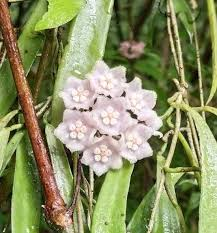
What is Hoya Nagaensis?
- New flowering plant species under Hoya genus
- Known for ornamental, waxy flowers
- Described through taxonomic research
- Location
- Kavünhou Community Reserved Forest in Phek district, Nagaland
- It is part of Eastern Himalayan biodiversity region
Key Features
- Distinctive leaf morphology and unique floral traits
- Found in high-altitude temperate forest
- Extremely restricted distribution, single recorded location
- Provisionally assessed as Critically Endangered
Significance
- Confirms Eastern Himalaya as global biodiversity hotspot
- Highlights community-led forest management model
- Adds to global plant taxonomy records
- Research published in Kew Bulletin
Rojava Region
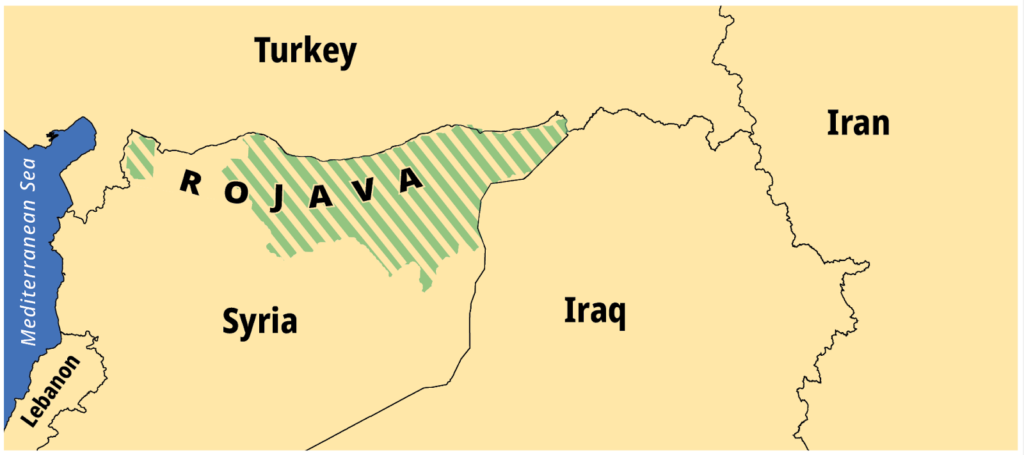
Context: Renewed clashes between Syrian forces and Kurdish-led SDF threaten DAANES autonomy after Assad’s fall in 2024
What is Rojava?
- Official name: Democratic Autonomous Administration of North and East Syria (DAANES)
- De facto autonomous region in northeastern Syria
- Lacks international recognition
Location in Syria
- Covers parts of Hasakah, Raqqa, Deir ez-Zor, Aleppo (Kobane)
- Lies along Euphrates River basin
- Includes oil- and gas-rich eastern Syria
Neighbouring Regions / Countries
- Türkiye to the north
- Iraq (Kurdistan Region) to the east
- Syrian government-controlled areas to west and south
Important Places
- Kobane – border town near Türkiye
- Qamishli – major Kurdish urban center
PANCHAM – Panchayat Assistance and Messaging Chatbot

Context: PANCHAM was recently launched by Union Ministry of Panchayati Raj as national digital governance initiative
What is PANCHAM?
- Digital chatbot platform for Panchayat governance support
- Developed in collaboration with UNICEF
- Aimed at Panchayat Elected Representatives and Functionaries
Objective / Aim
- Provides timely guidance for day-to-day Panchayat governance
- Enables simplified workflows and service delivery support
- Acts as digital companion for grassroots administration
Key Features
- Direct digital connect between Government of India and Panchayats
- Integrated with BHASHINI language platform
- Supports 22 Indian languages
- Enables QR-code-based citizen access
- Facilitates two-way communication with Ministry officials
- Allows feedback, queries, and local issue reporting
- Supports faster decision-making and field-level resolution
- Enables direct dissemination of circulars and advisories
Achanakmar Tiger Reserve
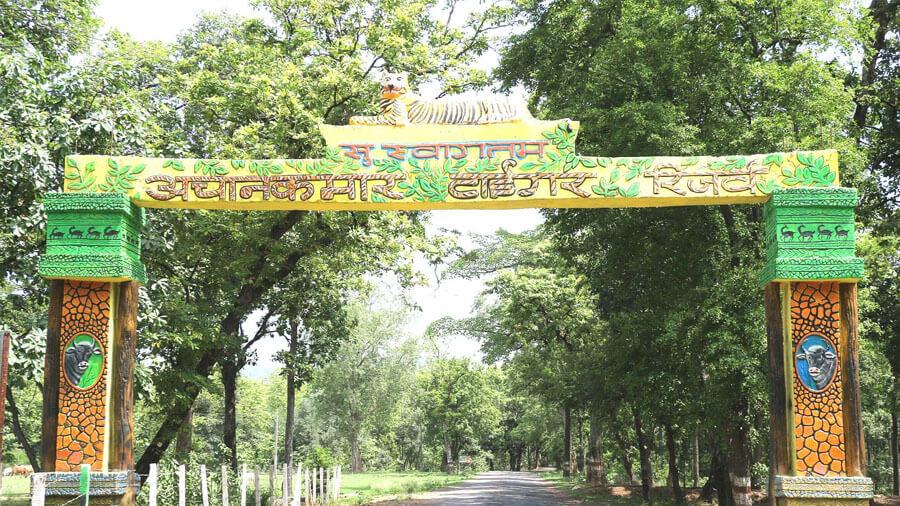
Context: Young male tiger found dead due to territorial infighting inside the Achanakmar tiger reserve
About the Reserve
- Location
- Situated in Chhattisgarh
- Part of Achanakmar-Amarkantak Biosphere Reserve
- Status and Importance
- One of three tiger reserves in Chhattisgarh
- Forms key tiger corridor network in Central India
- Connects Kanha and Bandhavgarh Tiger Reserves
- Supports tiger dispersal and genetic connectivity
- River System
- Maniyari River flows through the core area
- Acts as major ecological lifeline
- Tribal Communities
- Inhabited by Baiga (PVTG) community
- Also home to Gond and Yadav groups
- Vegetation Type: Dominated by tropical moist deciduous forests
- Flora
- Trees: Sal, teak, bamboo, haldu, bija, saja
- Contains 600+ medicinal plant species
- Fauna
- Mammals: Tiger, leopard, bison, chinkara, wild dog, hyena
- Deer: Sambar, chital
- Avifauna: 150+ bird species
Doomsday Clock

Context: Doomsday clock set to 85 seconds to midnight by Bulletin of the Atomic Scientists, January 2026.
What is the Doomsday Clock?
- Symbolic indicator of proximity to global catastrophe
- Midnight denotes human annihilation or “doomsday”
- Time reflects perceived global risk levels
Threat Parameters Considered
- Nuclear weapons risk
- Climate change threats
- Disruptive technological developments
Origin and Evolution
- Created in 1947
- Developed by Bulletin of the Atomic Scientists (BAS)
- Initially set at 7 minutes to midnight
- Reset 27 times since inception
- Latest Record: 85 seconds to midnight is closest ever recorded
Bulletin of the Atomic Scientists (BAS)
- Nonprofit organization focused on nuclear risk awareness
- Founded in September 1945
- Established by Atomic Scientists of Chicago
- Based at University of Chicago
- Founding Personalities
- Albert Einstein
- J. Robert Oppenheimer
- Eugene Rabinowitch
