Syllabus: Inclusive growth and issues arising from it.
Programme Overview and Achievements
- The Deendayal Antyodaya Yojana National Rural Livelihoods Mission mobilised around 10 crore households nationwide.
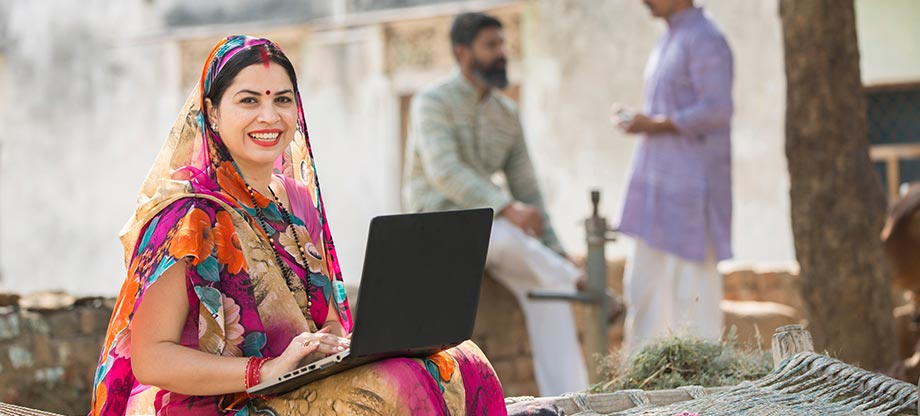
- Women were organised into 91 lakh Self-Help Groups, federated into 5.35 lakh Village Organisations.
- These groups further formed 33,558 Cluster-Level Federations at the sub-block level.
- SHGs mobilised over ₹11 lakh crore bank credit with Non-Performing Assets near 1.7%.
- The number of Lakhpati Didis has crossed two crore women entrepreneurs.
Political and Social Empowerment Outcomes
- Women’s collectives influenced Direct Benefit Transfer schemes across multiple States.
- Examples include Ladli Laxmi Yojana, Maiya Samman Yojana, and Ladki Bahin Yojana.
- Bihar transferred ₹10,000 each to over one crore women under Mukhyamantri Mahila Rozgar Yojana.
Next Phase Appraisal and Institutional Priorities
- The programme will be re-appraised for 2026–27 to 2030–31 financial cycle.
- Cluster-Level Federations are identified as the lynchpin of SHG institutional architecture.
- Concerns exist about CLFs becoming dependent on government functionaries.
- Successful community-owned models include Kudumbashree in Kerala and Jeevika in Bihar.
Financial Management and Accountability
- Around ₹56.69 lakh crore provided as capitalisation support to community institutions.
- Idle funds risk misuse, requiring social audits and statutory audits of CLFs.
- CLFs should design flexible loan products, avoiding uniform interest and repayment structures.
Credit Expansion and Individual Financial Inclusion
- SHG members seek higher individual loans as enterprises stabilise and scale-up.
- Lack of individual credit history limits access to formal banking.
- Generating CIBIL scores for SHG members is identified as a priority.
- CLFs should support bank linkages and loan repayments to build lender confidence.
Innovative Financing and Institutional Convergence
- The programme must explore equity, venture capital, and blended finance models.
- Partnerships with SIDBI, NBFCs, and neo-banks are encouraged.
- Annual Livelihood Action Plans should use Village Prosperity and Resilience Plan data.
- Proposal for a NITI Aayog Convergence Cell to institutionalise inter-departmental coordination.
Marketing and Professional Support Systems
- A dedicated national marketing vertical is proposed for SHG products.
- Focus areas include branding, packaging, pricing, quality, and logistics.
- Select CLFs can serve as regional logistics hubs for specific products.
- Deployment of sectoral professionals is needed to guide community organisations sustainably.