

Conceptual Shift: Molecules to Electrons
- Global industry is transitioning from fuel-based molecules to electricity-driven electrons for competitiveness.
- Electrification enables automation, process control, and easier decarbonisation across manufacturing systems.
- Electric motors convert over 90% input energy into work, far exceeding internal combustion efficiency.
Comparative Global Position
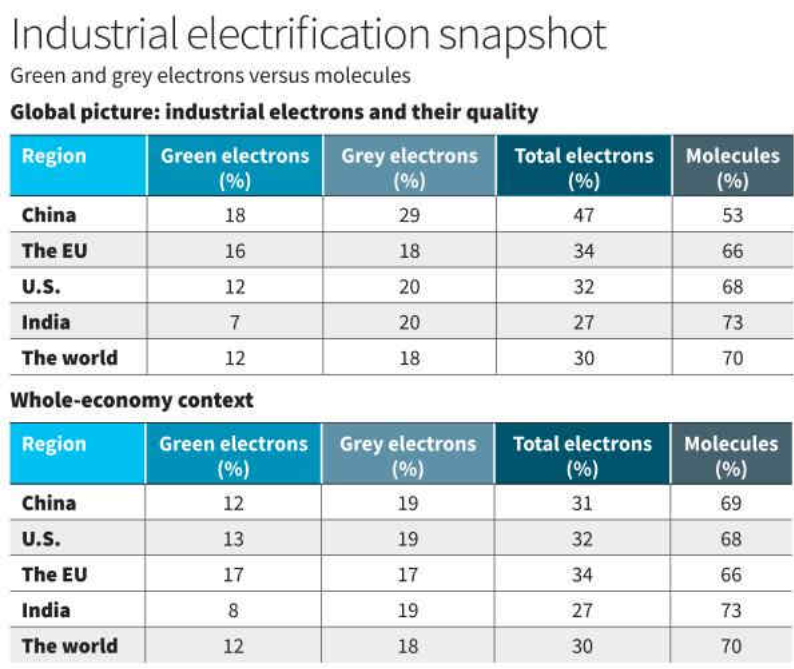
- In 2024, nearly half of China’s industrial energy came from electricity.
- India’s share remains near one-quarter, affecting export competitiveness and energy security.
- China leads in both quantity and quality of green electrons across industrial sectors.
- Economy-wide electrification: China 31%, United States 32%, European Union 34%.
China’s Industrial Electrification Strategy
- Massive investments in generation, ultra-high-voltage transmission, grid storage, and substations since 2010.
- Electric-arc-furnace steel output increased from 44 million tonnes in 2010 to 106 million tonnes in 2024.
- Waste-heat recovery in cement contributes 30–35 kWh per tonne, improving energy efficiency.
- Policy supports scrap recycling and preferential tariffs to expand electric steel production.
India’s Starting Conditions and Gaps
- India doubled grid capacity in a decade and leads global solar additions.
- Green electrons constitute only 7–8% of final energy use in industry.
- Key barriers include legacy on-site combustion, uneven power reliability, and limited process electrification policies.
Sectoral Roadmap for India
- Steel sector: Around 30% production uses electric-arc furnaces, compared to 70% in the U.S.
- Improved scrap collection, renewable-linked EAF incentives, and CBAM readiness are necessary.
- Cement sector: Support electrified kilns, waste-heat recovery, and CCUS pilot hubs.
- MSMEs: Promote electric boilers, induction furnaces, and pooled renewable power procurement.
Strategic Importance Beyond Climate
- Export competitiveness improves as buyers demand low-carbon manufacturing supply chains.
- Energy security strengthens by reducing dependence on imported oil and gas.
- Industrial sovereignty increases through location decisions based on skills, not fuel availability.
Policy Direction
- Focus on megawatt-hours flowing into factories, not only renewable generation capacity.
- Propose a national mission on industrial electrification and targeted MSME finance support.
