National Human Rights Commission (NHRC)
About
- Statutory body established under Protection of Human Rights Act, 1993
- Protects life, liberty, equality, and human dignity
- Headquarters
- Located in New Delhi
- Can establish regional offices across India
- Composition
- Chairperson: Former Chief Justice or Supreme Court Judge
- One former Supreme Court Judge
- One former High Court Chief Justice
- Three human rights experts, including one mandatory woman member
- Ex-Officio Members
- Chairpersons of National Commission for Minorities (NCM), Women (NCW), Backward Classes (NCBC), Protection of Child Rights (NCPCR).
- Chief Commissioner for Persons with Disabilities
- Appointment Authority
- Appointed by President of India
- Based on high-level selection committee recommendation
- Selection Committee
- Chaired by Prime Minister of India
- Includes Home Minister and Lok Sabha Speaker
- Includes Deputy Chairman of Rajya Sabha
- Includes Leaders of Opposition in both Houses
- Tenure and Age Limit
- Term of three years or age seventy
- Reappointment permitted under amended provisions
- Removal Grounds
- Removed by President after Supreme Court inquiry
- Includes misbehaviour, insolvency, conviction, or paid employment
- Powers
- Enjoys civil court powers for evidence and witnesses
- Can summon, examine, and demand official documents
- Can approach Supreme Court and High Courts
- Functions
- Inquires into human rights violations by public authorities
- Visits prisons and detention centres for rights assessment
- Reviews constitutional and legal safeguards
- Promotes awareness through education and outreach programs
- Supports non-governmental organisations in human rights work
- Submits annual reports to Parliament and State Legislatures
2019 Amendment Highlights
- Chairperson eligibility expanded to Supreme Court judges
- Members increased to three, including mandatory woman member
- Added NCBC, NCPCR, and PwD Commissioner as deemed members
- Reduced tenure to three years with reappointment option
- Placed Union Territories under State Commissions, except Delhi
Armed Forces Jurisdiction
- Can seek reports and recommend actions only
- Central Government must inform action within three months
Solid Fuel Ducted Ramjet (SFDR) Technology
Recent Test and Strategic Significance
- DRDO successfully demonstrated SFDR flight technology from Integrated Test Range, Chandipur, Odisha.
- Achievement places India among an elite group of nations possessing SFDR capability.
- Technology strengthens development of long-range air-to-air missiles with enhanced combat effectiveness.
- Provides a decisive tactical edge against adversaries in aerial warfare.
Technology Overview
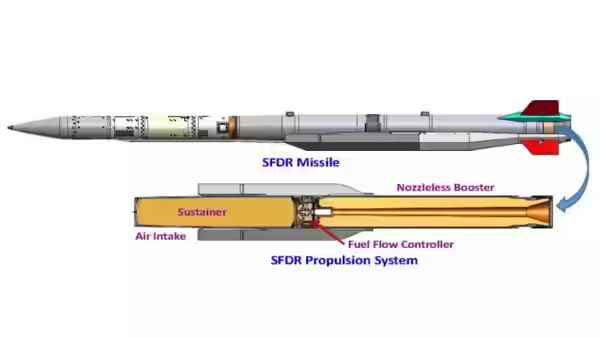
- Solid Fuel Ducted Ramjet (SFDR) is an advanced missile propulsion system.
- Operates on the principle of a ramjet engine, classified as an air-breathing engine.
- Uses the missile’s forward motion to compress incoming air, eliminating the need for a rotating compressor.
- Solid propellant burns using oxygen drawn from the atmosphere during flight.
- Enables missiles to achieve supersonic speeds and intercept aerial threats at extended ranges.
Development and Collaboration
- Developed by Defense Research and Development Laboratory, Hyderabad.
- Supported by Research Centre Imarat, Hyderabad, and High Energy Materials Research Laboratory, Pune.
- Programme executed under the broader DRDO missile technology framework.
- Technology developed in collaboration between India and Russia.
Operational Advantages
- Ensures sustained high-speed propulsion throughout the missile’s flight phase.
- Improves energy efficiency and terminal-phase manoeuvrability of air-to-air missiles.
- Enhances long-range interception capability against fast-moving aerial targets.
- Strengthens India’s position in advanced missile propulsion and aerospace innovation.
Strategic Implications
- Supports indigenous defence manufacturing and Aatmanirbhar Bharat objectives.
- Reduces dependence on foreign missile propulsion technologies.
- Reinforces India’s role as a high-technology military power in the regional security architecture.
Social Profile of Urban Waste-Pickers under NAMASTE Scheme
Context and Policy Framework
- Union Government released first national enumeration data on urban waste-pickers in Parliament.
- Data presented by Ministry of Social Justice and Empowerment under the NAMASTE scheme.
- Scheme aims to formally recognise workers and provide protective equipment through urban local bodies.
- Core objective is eradicating deaths from hazardous sewer and septic tank cleaning.
Coverage and Enumeration Status
- A total of 1.52 lakh waste-pickers profiled and validated across 35 States and Union Territories.
- Data updated till January 23, based on verification by urban local bodies.
- Enumeration recently expanded to include waste-pickers alongside sewer and septic tank workers.
Social Category Composition
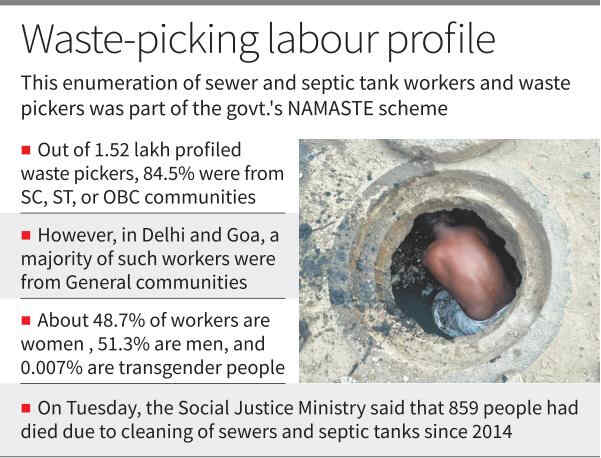
- 84.5% waste-pickers belong to SC, ST, and OBC communities at the national level.
- 60.3% from SC communities, accounting for 92,089 workers.
- 13.7% from OBC communities, numbering 20,954 workers.
- 10.5% from ST communities, totalling 10.5% of validated workers.
- 10.7% from General category, amounting to 16,329 workers.
- An additional 7,402 workers classified under the “Other” category.
Gender Profile of Workers
- 48.7% women, representing 74,427 workers in the validated dataset.
- 51.3% men, numbering 78,374 workers across urban areas.
- 0.007% transgender workers, accounting for 12 individuals.
State-Level Variations
- Delhi and Goa show a General category majority among waste-pickers.
- In Delhi, 4,289 of over 6,500 workers belong to the General category.
- In Goa, 729 of 1,286 profiled workers fall under the General category.
- West Bengal reports 42.4% General category representation among validated workers.
Definition and Scope under NAMASTE
- Waste-pickers defined as informally engaged workers collecting recyclable solid waste for livelihood.
- Work includes recovery from streets, bins, processing, and disposal facilities.
- Materials sold to recyclers directly or through intermediaries.
Related Enumeration Data
- 89,000 sewer and septic tank workers enumerated under the same scheme.
- 95.8% of these workers are men, showing strong gender skew.
- 91.95% belong to SC, ST, and OBC communities, as per December 2024 data.
Ratna Companies
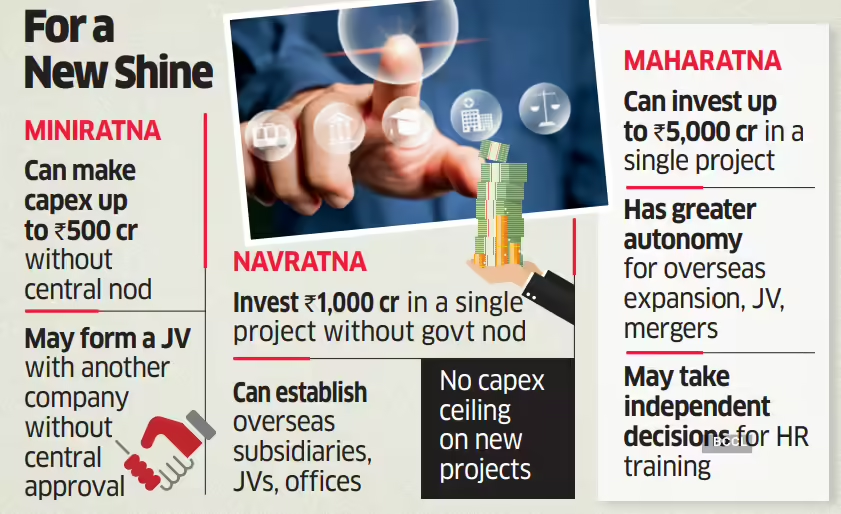
Maharatna
- Eligibility
- Must already hold Navratna status
- Average ₹2,500 crore net profit for three consecutive years
- Or average ₹10,000 crore net worth for three consecutive years
- Or average ₹20,000 crore annual turnover for three consecutive years
- Benefits / Autonomy
- Can invest up to ₹5,000 crore without government approval
- Can invest up to 15 percent of net worth per project
- Allowed joint ventures, mergers, and overseas investments
- Enjoys maximum financial and managerial autonomy
- Nature
- Highest CPSE classification for globally competitive strategic enterprises
Navratna
- Eligibility
- Must be Miniratna Category I CPSE
- Score 60 out of 100 on financial performance parameters
- Must have minimum four independent directors
- Requires strong profitability and governance systems
- Benefits / Autonomy
- Can invest up to ₹1,000 crore or 15 percent net worth
- Permitted to form joint ventures and subsidiaries
- Receives moderate financial and operational autonomy
- Nature
- Mid-level classification for high-performing growth-oriented CPSEs
Miniratna
- Category I – Eligibility
- Profit-making for last three consecutive years
- Minimum ₹30 crore profit in any one year
- Must maintain positive net worth
- Category I – Benefits
- Can invest up to ₹500 crore or full net worth
- Greater operational and financial flexibility
- Category II – Eligibility
- Profit-making for last three consecutive years
- Must maintain positive net worth
- Category II – Benefits
- Can invest up to ₹300 crore per project
- Limited financial autonomy for expansion
Single-Unit Solar Energy Capture and Storage Device

Context: Indian scientists developed a single-unit solar device integrating energy harvesting and storage systems.
What is it?
- Photo-rechargeable supercapacitor combining solar harvesting and electrical storage
- Eliminates need for separate solar cells and batteries
Developed By
- Centre for Nano and Soft Matter Sciences, Bengaluru
- Functions under Department of Science and Technology, Ministry of Science and Technology
Primary Objectives
- Develop efficient, low-cost, and eco-friendly energy storage systems
- Support portable, wearable, and off-grid energy applications
- Reduce system complexity and fossil fuel dependence
Working Mechanism
- Uses nickel–cobalt oxide nanowires on nickel foam
- Fabricated through in-situ hydrothermal growth process
- Forms porous three-dimensional conductive network
- Material absorbs sunlight and stores electrical charge simultaneously
Technical Advantage
- Removes external power-management electronics requirement
- Minimizes voltage and current mismatch losses
Key Features
- Delivers stable output voltage around 1.2 volts
- Retains eighty-eight percent capacitance after thousand cycles
- Operates under low indoor light and intense sunlight
- Designed as compact, lightweight, and autonomous energy unit
- Suitable for remote and energy-poor regions
Significance
- Supports clean, renewable, and sustainable energy transition
- Enables miniaturised and self-powered electronic devices
SBI ‘CHAKRA’ Centre of Excellence
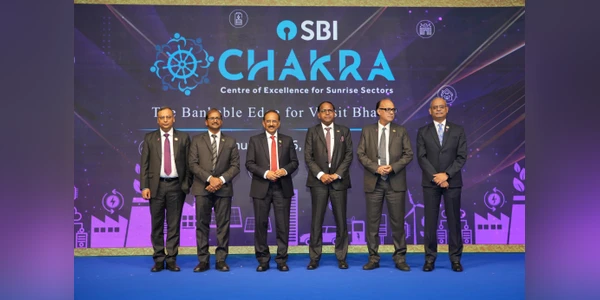
Context: State Bank of India launched CHAKRA Centre of Excellence to strengthen financing for eight sunrise sectors.
What is CHAKRA?
- Knowledge-led institutional platform for financing capital-intensive sunrise industries
- Combines sector expertise, risk assessment, and innovative financing models
Core Objectives
- Builds institutional expertise in emerging technology-led sectors
- Improves domestic and international debt capital flow
- Develops policy-aligned innovative financing structures
Focus Sectors (Eight)
- Renewable Energy
- Advanced Cell Chemistry and Battery Storage
- Electric Mobility
- Green Hydrogen
- Semiconductors
- Decarbonisation Technologies
- Smart Infrastructure
- Data Centre Infrastructure
Knowledge Framework
- Publishes white papers and sectoral research reports
- Hosts industry roundtables for investors and policymakers
Financing Capability
- Uses advanced risk assessment frameworks
- Designs tailor-made financing for evolving business models
Ecosystem Engagement
- Collaborates with DFIs, multilateral agencies, NBFCs, banks, academia
- Engages start-ups and policy think tanks
Institutional Base
- Extends SBI’s existing Centre of Excellence for MSMEs
Significance
- Supports sectors attracting ₹100 lakh crore capital expenditure by 2030
- Strengthens India’s climate finance and green transition architecture
Pennaiyar River
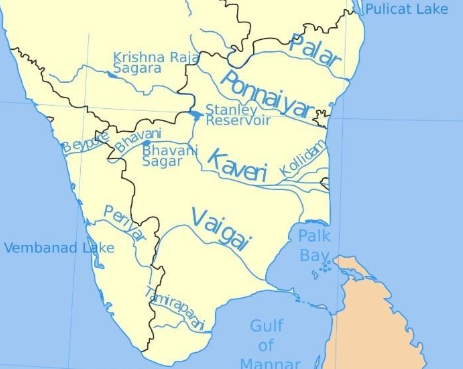
Context: The Supreme Court directed constitution of an Inter-State River Water Disputes Tribunal for the Pennaiyar dispute between Tamil Nadu and Karnataka.
What is Pennaiyar River?
- Major east-flowing inter-state river of southern India
- Also called Thenpennai / Ponnaiyar (Tamil)
- Called Dakshina Pinakini (Kannada)
Source / Origin
- Originates in Nandi Hills, Chikkaballapura district, Karnataka
- Part of the Eastern Ghats system
Riparian States
- Karnataka – Upper riparian state
- Tamil Nadu – Lower riparian state
Major Tributaries
- Markandeya River
- Varaha Nadhi
- Pambar River
- Pampar River
- Markandeya River central to current dispute
Length and Nature
- Length approximately 497 kilometres
- Second longest river in Tamil Nadu after Cauvery
- Seasonal river fed by Southwest and Northeast monsoons
Mouth / Drainage
- Empties into the Bay of Bengal
- Forms a delta near Cuddalore, Tamil Nadu
Major Dams
- Krishnagiri Dam
- Kelavarapalli Dam
- Sathanur Dam – largest, about 7.3 TMC capacity
Irrigation Coverage
- Karnataka districts: Chikkaballapura, Kolar, Bengaluru Rural, Bengaluru Urban
- Tamil Nadu districts: Krishnagiri, Dharmapuri, Tiruvannamalai, Villupuram, Cuddalore
Environmental Issues
- Affected by industrial pollution from Bengaluru–Hosur belt
- Faces sand mining and shrinking perennial flow
Cultural Significance
- Mentioned in Sangam literature and Tevaram hymns
- Hosts ancient temples along riverbanks
Aluminium Phosphide (Celphos)
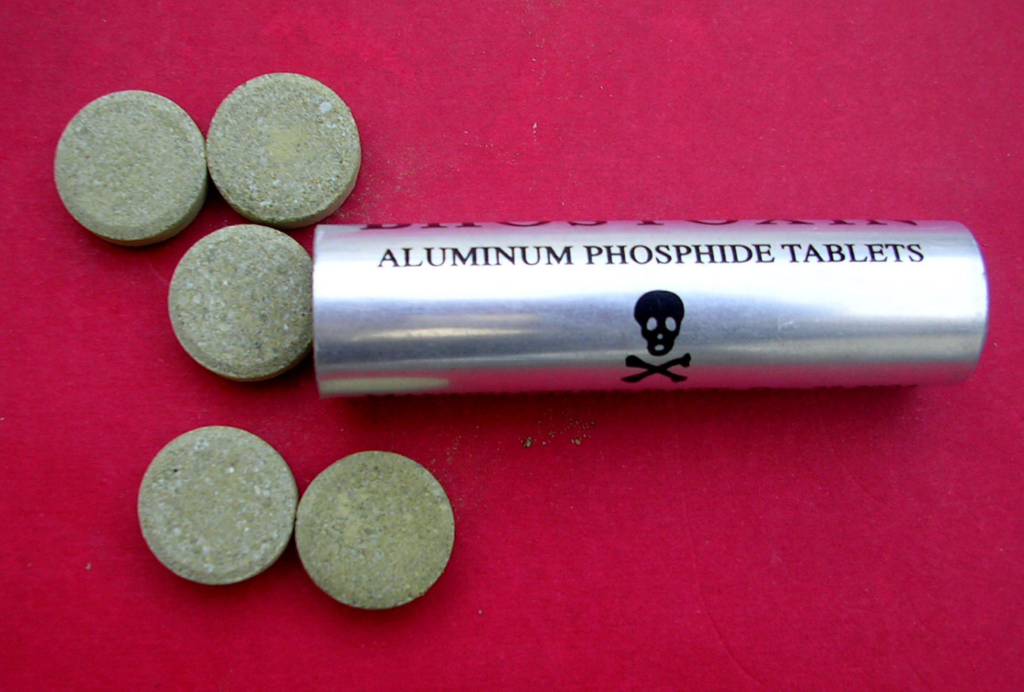
Context: Doctors at PGIMER reported a breakthrough using intravenous lipid emulsion therapy for aluminium phosphide poisoning.
What is Aluminium Phosphide?
- Commonly known as Celphos
- Highly toxic chemical pesticide and fumigant
Physical Characteristics
- Yellow or dark grey crystalline solid
- Emits garlic-like odour
Chemical Behavior
- Reacts with moisture or stomach acid
- Releases phosphine gas (PH₃)
Toxic Agent
- Phosphine gas is highly toxic and flammable
Mechanism of Toxicity
- Causes cellular hypoxia by mitochondrial damage
- Inhibits cytochrome C oxidase enzyme
- Generates reactive hydroxyl free radicals
Public Health Impact
- Major poisoning concern in Punjab, Haryana, and Uttar Pradesh
- Common in agricultural regions
Primary Uses
- Used as grain storage fumigant in agriculture
- Dispersed as pellets producing phosphine gas
Industrial Use
- Used in semiconductor manufacturing
- Applied in light-emitting diode production
SAKSHAM 2026
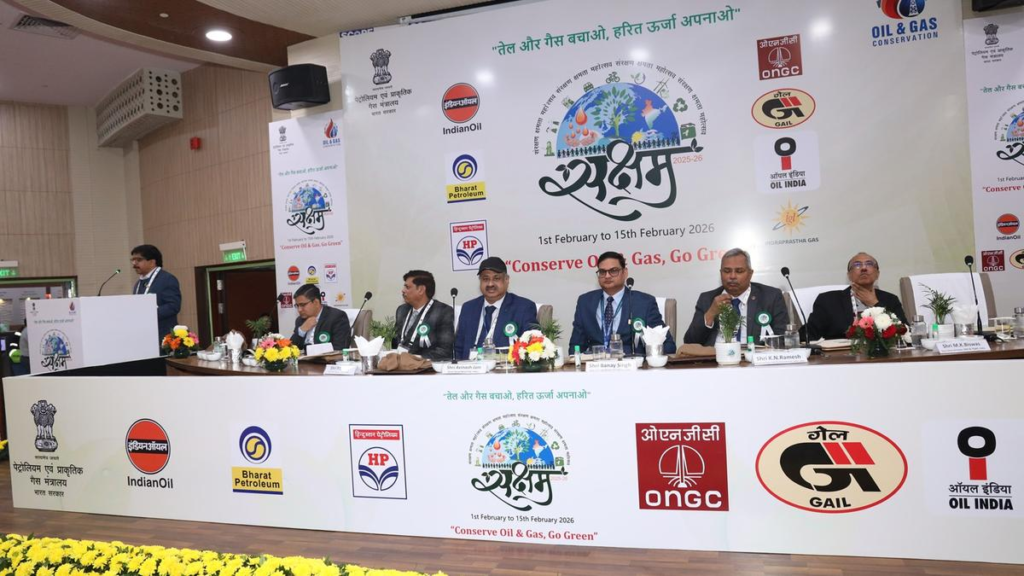
Context: The oil industry inaugurated SAKSHAM 2026 to promote national resource conservation awareness.
What is SAKSHAM?
- SAKSHAM stands for Samrakshan Kshamatha Mahotsav.
- Annual fuel conservation awareness campaign.
- Initiated by Ministry of Petroleum and Natural Gas, Government of India.
- Implemented by Oil and Gas Public Sector Enterprises (PSUs).
Core Objective
- Promote fuel conservation and sustainable energy practices.
- Encourage green and energy-efficient behaviour.
SAKSHAM 2026 Timeline
- Duration: 2 February to 16 February 2026.
- Campaign Length: Fortnight-long nationwide programme.
Theme 2026
- “Conserve Oil and Gas, Go Green”.
- Hindi tagline: “Tel aur Gas Bachao, Harshit Urja Apnao”.
Target Groups
- School students and youth.
- LPG users and fleet operators.
- Farmers and industry professionals.
Fuego Volcano
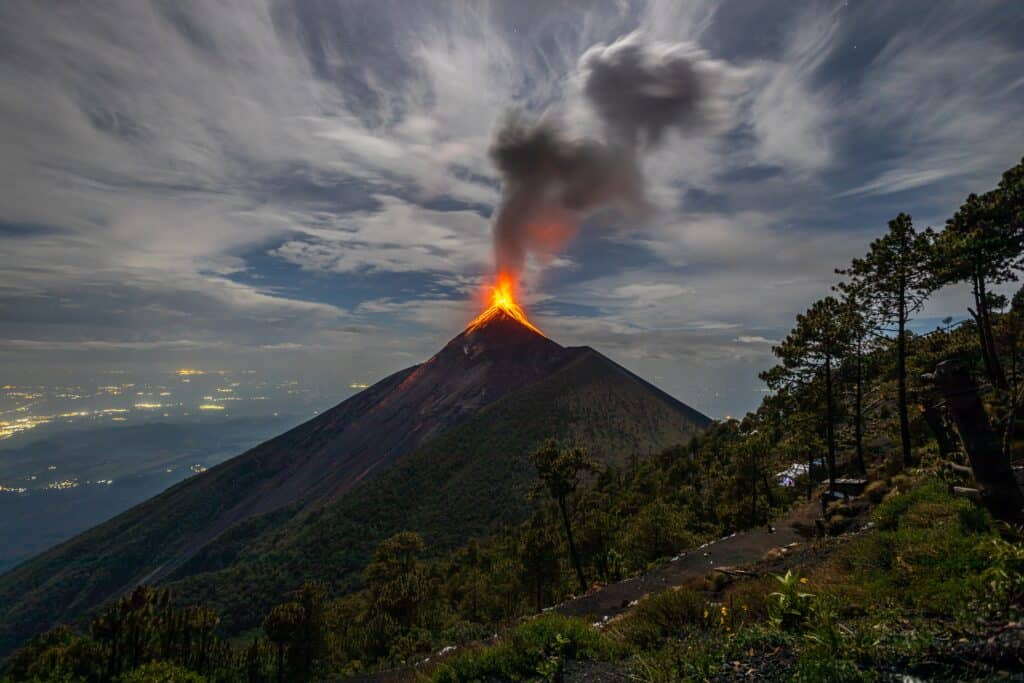
Context: Guatemala’s Volcán de Fuego produced a recent explosive eruption, drawing regional attention.
What is Fuego Volcano?
- Active stratovolcano located in Guatemala, Central America.
- Name means “Volcano of Fire” in Spanish.
- Part of the Central American Volcanic Arc.
- Lies along the Pacific Ring of Fire seismic belt.
Location & Physical Features
- Overlooks Antigua, Guatemala’s former capital city.
- Located between Acatenango and Agua volcanoes.
- Elevation: Approximately 3,763 metres above sea level.
- Type: Basaltic composite (stratovolcano).
Volcanic Activity
- Most active volcano in Central America historically.
- Over 60 eruptions since 1524.
- Frequent ashfall, lava flows, pyroclastic flows, and lahars.
Stratovolcano
- Tall, steep, cone-shaped volcanic structure.
- Forms mainly at tectonic subduction zones.
- Built from alternating lava and pyroclastic layers.
- Produces explosive eruptions due to viscous magma.
- Also called composite volcanoes.
Karimpuzha Wildlife Sanctuary
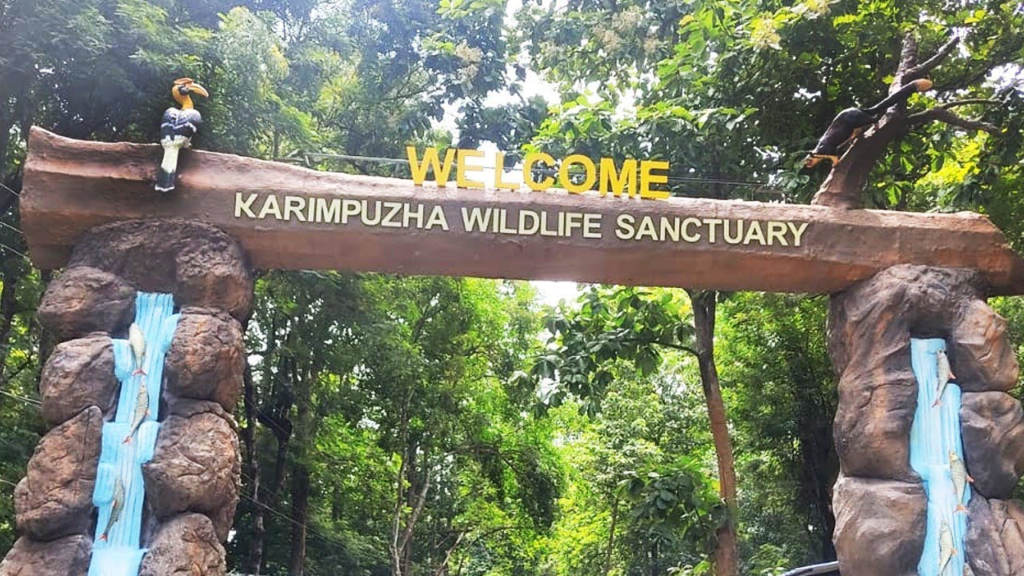
Context: A recent faunal survey expanded biodiversity records of Kerala’s youngest protected sanctuary.
Location
- Located in Malappuram district, Kerala.
- Situated on western slopes of the Nilgiri Hills.
- Part of the Nilgiri Biosphere Reserve (NBR).
- Included within the Nilambur Elephant Reserve (ER).
- Borders Mukurthi National Park (Tamil Nadu) to the east.
- Borders Silent Valley National Park (Kerala) to the south.
Hydrology
- Named after Karimpuzha River, tributary of Chaliyar River.
Topography
- Elevation ranges from 40 metres to 2,550 metres.
- Sharp altitudinal gradient drives high habitat diversity.
Tribal Community
- Inhabited by Cholanaikans tribe, known as “Cave Men of Kerala”.
- Classified as Particularly Vulnerable Tribal Group (PVTG).
- Population approximately 217 individuals.
Vegetation
- Only sanctuary in Kerala with all seven forest types.
- Includes evergreen, semi-evergreen, moist deciduous forests.
- Features montane wet temperate forests and grasslands.
Flora
- Dominant species include teak, rosewood, bamboo, endemic orchids.
- Supports rich medicinal plant diversity.
Fauna
- Hosts Nilgiri tahr and lion-tailed macaque.
- Supports tigers, leopards, elephants, sloth bears, gaur.
- Records over 150 bird species.
- Shelters Malabar mahseer and endangered freshwater fish.