

Rafale-M Jets
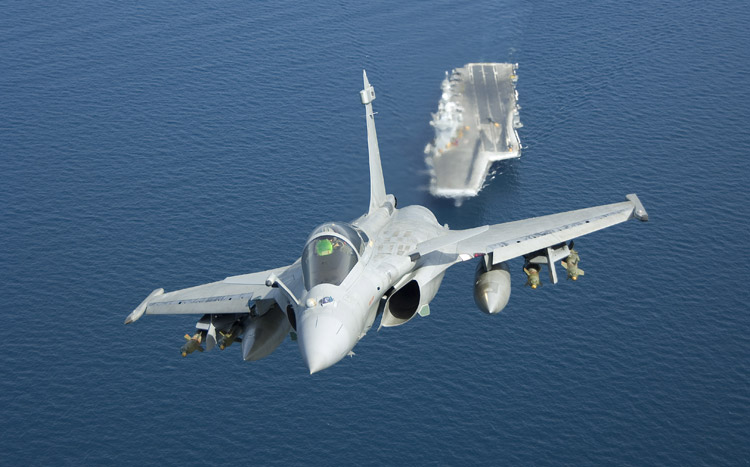
Context: India signed deal with France to procure 26 Rafale-M naval fighter jets.
What is Rafale-M?
- Carrier-borne variant of Rafale fighter jet.
- 4.5-generation multirole naval aircraft.
- Developed by: Dassault Aviation, France.
- Operational Role
- Air superiority missions.
- Deep strike operations.
- Reconnaissance roles.
- Nuclear deterrence missions.
- Anti-ship warfare.
- Carrier Compatibility
- Deployable on INS Vikrant (India’s indigenous aircraft carrier)
Key Features
- Weapons Suite
- Meteor air-to-air missiles.
- SCALP cruise missiles (~560 km).
- Exocet anti-ship missiles.
- Sensors & Avionics
- RBE2-AA AESA radar.
- Front Sector Optronics (FSO).
- SPECTRA electronic warfare suite.
- Carrier Adaptations
- Reinforced airframe.
- Corrosion resistance.
- Folding wings.
- Strengthened undercarriage.
- Performance
- Service ceiling → ~50,000 ft.
- Multirole sortie capability.
- Data Fusion
- Integrates multi-sensor inputs.
- Provides unified combat picture.
Regional Comparison
- China
- J-15 “Flying Shark” → Carrier fighter.
- J-11 → Air superiority fighter.
- Pakistan
- No aircraft carrier capability.
- Operates JF-17, F-16 (Air Force).
Motion of Thanks
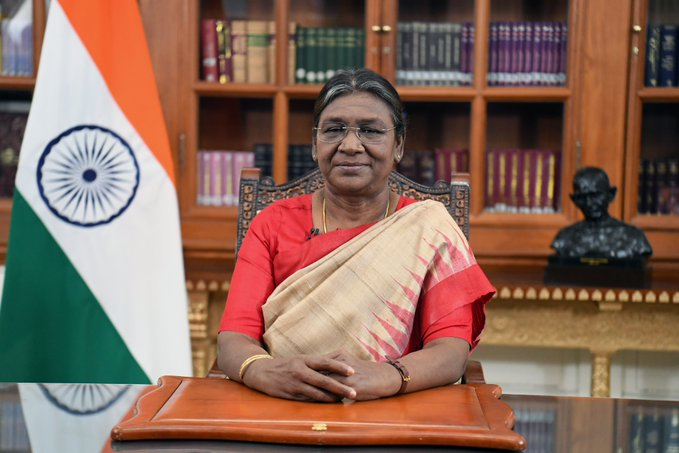
Context: Motion of Thanks discussed following President’s Address in Parliament.
What is Motion of Thanks?
- Parliamentary motion expressing gratitude to President’s Address.
- Constitutional Basis
- Article 87 → Special Address provision.
- President addresses both Houses.
- When Delivered?
- After every General Election.
- First session of each year.
- Nature of Address
- Government policy statement.
- Reviews past achievements.
- Outlines future programmes.
- Covers national and international issues.
- Drafting Authority
- Prepared by Union Government.
- Parliamentary Procedure
- Discussed in both Houses.
- Time allotted as per House rules.
- Called Special Address.
- Amendments
- Members may move amendments.
- Can highlight omissions.
- If passed → Motion adopted in amended form.
- Comparative Reference: Similar to “Speech from the Throne” (UK).
Appointment of State DGPs
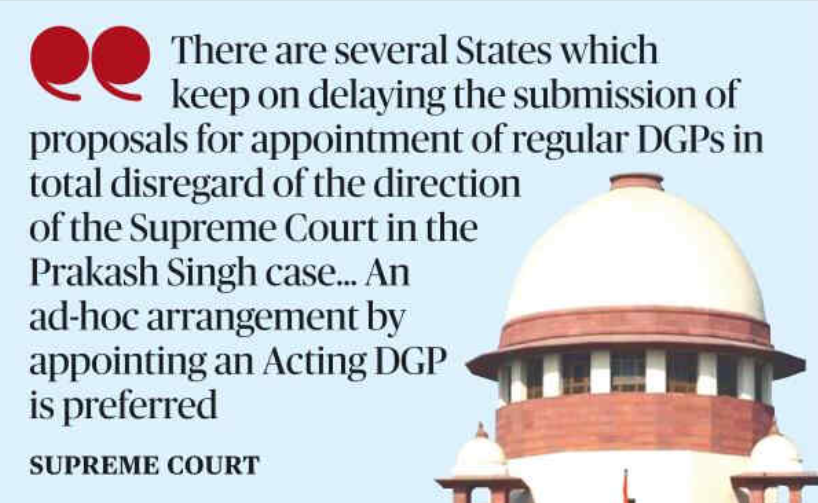
Context: Centre introduced Single Window System for appointment of State DGPs.
Who is DGP?
- Head of State Police Force.
- Senior-most IPS officer in State.
- Judicial Basis
- Guided by Prakash Singh vs Union of India (2006).
- Police reforms case.
- Regulatory Guidelines
- UPSC guidelines, 2009 govern selection.
Appointment Process
- State Proposal
- States send eligible officers list.
- Sent 6 months before DGP retirement.
- Eligibility Criteria
- Minimum 30 years service.
- Must hold DGP rank / equivalent.
- ≥ 6 months service remaining.
- UPSC Empanelment
- UPSC committee prepares panel.
- Based on merit and service record.
- Panel Size
- 3 officers (normal states).
- 2 officers (smaller states).
- Final Appointment
- State selects DGP from UPSC panel.
Key Objective
- Ensure merit-based selection.
- Insulate police from political interference.
India–GCC Free Trade Agreement (FTA)
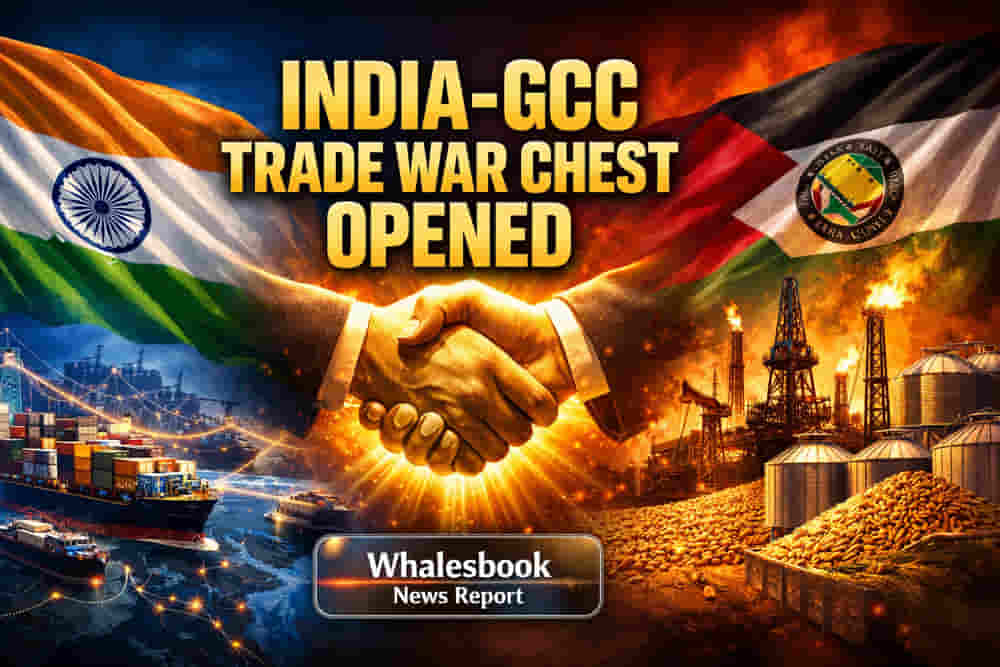
Context and Recent Development
- India and Gulf Cooperation Council signed Terms of Reference (ToR) for FTA negotiations.
- Signing marks the formal beginning of structured trade negotiations.
- Agreement aims to deepen economic integration between both sides.
Trade and Economic Objectives
- Agreement seeks freer flow of goods and services.
- Aims to create predictable and stable trade policies.
- Expected to boost bilateral investments and commercial partnerships.
Strategic and Developmental Gains
- Energy and Economic Security
- GCC can support India’s energy diversification efforts.
- Enhanced cooperation ensures long-term supply stability.
- Employment and Workforce Mobility
- Indian workforce in GCC expected to benefit significantly.
- Youth employment opportunities may expand further.
- Investment Expansion
- GCC nations have already committed substantial investments.
- FTA likely to accelerate capital inflows into India.
- Broader Bilateral Significance
- Agreement will strengthen India–GCC bilateral relations.
- Trade partnership expected to reach greater strategic depth.
Gulf Cooperation Council (GCC)
- GCC is a six-nation regional economic grouping.
- Members include Bahrain, Kuwait, Oman, Qatar, Saudi Arabia, UAE.
- Collectively, GCC forms India’s largest merchandise trade partner.
- Trade volume exceeds India’s trade with EU and United States.
- Established: 1981
- Headquarters: Riyadh, Saudi Arabia
SabhaSaar Initiative
Context: Over 1.11 lakh Gram Panchayats adopted SabhaSaar by January 2026.
What is SabhaSaar?
- AI-enabled Gram Sabha meeting summarisation platform.
- Generates structured Minutes of Meetings (MoM).
- Launched: 14 August 2025
- Nodal Ministry: Ministry of Panchayati Raj.
- Technology Partner
- IndiaAI Mission.
- Under Ministry of Electronics & IT.
- Aim
- Digitise Gram Sabha documentation.
- Improve transparency and participation.
- Standardise local governance records.
Key Features
- AI Transcription
- Voice-to-text conversion.
- Captures decisions and action points.
- Multilingual Support
- Integrated with Bhashini.
- Supports 13 Indian languages.
- Data Governance
- Hosted on government infrastructure.
- DPDP Act compliant.
- Governance Analytics
- Tracks attendance and resolutions.
- Monitors follow-up actions.
Significance
- Reduces manual documentation workload.
- Strengthens grassroots governance.
- Enhances transparency and accountability.
- Supports Digital India initiatives.
Bharat Taxi
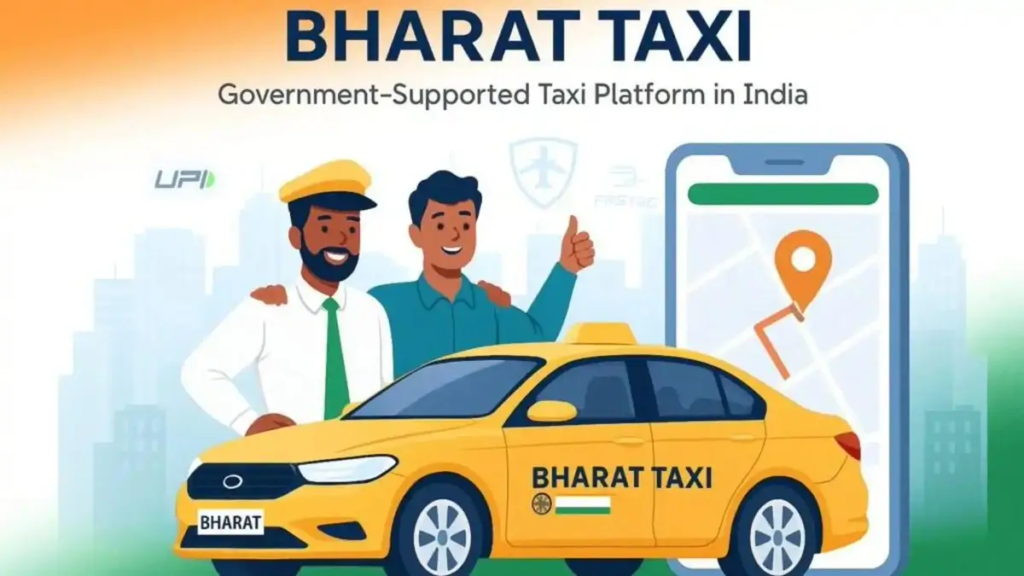
Context: India launched first cooperative taxi service Bharat Taxi in New Delhi.
What is Bharat Taxi?
- Cooperative, driver-owned ride-hailing platform.
- Indigenous alternative to aggregator models.
Organisations Involved
- Ministry of Cooperation.
- Sahkar Taxi Cooperative Limited.
Legal Status
- Registered under Multi-State Cooperative Societies Act, 2002.
- Established on 6 June 2025.
Aim
- Promote cooperative mobility model.
- Ensure fair driver income.
- Provide social security coverage.
Key Features
- Ownership Model
- Drivers are shareholders.
- “Sarathi hi Malik” principle.
- Pricing Structure
- Zero commission platform.
- No surge pricing.
- Social Security
- ₹5 lakh accident insurance.
- ₹5 lakh health insurance.
- Retirement and emergency support.
- Women Empowerment
- Sarathi Didi initiative.
- Bike Didi initiative.
- Digital Features
- Multilingual mobile app.
- Real-time ride tracking.
- Police integration.
- Operational Flexibility
- Non-exclusive platform access.
- Drivers may join other apps.
Military Exercises
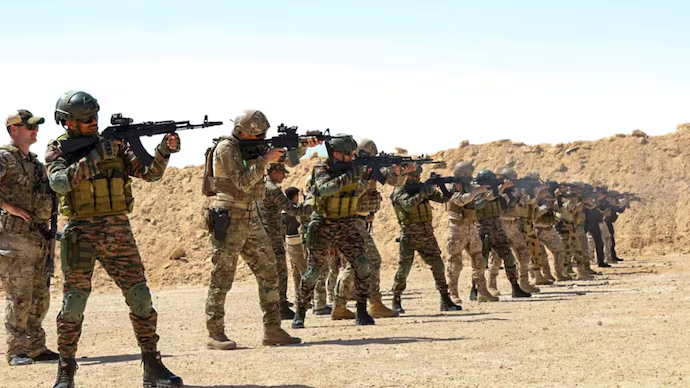
Context: India conducted Exercises Khanjar, Agni Pariksha.
Exercise Khanjar
- Location: Missamari, Assam (India).
- Participants
- Indian Army – Parachute Regiment (SF).
- Kyrgyzstan – ILBRIS Brigade.
- Nature
- Bilateral Special Forces exercise.
- 13th edition.
- Focus Areas
- Counter-terrorism operations.
- Urban warfare drills.
- Mountain warfare.
- Sniping, building intervention.
Exercise Agni Pariksha
- Location: Sigar, Arunachal Pradesh.
- Participants
- Indian Army.
- Indo-Tibetan Border Police (ITBP).
- Nature: Joint artillery familiarisation exercise.
- Aim
- Train non-artillery personnel.
- Improve firepower coordination.
- Key Feature: First joint artillery exposure drill.
