

Syllabus: Welfare schemes for vulnerable sections of the population by the Centre and States and the performance of these schemes.
Background and Context
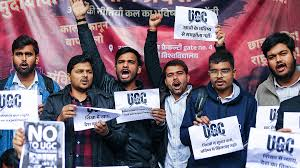
- UGC (Promotion of Equity in Higher Education Institutions) Regulations, 2026 triggered nationwide student protests.
- A section of general category students opposed the regulatory framework.
- On January 29, the Supreme Court stayed implementation of the regulations.
- Regulations respond to persistent caste, gender, and religion-based discrimination on campuses.
Rationale Behind the Regulations
- Discrimination in higher education remains widespread and structurally entrenched.
- Grievance redressal mechanisms have been slow, discretionary, and often symbolic.
- Marginalised students frequently suffer in silence without institutional support.
- Regulations aim to ensure faster, accountable equity enforcement.
Sources of Opposition
- Critics fear misuse by some individuals from disadvantaged sections.
- Concerns centre on vague definitions of discrimination.
- Composition of equity committees has also raised apprehensions.
- Procedural ambiguities in grievance redressal amplify distrust.
Speed vs Fairness Debate
- Regulations mandate immediate complaint acknowledgment and swift inquiries.
- Committees must follow rigid timelines for case disposal.
- Framework assumes speed strengthens justice delivery.
- Global evidence suggests hurried justice may undermine fairness.
Procedural Concerns
- Quick timelines lack clearly defined procedural safeguards.
- Institutions fear penalties without adequate appeal mechanisms.
- Faculty worry about reputational harm from premature findings.
- Procedural vagueness combined with speed fuels protests.
Institutional Enforcement Architecture
- Regulations do not clearly define offences or penalties.
- Investigations are delegated to internal equity committees.
- Punishments rely on existing institutional disciplinary frameworks.
- UGC penalises institutions, not individual offenders.
Incentive and Compliance Issues
- Universities fear derecognition or funding withdrawal.
- This encourages visible action over careful adjudication.
- Ambiguity-driven compliance may erode institutional trust.
Equity vs Accessibility Paradox
- Complaint systems favour institutionally fluent students.
- Rural and linguistic minorities face articulation barriers.
- Structural inequities may persist within grievance mechanisms.
Academic Environment Impact
- Faculty may dilute feedback due to regulatory fear.
- Difficult academic conversations may be avoided.
- Evaluation processes risk becoming overly sanitised.
Compliance Theatre Risk
- Institutions may prioritise documentation over real reform.
- Committees may multiply without structural change.
- Governance risks becoming performative rather than substantive.
Concluding Perspective
- Campus justice requires urgency balanced with procedural clarity.
- Sustainable equity demands patience, precision, and institutional trust.
