

Commission for Air Quality Management (CAQM)

Context: The CAQM in NCR has proposed a stricter particulate matter (PM) emission limit of 50 mg/Nm³ for industries across Delhi-NCR, replacing the earlier 80 mg/Nm³ standard notified in June 2022.
About CAQM
- Legal Status & Establishment
- CAQM is a statutory body.
- Established under the Commission for Air Quality Management in NCR and Adjoining Areas Act, 2021.
- Created to address severe air pollution in Delhi-NCR region.
- Directly accountable to Parliament of India.
- Jurisdiction & Mandate
- Covers National Capital Region (NCR) and adjoining areas.
- Aims at better coordination and research on air quality issues.
- Focuses on prevention and control of air pollution affecting NCT of Delhi.
- Coordinates with governments of Delhi, Punjab, Haryana, Rajasthan, and Uttar Pradesh.
- Key Powers
- Can restrict activities affecting air quality levels.
- Conducts investigations and research on environmental pollution.
- Issues binding directions for inspection and regulation.
- Prepares codes and guidelines to control air pollution sources.
- Its orders are legally binding on concerned authorities.
- Composition
- Chaired by an officer of rank Secretary or Chief Secretary.
- Chairperson tenure: Three years or until 70 years of age.
- Includes five ex-officio members from Delhi and adjoining states.
- Has three full-time technical members.
- Includes three members from non-government organisations.
- Technical members drawn from CPCB, ISRO, and NITI Aayog.
Special Intensive Revision (SIR)

Basic Understanding
- It is a large-scale revision of electoral rolls conducted by the Election Commission of India.
- It goes beyond routine summary revision of voter lists.
- Combines intensive house-to-house verification with roll updates.
- Usually undertaken before major Lok Sabha or Assembly elections.
Constitutional & Legal Basis
- Article 324(1) gives ECI control over conduct of elections.
- Article 326 guarantees adult suffrage (18+ years).
- Section 21(3), Representation of the People Act, 1950 permits special revision.
- Sections 16 and 19 of RPA, 1950 define voter eligibility criteria.
- Procedures governed by Registration of Electors Rules, 1960.
Objectives of SIR
- Ensure accuracy of electoral rolls by removing duplicates and deceased names.
- Promote inclusion of all eligible citizens, including first-time voters.
- Strengthen electoral legitimacy through “one person, one vote” principle.
- Reflect demographic changes due to migration and urbanisation.
- Reduce disputes before major elections through clean voter lists.
Key Features
- Involves house-to-house verification by Booth Level Officers (BLOs).
- Requires submission of supporting documents where necessary.
- Focuses on migrants, youth, and previously excluded electors.
- Uses digital tools like SMS alerts and online portals.
- Time-bound exercise conducted before important elections.
Process of Special Intensive Revision
- Notification issued specifying qualifying date.
- Enumeration forms distributed to voters by BLOs.
- Verification of documents for new or doubtful entries.
- Deletion of ineligible names and addition of eligible voters.
- Publication of draft electoral roll.
- Objections and claims invited and resolved.
- Final roll published and frozen for election use.
Tetanus and Adult Diphtheria (Td) Vaccine
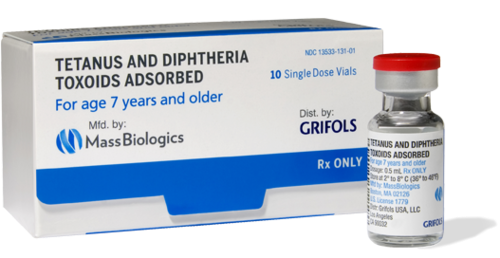
Context: Union Health Minister J.P. Nadda launched the indigenously manufactured Tetanus and Adult Diphtheria (Td) vaccine at the Central Research Institute (CRI), Kasauli, Himachal Pradesh on Saturday.
Overview
- The Td vaccine protects against tetanus and diphtheria.
- It is designed mainly for adolescents and adults.
- Aims to reduce morbidity and mortality from these infections.
Composition & Preparation
- Prepared using purified tetanus toxoid and diphtheria toxoid.
- Antigens are adsorbed onto aluminium phosphate (adjuvant).
- Thiomersal is used as a preservative.
- The vaccine is freeze-sensitive and heat-sensitive.
Key Facts about Tetanus
- Caused by bacterium Clostridium tetani.
- It is an acute infectious disease.
- Can occur at any age group.
- Characterised by painful muscle stiffness and spasms.
- Causes lockjaw, difficulty swallowing and breathing.
- High case-fatality rate even with intensive care.
Key Facts about Diphtheria
- Caused by Corynebacterium diphtheriae.
- Spread through respiratory droplets.
- Can cause breathing difficulty, heart failure and paralysis.
- It is a potentially life-threatening infection.
- South-East Asia reports significant global incidence.
National Commission for Scheduled Tribes (NCST)
Constitutional Status & Establishment
- The National Commission for Scheduled Tribes (NCST) is a constitutional body.
- Established under Article 338A of the Constitution.
- Created by the Constitution (89th Amendment) Act, 2003.
- Became functional in 2004.
- Formed after bifurcation of the earlier SC/ST Commission.
Historical Evolution
- 1978: Government created a multi-member commission for SCs and STs.
- 1992: 65th Constitutional Amendment granted it constitutional status.
- 2003–04: 89th Amendment separated it into:
- National Commission for Scheduled Castes
- National Commission for Scheduled Tribes (NCST)
Composition
- Consists of:
- Chairperson
- Vice-Chairperson
- Three Members
- All appointed by the President of India.
- Members generally have expertise in tribal administration and social justice.
Key Functions
- Monitors constitutional and legal safeguards for Scheduled Tribes.
- Inquires into complaints of rights violations and land alienation.
- Advises on socio-economic development programmes for STs.
- Submits annual and special reports to the President.
- Union and States are expected to consult NCST on major tribal policy matters.
Powers
- Possesses powers of a civil court while investigating cases.
- Can summon individuals and demand production of documents.
- Can receive evidence and examine witnesses under oath.
Salem Sago (Javvarisi)

Basic Overview
- Salem Sago (Javvarisi) is a starch-based food product.
- Made from tapioca roots (cassava).
- Wet starch is processed into small pearl-like granules.
- Widely consumed as a staple food in India.
Origin & Production Region
- Originates from Salem district, Tamil Nadu.
- Salem is popularly known as the “Land of Sago.”
- Over 80% of India’s sago production comes from this region.
- Nearby producing belts include Erode, Namakkal and Dharmapuri.
- Region benefits from high tapioca yield and favourable climate.
GI Tag Status
- Granted Geographical Indication (GI) tag in March 2023.
- GI registration obtained by SAGOSERVE.
- Enhances authenticity and market value of the product.
Key Characteristics
- Derived from tapioca roots containing 30–35% starch.
- Tapioca yield in Salem reaches 25–30 tonnes per hectare.
- Granule size ranges between 2–4.5 mm.
- Provides around 310 kcal per 100 grams.
- Approximately 1 kg sago from 5 kg tapioca tubers.
Uses & Significance
- Used in food, textile, paper and pharmaceutical industries.
- Also used in cosmetics, construction and alcohol industries.
- GI tag boosts export potential of Indian agri-products.
- Improves income of farmers and tribal cultivators.
