
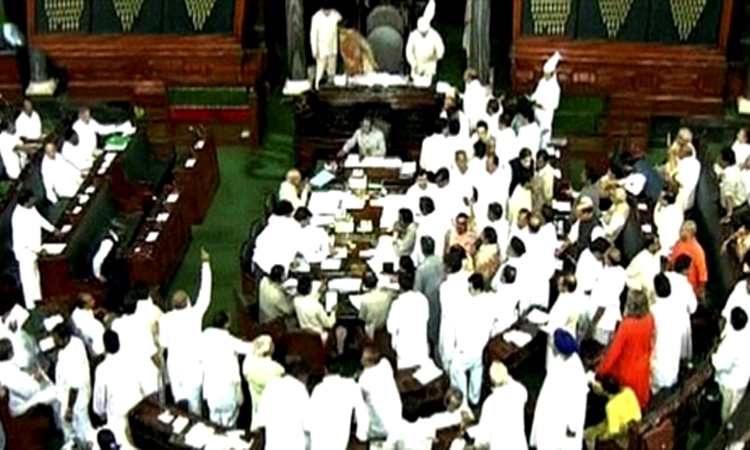
Constitutional Foundation
- Article 105 guarantees freedom of speech to Members of Parliament.
- This freedom is essential for fearless legislative debate and accountability.
- It is subject to the Constitution and Rules of Procedure of the Houses.
- However, rules cannot override or eclipse constitutional rights.
- The Supreme Court has repeatedly held that restrictions must not destroy the right itself.
- Parliamentary privileges are meant to ensure effective functioning of the Legislature, not executive comfort.
Scope and Limits of Freedom of Speech in Parliament
- Constitutional Restrictions
- Article 121 prohibits discussion on conduct of judges except during impeachment.
- Members cannot misuse privilege to violate constitutional boundaries.
- Procedural Restrictions under Rules
- Restrictions exist on sub judice matters.
- Personal allegations without prior notice are barred.
- Members cannot question the bona fides of fellow members.
- Defamatory or incriminatory allegations require advance intimation.
- Words that are unparliamentary, indecent, or undignified may be expunged under Rule 380.
- The Controversy Over Expunction of Speeches
- Expunction allows removal of only the offending words, not entire paragraphs.
- Arbitrary deletion of large portions may distort the meaning of speeches.
- If a speech becomes incoherent after expunction, the constitutional right is compromised.
- MPs have the right to have their remarks properly recorded in official proceedings.
- Parliamentary records are preserved for posterity and democratic memory.
- Emerging Concerns in Contemporary Context
- Increasing restrictions on Opposition leaders raise concerns about democratic space.
- Attempts to silence or disqualify critics threaten institutional balance.
- Parliament has no power to arbitrarily disqualify members beyond constitutional provisions.
- Weaponisation of procedural rules may erode democratic legitimacy.
- Breakdown of trust between government and Opposition weakens deliberative democracy.
Normative Democratic Principles
- Free, frank, and fearless speech enables Parliament to function effectively.
- Parliamentary democracy requires a healthy relationship between government and Opposition.
- Jawaharlal Nehru regularly attended Question Hour to ensure transparency. He listened to Opposition speeches to understand ground realities.
- As Ivor Jennings observed, the duty of the Opposition is to criticise. Democracy survives only when the majority governs and the minority critiques.
Way Forward
- Presiding officers must exercise expunction powers judiciously and proportionately.
- Rules should regulate decorum without diluting substantive debate.
- Parliament must reaffirm the primacy of Article 105 privileges.
- Government and Opposition must restore mutual respect and institutional trust.
- Constitutional morality should guide parliamentary practice.