

Human Papillomavirus (HPV)
Context:
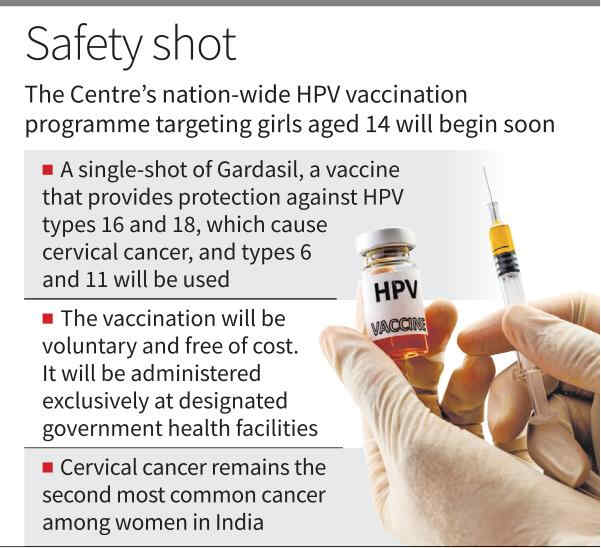
- The Union Health Ministry will launch a nation-wide Human Papillomavirus (HPV) vaccination programme targeting girls aged 14 years.
- The vaccination will be voluntary and free of cost, ensuring equitable access across all socio-economic groups.
- India will use Gardasil, a quadrivalent HPV vaccine, procured through partnership with Gavi, the Vaccine Alliance, to prevent cervical cancer.
- Gardasil quadrivalent vaccine protects against HPV types 16 and 18 (cause cervical cancer) and types 6 and 11.
About Human Papillomavirus (HPV)
- HPV is a group of more than 200 related viruses.
- More than 40 types spread through direct sexual contact.
- 2 types cause genital warts, while about a dozen types can cause certain cancers.
- More than 95% of cervical cancer cases are caused by HPV.
- Transmission
- HPV is the most common STI (Sexually Transmitted Infection) globally.
- Also spreads through skin-to-skin contact, not just sexual contact.
- Most infected people remain completely asymptomatic i.e. they carry and spread the virus without knowing it.
- In most cases, the body naturally clears the virus on its own.
- If the virus persists in the body for long, it can eventually lead to cancer.
- HPV Vaccine
- Administered as a series of shots.
- Prevents HPV infections from progressing to cancer or genital warts.
- Most effective when given between 9–26 years of age.
- Once a person is already infected, the vaccine becomes less effective.
- Not administered during pregnancy.
- Protects both men and women against HPV-related cancers.
Renaming States in India
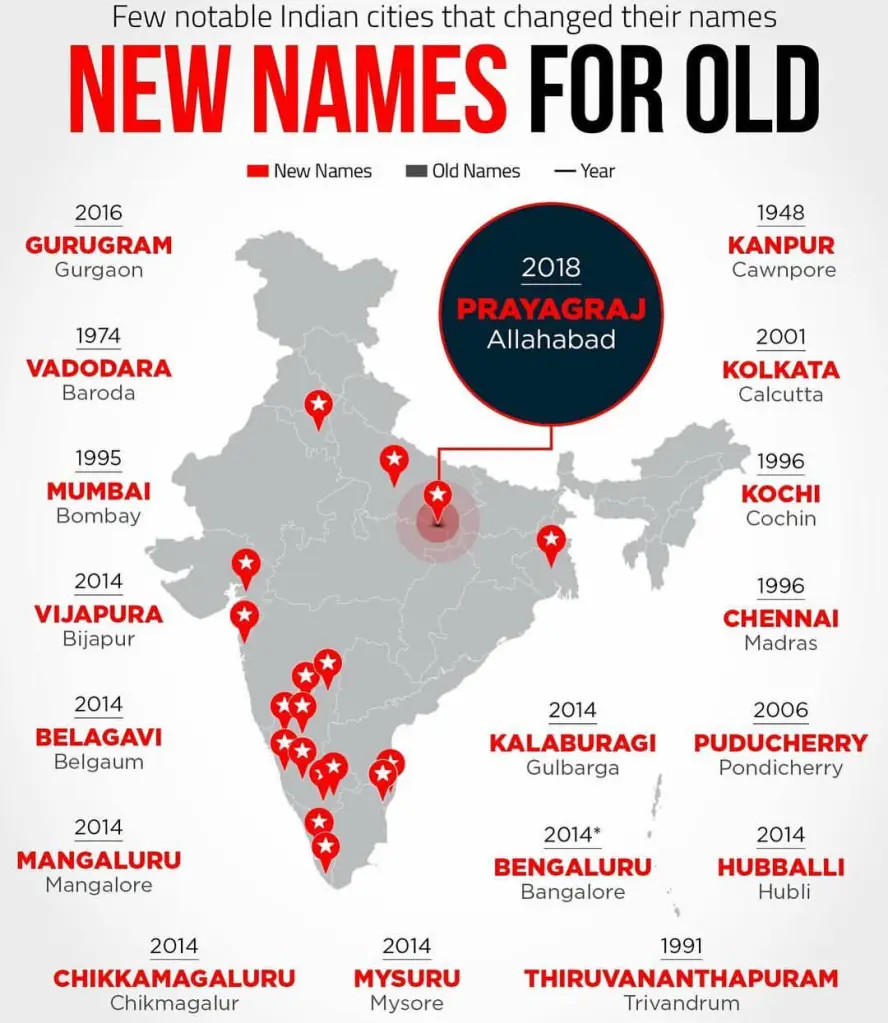
Context:
- The Union Cabinet approved the Kerala government’s proposal to change the State’s name from ‘Kerala’ to ‘Keralam’, the name used in Malayalam language.
- The President will refer the Kerala (Alteration of Name) Bill, 2026 to the Kerala Legislative Assembly for its views before introducing the legislation in Parliament.
Constitutional Basis
- Renaming a state in India is governed by Article 3 of the Constitution.
- Article 3 empowers Parliament to alter the name of any state by law.
- Initiation of the Process
- The process can be initiated by either Parliament or the State Legislature.
- A Bill must be introduced in Parliament on the recommendation of the President.
- The President then refers it to the State Legislature for their views.
- The Bill is passed in each House by a simple majority.
- Once the President gives his assent, the name change is recorded in the:
- First Schedule of the Constitution
- Fourth Schedule of the Constitution
Telecom Regulatory Authority of India (TRAI)
Context: TRAI recommended that the entire available radiowave spectrum should be auctioned, while proposing lower entry barriers for new players and a uniform 35% spectrum cap to safeguard competition in the telecom sector. Industry calculations estimate the spectrum could fetch nearly ₹81,000 crore at reserve price if all bands are sold.
Establishment of TRAI
- TRAI was established under the TRAI Act, 1997, passed by Parliament
- Primary mandate is to regulate telecom services in India, including tariff fixation and revision, a function that was earlier handled by the Central Government.
Scope of Regulation
- TRAI covers areas such as tariffs, quality of service, interconnection, spectrum management, and consumer protection in the telecom sector.
- It issues regulations, recommendations, and orders that guide telecom policy-making and market practices.
Composition of TRAI
- Consists of a Chairperson, a maximum of two full-time members, and two part-time members.
- All appointments are made by the Central Government.
- Members serve for three years or until the age of 65 years, whichever is earlier.
Government Control over TRAI
- TRAI is not a fully independent body and it operates under certain executive constraints.
- Under Section 25 of the TRAI Act, the Central Government can issue binding directions to TRAI.
- TRAI’s funding is provided by the Central Government.
- TRAI’s recommendations are advisory, not binding; however, the Government must consult TRAI for licensing of service providers
- TRAI can notify telecom service rates in the Official Gazette for services within and outside India
SIM Binding

What is SIM Binding?
- SIM binding is a security mechanism that permanently links a user’s messaging or authentication service to the physical SIM card used during registration.
- If the original SIM is not present in the device, the app stops working automatically.
- It essentially acts as a hardware token for identity verification.
Regulatory Framework
- Governed by the Department of Telecommunications (DoT).
- Introduced under the Telecommunication Cybersecurity Amendment Rules, 2025.
- Introduced a new concept called Telecommunication Identifier User Entity (TIUE) to regulate digital communications more securely.
How SIM Binding Works
- Every SIM card contains unique hardware-level identifiers:
- IMSI: International Mobile Subscriber Identity
- ICCID: Integrated Circuit Card Identifier
- Ki: Authentication key stored in SIM hardware
- When an app implements SIM binding, it continuously checks these identifiers.
- If a mismatch is detected between the registered and present SIM, the app automatically blocks access.
Why SIM Binding Rules Were Needed
- Fraudsters were using messaging apps without the original SIM, especially from outside India.
- Helps prevent impersonation, spoofing, OTP bypass attacks, and cross-border cyber fraud.
- Ensures a strong device–SIM–account linkage, making account misuse significantly harder.
- Strengthens national cybersecurity by reducing anonymity on messaging platforms.
Polar Satellite Launch Vehicle (PSLV)
Key Facts
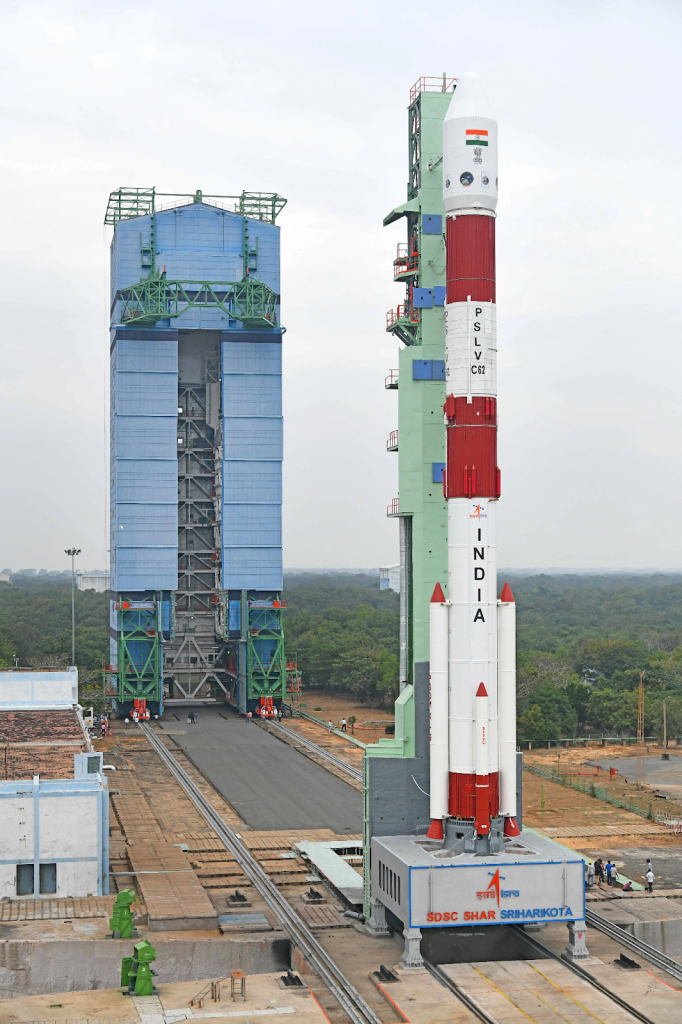
- PSLV is the third generation launch vehicle of India.
- It is the first Indian launch vehicle to be equipped with liquid stages.
- After its first successful launch in October 1994, it became India’s most reliable and versatile workhorse launch vehicle.
Structure of Four Stage Launch Vehicle
| Stage | Type |
| First Stage | Large solid rocket motor |
| Second Stage | Earth storable liquid stage |
| Third Stage | High performance solid rocket motor |
| Fourth Stage | Liquid stage with engines |
PSLV Variants
| Variant | Strap-on Motors | Payload to SSPO (600 km) |
| PSLV-CA | Nil | 1019 kg |
| PSLV-DL | Two | 1257 kg |
| PSLV-QL | Four | 1523 kg |
| PSLV-XL | Six | 1673 kg |
Green Shoe Option
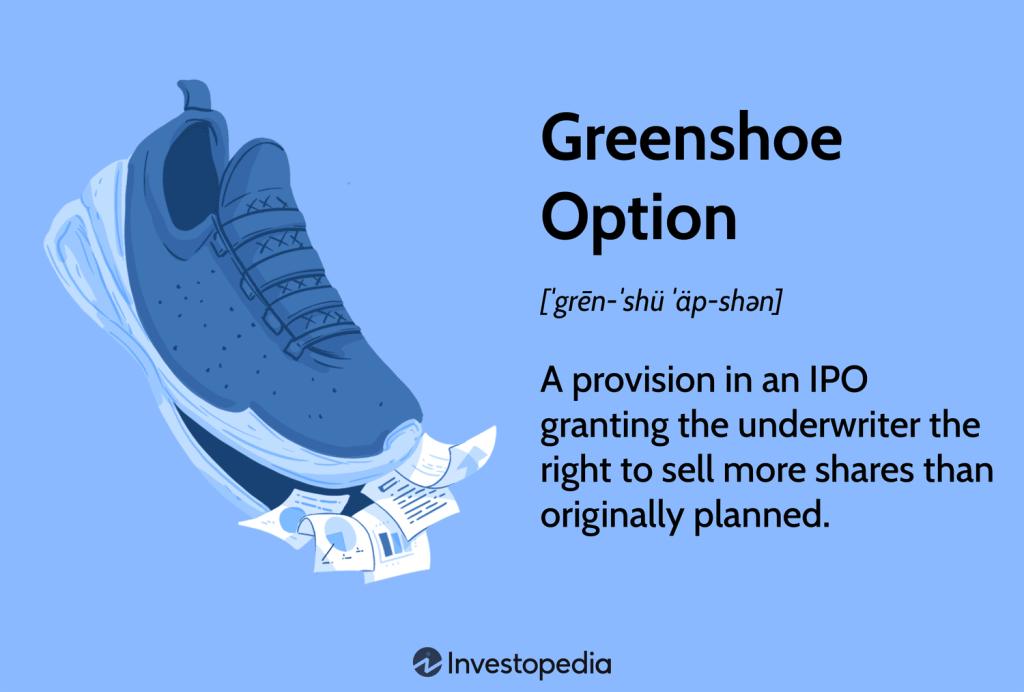
Context: Canara Bank plans to raise ₹5,000 crore through bonds to strengthen its capital base and support future growth plans. The issue comprises a base size of ₹2,000 crore with a green-shoe option (over-allotment facility) of up to ₹3,000 crore.
What is the Green Shoe Option?
- It is also known as the over-allotment option.
- It is a provision in an IPO or FPO that allows underwriters (merchant bankers) to sell additional shares beyond the original issue size in case of excess demand.
- It is essentially a price stabilisation mechanism designed to prevent excessive volatility in a newly listed security.
- Origin
- The term comes from the Green Shoe Manufacturing Company (now Stride Rite Corporation), which was the first company to include such an option in its 1919 public offering in the United States.
Key Features
- Underwriters can sell up to 15% more shares than originally planned.
- If the stock price rises above the issue price then underwriters exercise the option by allocating additional shares.
- If the stock price falls below the issue price then underwriters buy back shares from the open market to support the price.
- Managed by a Stabilising Agent (SA), usually the lead merchant banker or Book-Running Lead Manager (BRLM).
- A separate “Green Shoe Account” is maintained to hold the extra shares.
- Stabilisation Period
- Post-listing, the stabilising agent monitors market price for a defined period.
- The stabilisation period shall not exceed 30 calendar days from the date of allotment.
- Objectives
- Price stabilisation prevents excessive post-listing volatility.
- Investor confidence reduces risk of sharp price declines.
- Liquidity support ensures adequate liquidity in early trading days.
- Efficient price discovery facilitates fair valuation.
Regulatory Framework in India
- Governed by SEBI under the SEBI (Issue of Capital and Disclosure Requirements) Regulations, 2018, also called ICDR Regulations.
- Maximum over-allotment allowed is 15% of the issue size.
- The stabilising agent (SA) must enter into an agreement with the issuer and disclose option details in the prospectus.
- SA must maintain detailed records of market transactions, buybacks, and price movements during the stabilisation period.
Cassava
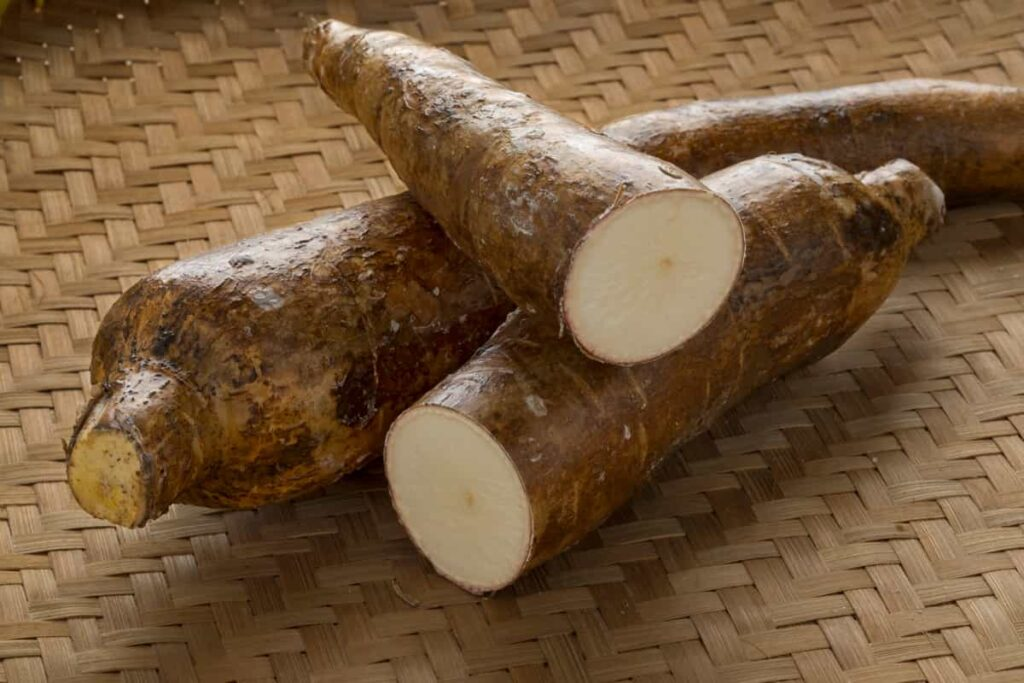
About Cassava
- Cassava is also known as Yuca or Manioc.
- It is a starchy root vegetable and the source of tapioca, a starch used in bakery products, paper, and adhesive industries
Origin and Cultivation
- Native to South America and widely cultivated in tropical regions across Africa, Asia, and Latin America.
- Known for its resilience to drought and poor soils, making it a reliable crop in challenging conditions.
- In India, cultivation is mostly confined to Kerala, Tamil Nadu, Andhra Pradesh, and North-Eastern States.
- Conventionally grown through stem cuttings.
- Brazil’s Kukurro tradition promotes genetic diversity by encouraging seed-based reproduction.
Uses
- Used in the production of bioethanol and biodegradable plastics.
- Its peels and leaves serve as animal fodder.
- Source of tapioca used in bakery, paper, and adhesive industries.
Health Benefits
- Supports gut health.
- Regulates blood sugar and controls appetite.
- Lowers the risk of type 2 diabetes.
