

Context
- The ongoing conflict in West Asia has pushed global oil prices sharply upward, with Brent crude reaching about $118 per barrel.
- Since mid-December 2025, when Brent crude was around $57.56, prices have surged by more than 100%, reflecting growing geopolitical tensions.
- Historically, geopolitical shocks trigger temporary price spikes followed by stabilisation, but current developments indicate a more prolonged period of uncertainty in global energy markets.
Geopolitics Reshaping Oil Markets
- Global oil markets are increasingly shaped by strategic rivalries, regional conflicts, and geopolitical risks, rather than purely by supply–demand dynamics.
- The current crisis has created real disruptions to supply chains, unlike earlier conflicts that rarely removed Gulf oil from the global market.
- For importing economies such as India, energy security now extends beyond access to oil and includes exposure to financial, logistical, and political risks affecting every shipment.
Strategic Chokepoints and Supply Chain Vulnerabilities
- Global oil trade remains heavily dependent on key maritime routes:
- Around 20% of global oil consumption passes through the Strait of Hormuz.
- Nearly 10% of seaborne crude moves through the Bab-el-Mandeb and Suez corridor.
- The Israel–Iran conflict has effectively sidelined about one-fifth of global supplies, even without formal production cuts.
- Geopolitical tensions also raise shipping insurance premiums, freight rates, and vessel shortages, with daily rates for supertankers reportedly doubling during periods of conflict.
- These disruptions increase the landed cost of imports and ripple through global supply chains.
Oil as a Strategic and Financial Instrument
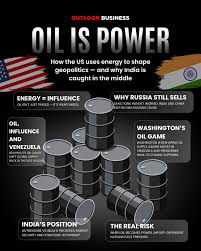
- Oil today functions not only as a commodity but also as a political and financial tool.
- The redirection of Russian crude exports after the Ukraine conflict illustrates how geopolitical events reshape trade routes and payment systems without necessarily reducing supply volumes.
- Financial markets further amplify volatility, as oil is widely traded through futures, options, and derivatives, making prices sensitive to investor expectations and geopolitical signals.
- Strategic Petroleum Reserves (SPRs), originally designed to address supply shortages, are now also used to stabilise market sentiment.
- For instance, G-7 countries announced the release of about 400 million barrels of oil, roughly equivalent to 20 days of normal traffic through the Strait of Hormuz, to calm markets.
Implications for India and the Future of Energy Security
- Despite the global energy transition, oil remains central to sectors such as transport, aviation, and petrochemicals, with global demand still exceeding 105 million barrels per day.
- Asia, including India, accounts for a large share of the incremental growth in oil demand, making the region highly sensitive to geopolitical disruptions.
- For India, energy security now requires:
- diversification of crude sources,
- the ability to process multiple crude grades,
- maintaining strategic petroleum reserves, and
- strengthening expertise in energy diplomacy, maritime security, and market analysis.
- In the emerging global order, resilience will depend not only on access to oil resources but also on the ability to manage the political, financial, and logistical risks surrounding energy trade.
