

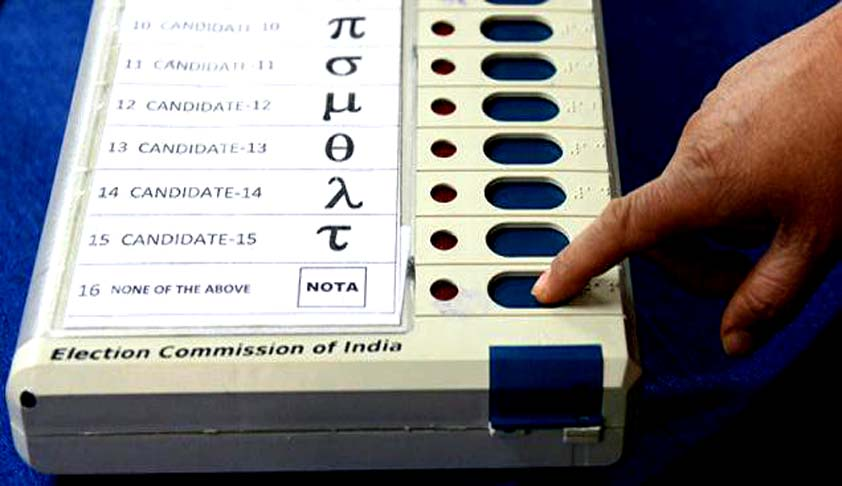
What is the Right to Vote in India?
- Article 326 provides for universal adult suffrage, allowing every citizen above 18 years to vote, subject to disqualifications.
- Section 19, Representation of the People Act, 1950 mandates that a person must be 18+ and ordinarily resident to be enrolled as a voter.
- Section 62, Representation of the People Act, 1951 grants the right to vote to those listed in electoral rolls.
- The Supreme Court has clarified that the right to vote is a statutory right, not a fundamental right.
- At the same time, voting is not a legal or fundamental duty, but a democratic entitlement.
Should Voting be Made Compulsory?
- Voting is essential for a representative and participatory democracy, but making it compulsory raises serious concerns.
- The Dinesh Goswami Committee (1990) rejected compulsory voting due to practical difficulties and instead emphasised awareness.
- The Law Commission (255th Report, 2015) noted that compulsory voting can increase turnout by around 7%, but only with strict penalties.
- Some countries like Australia, Argentina, Brazil, and Peru enforce compulsory voting through:
- Fines for non-voters
- Denial of certain public services
- However, such coercive measures may be harsh and unsuitable in India’s socio-economic context.
- From a constitutional perspective, compulsory voting may violate Article 19(1)(a) (freedom of expression), which includes the right not to vote.
Feasibility in the Indian Context
- India’s vast population, diversity, and socio-economic inequalities make enforcement of compulsory voting extremely difficult.
- Penalising non-voters could disproportionately affect poor, migrant, and marginalised groups.
- Administrative challenges in tracking non-voters and enforcing penalties would strain governance capacity.
- Thus, compulsory voting is considered neither desirable nor practical in India.
Concerns with Low Voter Turnout
- Low turnout can result in candidates winning with limited public support, weakening democratic legitimacy.
- Urban apathy, migration, and lack of awareness contribute to uneven participation.
- This creates a gap between formal electoral rights and actual democratic participation.
Way Forward
- Voter Awareness Campaigns: Promote civic responsibility through education, social media, and behavioural nudges.
- Facilitating Migrant Voting: Ensure statutory holiday enforcement, along with special transport facilities (buses, trains) for migrant workers.
- Remote Voting Mechanisms: Explore secure digital or remote voting systems to include mobile populations.
- Ease of Voting: Improve accessibility, voter registration processes, and polling infrastructure.
- Positive Incentives over Penalties: Encourage participation through recognition, facilitation, and trust-building, rather than coercion.
Conclusion
- India’s democracy rests not on compulsion, but on informed and voluntary participation. While low turnout is a concern, coercive measures like compulsory voting may undermine constitutional freedoms. The path forward lies in empowering citizens, reducing barriers, and nurturing a culture of democratic engagement, where voting becomes a conscious choice rather than an enforced obligation.
