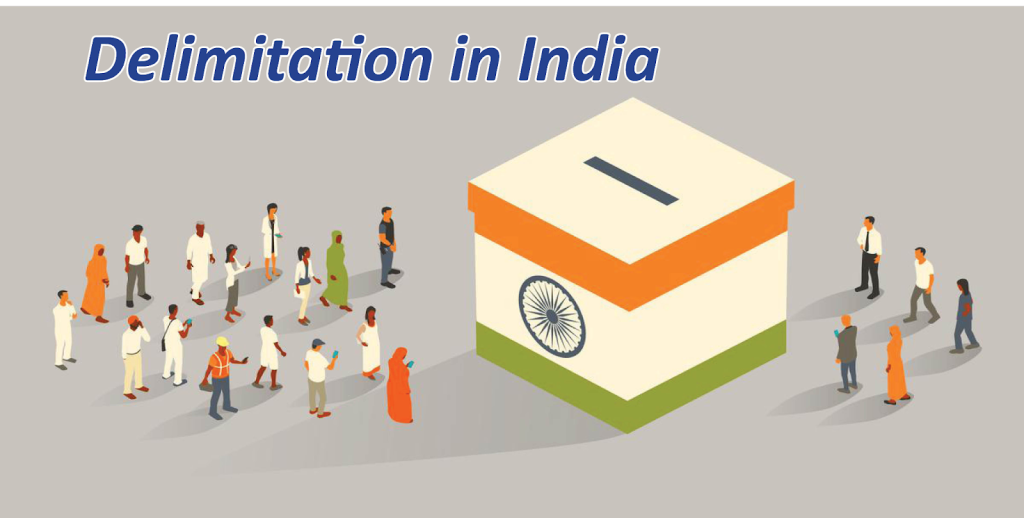
Context and Constitutional Framework
- Article 81 mandates that representation in Parliament should be based on population proportionality across States.
- The 84th Constitutional Amendment Act, 2002 froze the number of Lok Sabha seats until the first Census after 2026.
- The freeze aimed to incentivise States to pursue population stabilisation policies.
- With the upcoming Census (2026) and delimitation before the 2029 Lok Sabha elections, the issue has regained urgency.
Changing Demographic Realities
- In 2005–06, only nine States had achieved replacement-level fertility (TFR 2.1 or below).
- By 2021, most major States had achieved this level, except Bihar, Uttar Pradesh, Jharkhand, Meghalaya, and Manipur.
- Significant disparity persists:
- States below national average TFR: 1.64
- States above national average TFR: 2.38
- This reflects nearly 45% higher fertility in lagging States.
- These differences indicate uneven progress in population stabilisation efforts across States.
Core Issue: Population vs Federal Fairness
- Strict population-based delimitation may reduce representation of States that successfully controlled population growth.
- This creates a paradox where States that performed better in governance may face political disadvantage.
- The issue is not limited to North–South divide; several States such as Punjab, Haryana, Himachal Pradesh, and Goa also achieved early demographic transition.
- There is a need to balance democratic equality (one person, one vote) with federal fairness (equitable representation of States).
Proposed Approach: Demographic Performance (DemPer) Principle
- Inspired by the Finance Commission model, which incorporates demographic performance in resource allocation.
- Key features of DemPer approach:
- Population remains the dominant factor for seat allocation.
- Demographic performance is incorporated for additional seats beyond existing 543.
- Suggested weightage:
- 10% weight to early achievement of replacement fertility (before 2005).
- 90% weight to the rate of decline in fertility between 2005–2021.
- Expected outcomes:
- All States gain seats, with more populous States gaining more in absolute terms.
- States with better demographic performance do not lose relative representation.
- Promotes a model of fair federalism.
Broader Concerns and Limits
- Excessive increase in Lok Sabha size may affect quality of deliberation.
- Given population growth, expansion is necessary, but the total strength should ideally remain below 700 members.
- Delimitation must avoid becoming a politically sensitive regional conflict issue.
Way Forward
- Adopt a balanced formula combining population and demographic performance.
- Ensure that delimitation strengthens both representative democracy and federal stability.
- Recognise States as meaningful political units, not merely demographic aggregates.
- Promote a framework that rewards good governance and population stabilisation efforts.
- Conduct delimitation with transparency to minimise regional tensions and mistrust.
Conclusion
- Delimitation is not merely a technical exercise but a test of India’s commitment to cooperative federalism. A balanced approach that integrates population with performance will ensure that democracy remains both representative and fair, thereby strengthening the unity of the Union.