

Anti-Defection Law
What is Anti-Defection Law?
- Introduced by 52nd Constitutional Amendment Act, 1985.
- Added Tenth Schedule to the Constitution to curb political defections.
- Applies to Parliament and State Legislatures.
- Strengthened by 91st Amendment Act, 2003 removing ‘split’ provision.
- Core Objective
- Ensures political stability by preventing frequent government collapse.
- Curbs horse-trading and unethical inducements in politics.
- Promotes party discipline through whip system.
- Strengthens democratic integrity and accountability.
Grounds for Disqualification
- Voluntary resignation from party or conduct indicating defection.
- Voting or abstaining against party whip.
- Independent member joining a political party after election.
- Nominated member joining a party after 6 months of nomination.
Exceptions
- Merger provision: No disqualification if 2/3rd members agree to merge.
- Members opting out or staying also remain protected under merger rule.
- Presiding officers (Speaker/Chairman) can resign from party for neutrality.
Role of Presiding Officer
- Speaker/Chairman decides disqualification cases.
- Acts as quasi-judicial authority under Tenth Schedule.
- Decision is subject to judicial review (post-decision only).
Fireworks Regulation & Safer Alternatives

Context: Recent fireworks accidents and festival safety concerns have revived focus on safer celebration technologies.
Legal Framework Governing Fireworks
- Fireworks regulated under Explosives Act, 1884 and Explosive Rules, 2008.
- Nodal regulator is Petroleum and Explosives Safety Organisation (PESO) under Department for Promotion of Industry and Internal Trade (DPIIT).
- PESO oversees manufacture, storage, sale, and transport of explosives.
Supreme Court Directives (High-Yield)
- Arjun Gopal case (2018) banned crackers containing barium salts. It allowed only PESO-certified green crackers with reduced emissions.
- Banned series crackers (laris) due to high pollution and noise.
- Noise Pollution Case (2005) linked excessive noise to Article 21 violation.
- Imposed restrictions on timings and permissible noise limits.
Concerns with Traditional Fireworks
- Safety & Governance Issues: Illegal manufacturing hubs (e.g., Sivakasi), weak enforcement, poor safety protocols.
- Health Hazards: Release toxic chemicals like Barium, Strontium, Copper, Aluminium. It thus causes respiratory disorders, hormonal imbalance, and skin irritation.
- Environmental Impact: Leads to spike in PM2.5 and PM10, worsening air pollution.
- Noise Pollution: Exceeds permissible limits, affecting children, elderly, and animals.
Cold Spark Technology (New-Age Innovation)
- Produces visual sparks without explosion, noise, or smoke.
- Uses metal powders like titanium and zirconium for spark effects.
- Operates at low temperature (60–100°C), reducing fire hazards.
- Considered safer for public events and indoor celebrations.
Safer Alternatives to Fireworks
- Green Crackers (CSIR-NEERI)
- Free from harmful chemicals like barium, lithium, arsenic, lead.
- Reduce emissions by 30–35%.
- Types:
- SWAS → Releases water vapour to reduce particulate matter.
- STAR → Lower emissions and reduced sound intensity.
- SAFAL → Uses magnesium instead of aluminium.
- Technological Alternatives
- Drone Shows: 3D sky visuals using LED drones.
- Laser Shows: High-intensity light displays without pollution.
- Projection Mapping: Visual effects on buildings and monuments.
- Cold Spark Machines: Low-temperature, smoke-free spark effects.
Middle East and North Africa (MENA)
Concept
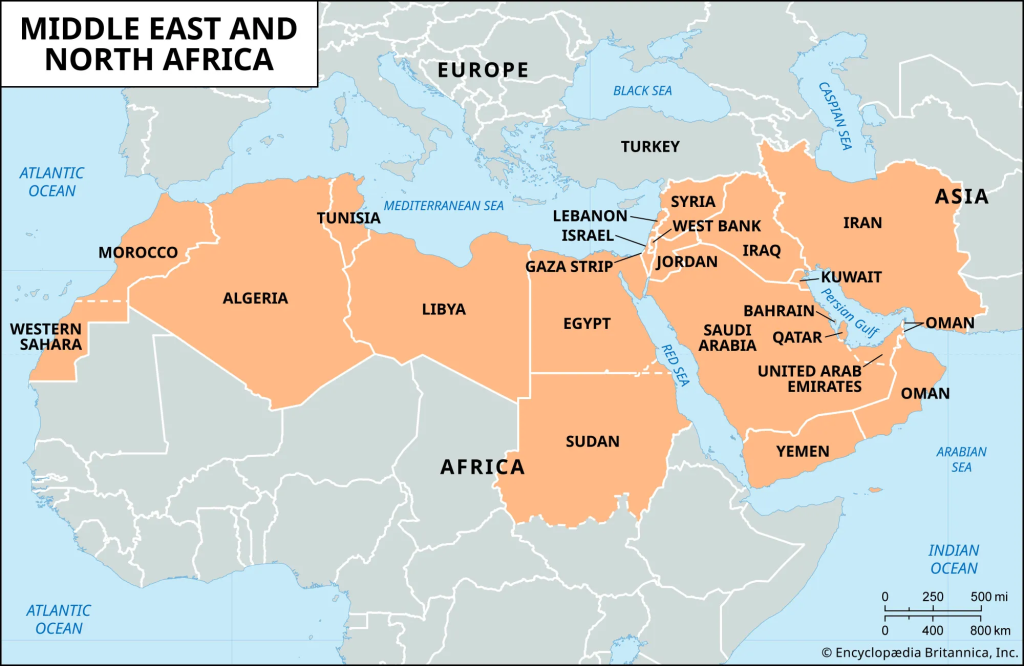
- MENA denotes the Middle East and North Africa region, a key geopolitical grouping.
- Comprises around 19–27 countries, depending on classification criteria.
- World Bank identifies 21 countries, accounting for nearly 6% of global population.
- Characterised by young demographics and increasing urbanisation.
Significance of the Region
- Holds over 50% of global oil reserves and about 40% of natural gas reserves.
- Serves as a cornerstone of global energy security and petroleum supply.
- Influences international markets through oil production and pricing dynamics.
- Includes critical maritime chokepoints like Strait of Hormuz and Suez region.
Countries Covered
- West Asia: Saudi Arabia, UAE, Qatar, Kuwait, Oman, Bahrain, Iran, Iraq, Israel, Jordan, Lebanon, Syria, Yemen, Palestine.
- North Africa: Egypt, Libya, Tunisia, Algeria, Morocco.
- Additional inclusions (variable lists): Djibouti, Malta.
Shanghai Cooperation Organisation (SCO)
Context: India’s Defence Minister will attend the SCO Defence Ministers’ Meeting (2026) focusing on terrorism, extremism, and regional security.
About SCO
- SCO is a permanent intergovernmental organisation established in 2001.
- Evolved from Shanghai Five (1996) formed for regional security cooperation.
- Uzbekistan’s inclusion led to formation of SCO with “Shanghai Spirit”.
- Member Countries
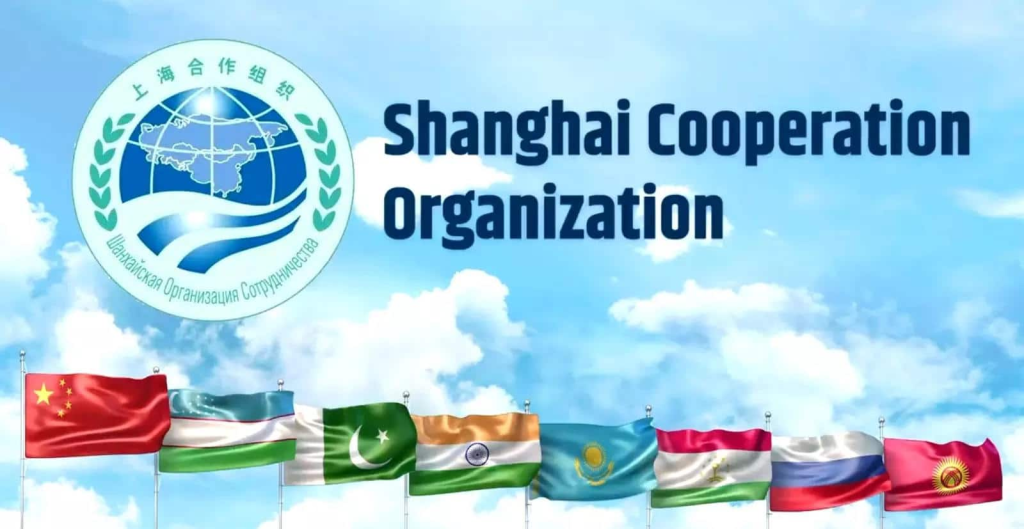
- China, Russia, Kazakhstan, Kyrgyzstan, Tajikistan, Uzbekistan, India, Pakistan.
- India and Pakistan became full members in 2017 (Astana Summit).
- Iran joined as 9th member (2023).
- Observers: Afghanistan, Belarus, Mongolia.
- Dialogue Partners: Includes Egypt, Qatar, Saudi Arabia, Turkey, Nepal, Sri Lanka, etc.
- Key Features
- Heads of State Council (HSC): Highest decision-making body (annual meetings).
- Heads of Government Council: Focus on economic cooperation.
- Council of Foreign Ministers: Handles international and diplomatic issues.
- RATS (Tashkent): Counter-terrorism body targeting terrorism, separatism, extremism.
- Secretariat located in Beijing (China).
- Official languages: Chinese and Russian.
- Focus areas: Security cooperation, regional stability, economic engagement.
Foreign Exchange Management Act (FEMA), 1999

Background
- FEMA was enacted in 1999 and came into force on 1 June 2000.
- It replaced the earlier FERA, 1973, marking a shift from control to management.
- Introduced in the context of economic liberalisation to facilitate external trade.
- Aims to ensure orderly development of the foreign exchange market in India.
Key Features
- Regulation of Forex Transactions
- Governs acquisition, holding, and transfer of foreign exchange and securities.
- Covers payments, remittances, and cross-border transactions.
- Liberal Approach
- Promotes ease of doing business and global integration.
- Unlike FERA, it adopts a facilitative and transparent framework.
- Role of RBI
- RBI acts as the central regulatory authority under FEMA.
- Empowered to frame rules, issue guidelines, and monitor transactions.
- Civil Nature of Offences
- Violations are treated as civil offences, not criminal.
- Focus is on compliance through penalties rather than prosecution.
Scope
- Applicable across entire territory of India.
- Covers individuals, companies, and Indian entities abroad.
- Includes NRIs and overseas entities owned by Indians.
- Regulates sectors like trade, banking, insurance, and investments.
Enforcement & Penalties
- Enforced primarily by the Enforcement Directorate (ED).
- Penalty up to three times the amount involved or ₹2 lakh.
- Additional penalty of ₹5,000 per day for continuing violation.
- In serious cases, authorities may order confiscation of assets.
Foreign Direct Investment (FDI)
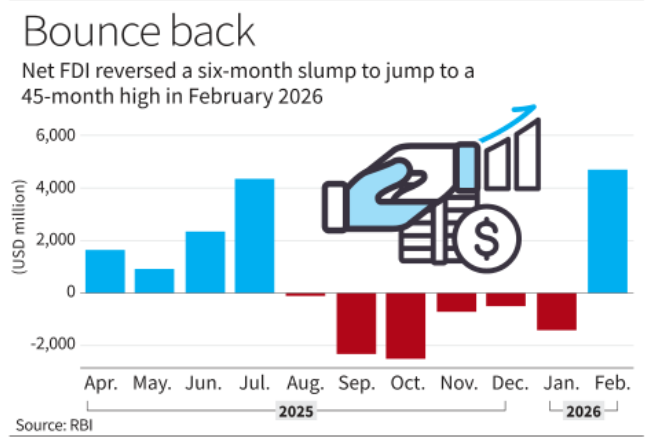
Context: Net FDI in India turned positive in February 2026, reaching a 45-month high after a prolonged decline.
Key Highlights
- Net FDI stood at $4.6 billion, highest since May 2022.
- Gross FDI rose 61.6% to nearly $9 billion (7-month high).
- Outward FDI declined sharply, contributing to positive net inflows.
- Repatriation/disinvestment fell significantly to $1.7 billion.
- Top Source Countries
- Singapore, USA, Mauritius, Japan, Netherlands Account for nearly 75% of total FDI inflows.
- Outward Investment Trends
- Outward FDI by Indian firms declined by 30.4% in February 2026.
- Major destinations → Singapore, UAE, UK (~75%).
Key Concepts
- FDI (Foreign Direct Investment): Investment where a foreign entity acquires lasting interest/control in a domestic enterprise.
- Gross FDI: Total inflows of foreign investment into the country.
- Net FDI: Difference between FDI inflows and outflows.
- Greenfield Investment: Investment in new projects/establishments from scratch.
Khyal Music
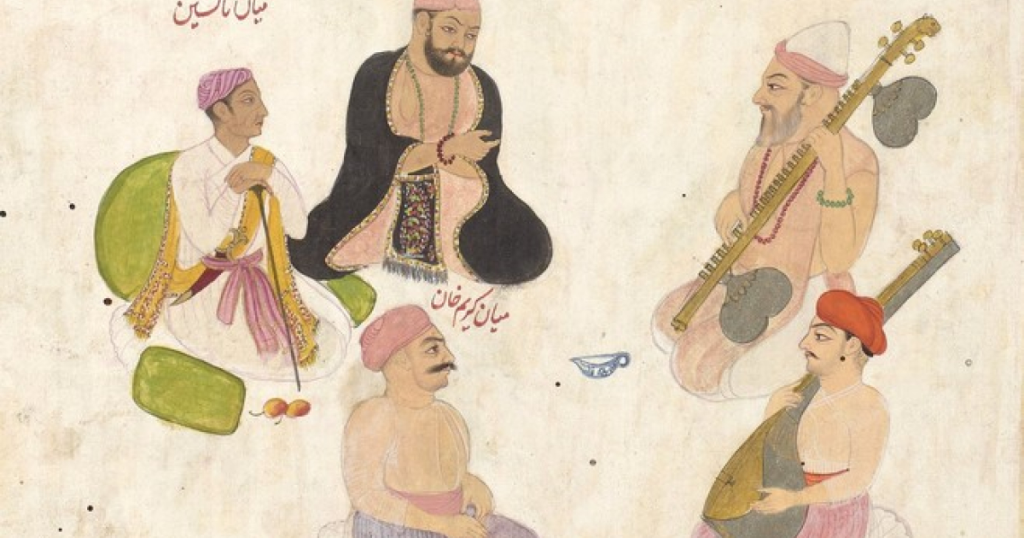
Context: Renowned Hindustani vocalist Neela Bhagwat highlighted for redefining khayal tradition with social themes.
About Khayal Music
- Khayal is a major form of Hindustani classical vocal music.
- Developed around 18th century, evolving from earlier classical traditions.
- Emphasises improvisation, creativity, and emotional expression.
- Performed within framework of raga (melody) and tala (rhythm).
- Associated with gharanas (lineages) transmitting style and techniques.
Key Features of Khayal
- Combines melody, rhythm, and poetic expression seamlessly.
- Allows singers freedom to innovate within structured framework.
- Includes forms like bandish, taan, tarana, and alap.
- Focuses on individual expression rather than rigid composition.
Cultural Significance
- Khayal represents the dynamic and evolving nature of Indian classical music.
- Ensures continuity through guru-shishya parampara (tradition).
- Modern adaptations show its ability to absorb societal changes.
Falkland Islands
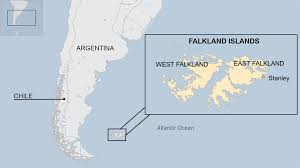
Context: Discovery of a prehistoric buried forest highlights unique environmental history of the Falkland Islands.
Location
- Located in the South Atlantic Ocean, about 480 km from South America.
- Lies east of the Strait of Magellan in southern hemisphere.
- Comprises East Falkland, West Falkland, and ~776 smaller islands.
- Separated by the Falkland Strait.
- Total area around 12,173 sq km.
- Capital: Stanley (East Falkland).
- Climate: Cool temperate oceanic, with minimal extremes.
Goldilocks Economy
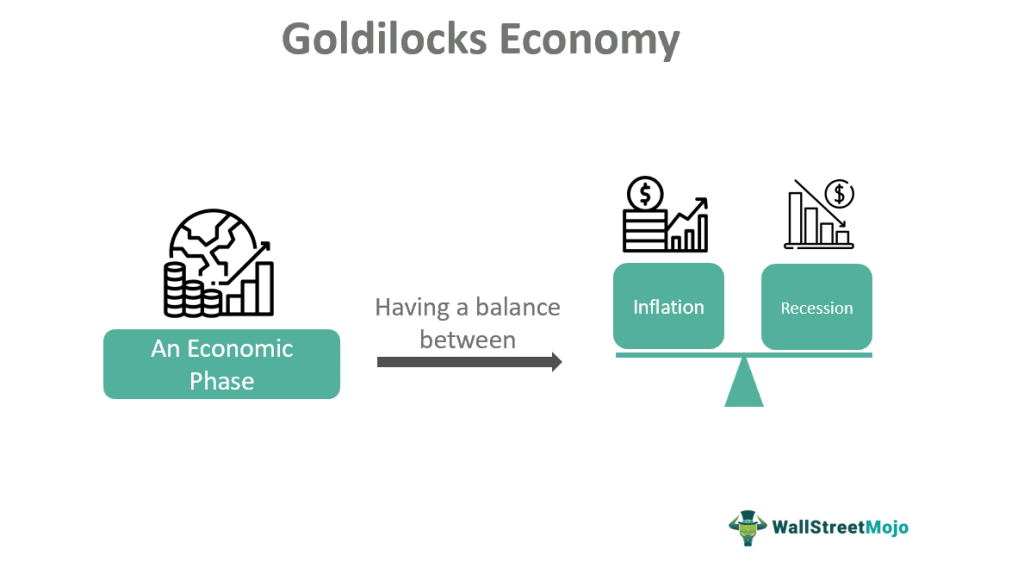
Core Concept
- A Goldilocks economy refers to a “just right” economic condition with balanced growth.
- Growth is neither too fast (inflationary) nor too slow (recessionary).
- Characterised by stable growth, low inflation, and near full employment.
Key Characteristics
- Balanced Growth: GDP grows at a steady and sustainable rate without overheating.
- Low Unemployment: Most people willing to work are gainfully employed (near full employment).
- Low Inflation: Prices remain stable, preserving purchasing power of money.
- Moderate Interest Rates: Interest rates remain low but stable, encouraging investment and borrowing.
- Asset Price Stability: Gradual rise in stocks, bonds, and real estate prices without bubbles.
Role of Policies
- Monetary Policy (Central Bank Role)
- Central banks regulate interest rates and money supply.
- Lower rates → boost growth; Higher rates → control inflation.
- Fiscal Policy (Government Role)
- Uses taxation and public expenditure to influence demand.
- Infrastructure spending and tax cuts can stimulate economic activity.
Challenges in Sustaining Goldilocks Economy
- Excessive growth may trigger high inflation and asset bubbles.
- Weak growth can lead to unemployment and recession.
- External shocks (global crises, oil prices) disrupt stability.
- Policy missteps (too early/tight rate hikes) can slow the economy sharply.
Haemophilia

Context: WHO highlighted need for equitable haemophilia care, with India having the second-largest global burden (~1.4 lakh cases).
About Haemophilia
- A rare inherited bleeding disorder where blood fails to clot properly.
- Caused by deficiency of clotting factors (proteins) required for haemostasis.
- Leads to prolonged or spontaneous bleeding episodes.
- Types of Haemophilia
- Haemophilia A: Deficiency of Factor VIII (most common).
- Haemophilia B (Christmas Disease): Deficiency of Factor IX.
Causes & Genetic Pattern
- Inherited as an X-linked recessive disorder.
- Predominantly affects males, while females are usually carriers.
- Around one-third cases arise due to spontaneous mutations.
- Root cause: absence or low levels of clotting proteins.
Symptoms & Clinical Features
- Prolonged bleeding after injury, surgery, or dental procedures.
- Easy bruising even after minor trauma.
- Joint bleeding (haemarthrosis) causing pain and swelling.
- Severe cases may lead to internal bleeding (brain/organs).
- Repeated bleeding causes chronic joint damage and disability.
Diagnosis & Severity
- Diagnosed using blood tests (CBC, aPTT, factor assays).
- Classified into mild, moderate, severe based on factor levels.
Treatment & Advances
- Factor replacement therapy → main treatment approach.
- Prophylaxis → regular infusion to prevent bleeding episodes.
- New therapies include non-factor drugs (e.g., emicizumab).
- Gene therapy emerging as potential long-term solution.
Promotion & Regulation of Online Gaming Rules, 2026

Context: Government notified Online Gaming Rules, 2026 to create a uniform national regulatory framework.
What are these Rules?
- Framed by Ministry of Electronics & IT (MeitY) under the 2025 parent Act.
- Effective from 1 May 2026.
- Aim to replace fragmented state-level regulations.
- Address concerns like addiction, fraud, and money laundering.
Key Features
- Regulatory Authority (OGAI)
- Establishes Online Gaming Authority of India (OGAI) under MeitY.
- Multi-ministerial body (Home, Finance, I&B, Sports, Law).
- Game Classification
- Categorises games into:
- Online Money Games (prohibited)
- Online Social Games
- Esports
- Categorises games into:
- Selective Registration
- Mandatory registration only for notified categories (e.g., esports).
- Based on scale and financial transactions.
- Financial Regulation
- Banks and payment gateways must verify game legality before transactions.
- Payment system becomes a compliance enforcement tool.
- User Safety Measures
- Mandatory features → age verification, time limits, parental controls.
- Includes monitoring to ensure fair play and integrity.
- Data Localisation
- Requires storage of user data and traffic within India.
Significance
- Promotes uniform regulation across India.
- Enhances consumer protection and digital safety.
- Curbs illegal real-money gaming platforms via payment restrictions.
- Builds a future-ready regulatory ecosystem for emerging digital sector.
About Online Gaming Authority of India (OGAI)
- Statutory regulatory body under the Promotion & Regulation of Online Gaming Act, 2025.
- Functions under Ministry of Electronics & IT (MeitY).
- Operational from May 1, 2026 as a centralised digital regulator.
- Key Functions
- Game classification: Identifies money games, social games, esports.
- Registration mechanism: Formal approval for specified categories.
- Regulatory oversight: Issues guidelines, codes of practice, directions.
- Grievance redressal: Addresses complaints from users and stakeholders.
- Enforcement coordination: Works with banks, fintechs, and law enforcement.
- Institutional Structure
- Total 6 members in the authority.
- Chairperson: Additional Secretary, MeitY.
Atlas Drone Swarm System

Context: China unveiled the Atlas Drone Swarm System, capable of controlling nearly 100 drones by a single operator.
What is Atlas System?
- A mobile drone swarm warfare platform functioning as a mini battlefield network.
- Integrates AI-driven coordination with mass drone deployment capability.
- Developed by China Electronics Technology Group Corporation (CETC).
- Designed for reconnaissance, communication, deception, and precision strikes.
Operational Mechanism
- System Components
- Swarm-2 vehicle: Drone launch platform.
- Command vehicle: Controls and monitors swarm.
- Support vehicle: Logistics and operational support.
- Launch & Control
- Drones launched at intervals of <3 seconds.
- Up to 96 drones deployed within ~5 minutes.
- Managed by single operator using AI-assisted systems.
- Autonomous Intelligence
- Drones act both individually and collectively.
- Can reroute, identify targets, and adapt formations autonomously.
Strategic Implications
- Can overwhelm air defence systems through swarm saturation.
- Forces use of high-cost missiles against low-cost drones.
- Enhances asymmetric warfare capability.
- Deployment near borders (e.g., Tibet region) may threaten logistics and forward bases.
Mahanadi River
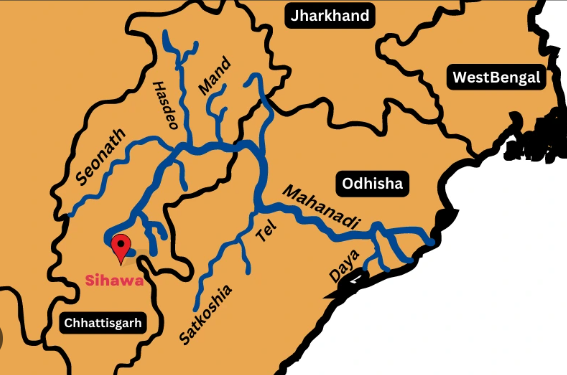
Context: Mahanadi Water Disputes Tribunal (MWDT) urged Odisha and Chhattisgarh to reach a water-sharing agreement.
Features
- Major river of East-Central India, often called the “Great River”.
- Originates near Nagri Sihawa (Dhamtari district, Chhattisgarh).
- Flows through Chhattisgarh and Odisha into the Bay of Bengal.
- Total length around 851–900 km.
- Seasonal river with high monsoonal discharge.
Tributaries
- Left Bank → Shivnath, Hasdeo, Mand, Ib.
- Right Bank → Jonk, Ong, Tel.
Key Geographical Features
- Hirakud Dam (Odisha): Longest earthen dam (~26 km including dykes).
- Hirakud Reservoir: One of the largest artificial lakes in Asia.
- Satkosia Gorge: ~64 km gorge through Eastern Ghats.
- Forms a large delta with Brahmani River before entering sea.
- Delta distributaries → Kathjori, Birupa, Devi.
NARIT-AI
Context: Gujarat Police launched NARIT-AI (Narcotics Analysis & RAG-based Investigation Tool), an AI tool to improve investigation quality and conviction rates under NDPS Act.
What is NARIT-AI?
- An AI-based investigation platform for narcotics cases.
- Developed by Western Railway Police (Vadodara Division) with private collaboration.
- First such AI deployment by a State Police in India.
- Acts as a digital legal assistant for investigating officers.
Technology Backbone
- Uses Retrieval Augmented Generation (RAG) technology.
- Works on a closed legal database, not open internet.
- Sources include:
- Supreme Court & High Court judgments
- Bare Acts (BNS, BNSS, BSA)
- Government circulars
- Prevents AI hallucinations (false outputs) and ensures data security.
Key Functions
- Analyses FIRs and case records in real time.
- Generates legal insights and procedural guidance.
- Provides evidence checklist for investigation.
- Identifies strengths and weaknesses of cases.
- Predicts possible defence arguments in court.
Prime Minister Internship Scheme (PMIS)
What is PMIS?
- A Government of India initiative to provide structured internship opportunities to youth.
- Targets placements in top 500 companies across 24 sectors.
- Aims to enhance employability, skills, and industry exposure.
Key Features
- Internship duration: 12 months.
- Covers sectors like energy, banking, automotive, hospitality, services.
- Provides minimum stipend of ₹9,000 per month.
- Focus on youth from low-income households.
Eligibility Criteria
- Age group: 21–25 years.
- Educational qualification
- Passed 10th/12th/ITI/Polytechnic/Diploma.
- Includes fresh graduates from non-premier institutions.
- Exclusion: Students from IITs, IIMs, NLUs, and professionals (CA, MBA, MBBS).
- Family income limit → ≤ ₹12 lakh annually.
- No family member should be in a government job.
- Recent Changes
- Final-year UG/PG students now eligible.
- Mandatory No Objection Certificate (NOC) from institution required.
