

Rare Earth Elements
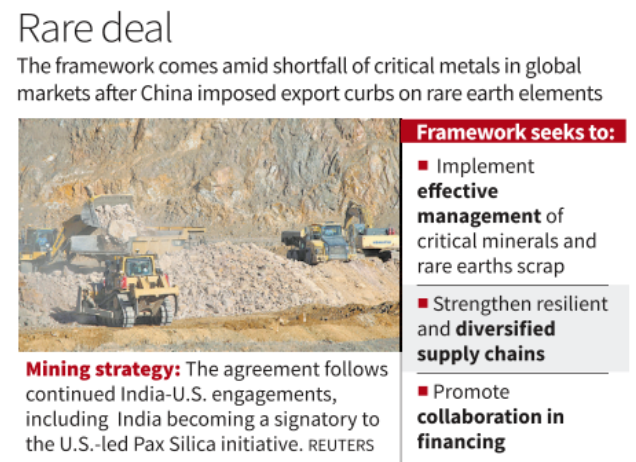
Context: India and the US signed a framework for cooperation in critical minerals and rare earth supply chains on the sidelines of the 11th Quad Foreign Ministers’ Meeting.
More in News
- The framework covers mining, processing, recycling, and related investments in critical minerals and rare earths.
- A separate Quad Critical Minerals Initiative Framework was signed by all four Quad nations — Australia, India, Japan, and the US.
- The Quad framework aims to mobilise around $20 billion in government and private-sector support.
- The US is mobilising over $30 billion in letters of interest, investments, and loans for critical supply chains.
- China imposed export controls on rare earth elements in 2025, triggering the urgency behind these frameworks.
- India became a signatory to the US-led Pax Silica initiative on February 20.
About Rare Earth Metals (REMs)
- REMs are a group of 17 elements comprising 15 lanthanides + scandium + yttrium.
- They are not truly rare in Earth’s crust but are rarely found in concentrated, separable form.
- Their chemical similarity makes separation and refining extremely difficult.
- Key uses include EV motors, wind turbines, electronics, lasers, fibre optics, and defence systems.
- Neodymium-based magnets are considered the most critical among rare earth applications.
- Reserves of REMs are globally spread, but processing and refining are highly concentrated in China.
REMs vs Clean Energy Elements
- REMs are a fixed group of 17 elements used mainly for magnets, motors, and high-tech hardware.
- Clean energy elements have no fixed group and include lithium, cobalt, nickel, copper, graphite, and silicon.
- REMs enable energy use; clean energy elements store and move energy.
Quad Maritime Initiatives
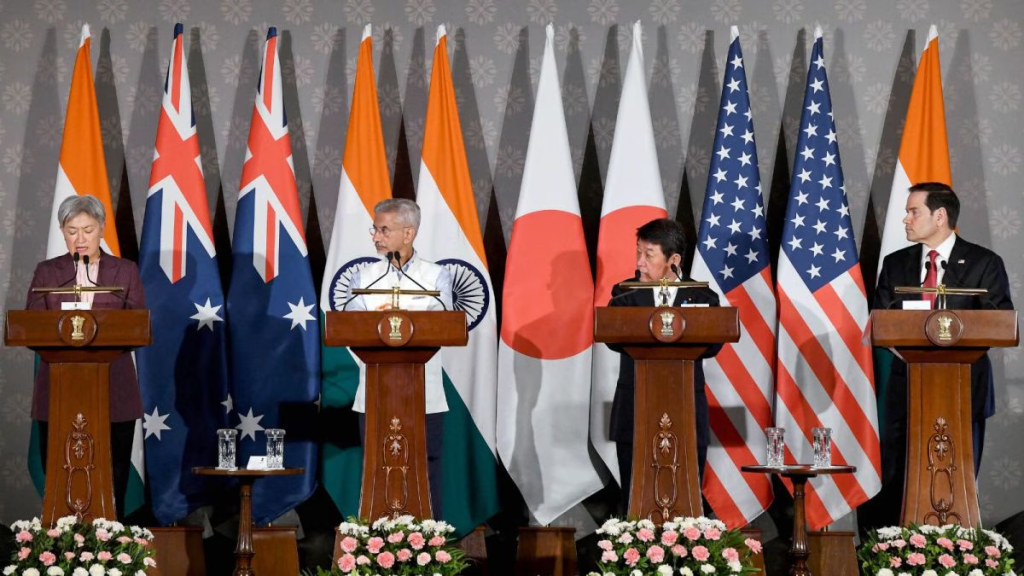
Context: The 11th Quad Foreign Ministers’ Meeting (FMM) was held in New Delhi at Hyderabad House. Quad responded to tensions in the Persian Gulf (Hormuz crisis) and the South China Sea.
More in News
- Quad launched the Indo-Pacific Maritime Surveillance Collaboration initiative to enhance information sharing among member nations.
- India will host the next iteration of the Quad at Sea mission, bringing together all four nations’ Coast Guards.
- Quad announced the Quad Initiative on Indo-Pacific Energy Security to boost regional energy resilience and emergency response.
- Quad Ports of the Future Partnership was announced, with a pilot project for port infrastructure in Fiji.
- The Quad joint statement insisted on freedom of navigation in the Strait of Hormuz and the South China Sea.
About Strait of Hormuz
- Location
- The Strait of Hormuz lies between Iran (north) and Oman’s Musandam Peninsula (south).
- It connects the Persian Gulf to the Gulf of Oman and the Arabian Sea.
- It is approximately 33 km wide at its narrowest point.
- Shipping lanes are only 3 km wide in each direction, separated by a buffer zone.
- Strategic Importance
- Around 20% of global petroleum liquids consumption passes through this strait.
- It is a crucial route for Liquefied Natural Gas (LNG), especially exports from Qatar.
- Major oil exporters using this route include Saudi Arabia, Iraq, UAE, Kuwait, Qatar, and Iran.
- It is vital for Asian energy importers including India, China, Japan, and South Korea.
Mekedatu Dam Project
About the Project
- It is a multipurpose project for drinking water supply and hydropower generation.
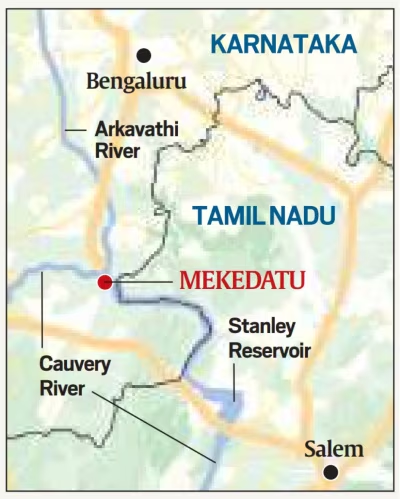
- Located near Kanakapura, Ramanagara district, Karnataka, about 90 km from Bengaluru.
- Proposed at the confluence of the Cauvery River and its tributary Arkavathi.
Key Features
- A 99-metre-high, 735-metre-long concrete gravity dam is proposed.
- Reservoir capacity will be 66 TMC (thousand million cubic feet).
- It will generate 400 MW of hydroelectricity once operational.
- Expected to supply over 4 TMC of drinking water to Bengaluru city.
Dispute
- Tamil Nadu, the lower riparian state, strongly opposes the project.
- Tamil Nadu argues that Mekedatu is the last free point from where Cauvery flows unrestricted into Tamil Nadu.
Asiatic Lion
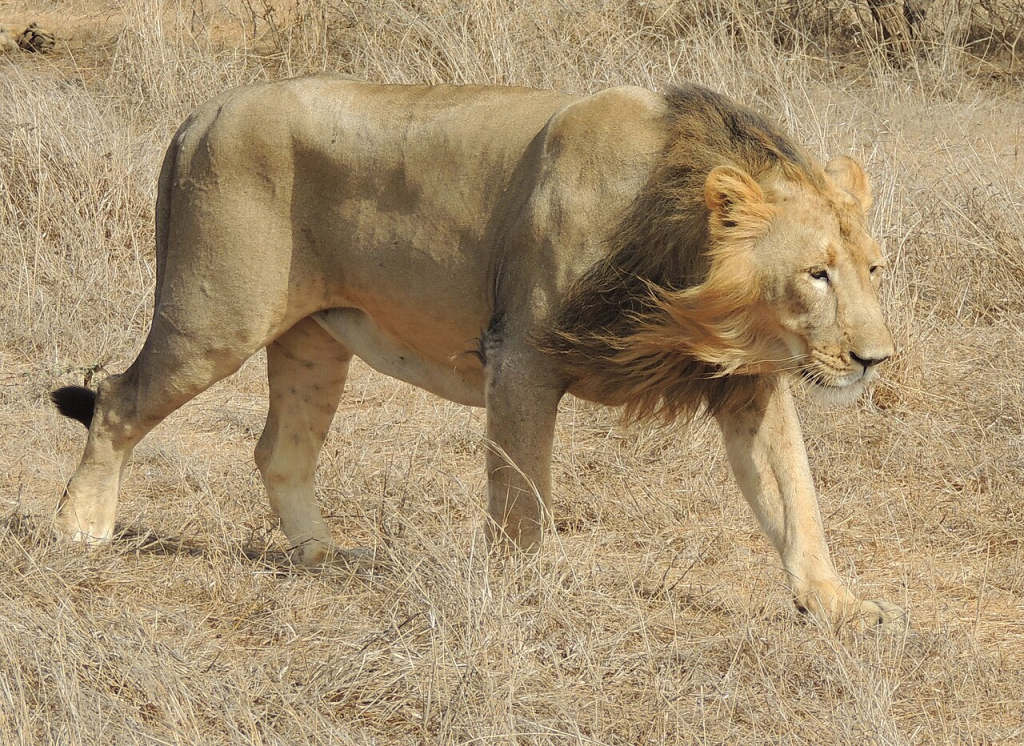
Context: Two lion cubs died in Gir National Park, Gujarat due to suspected Babesia infection, a tick-borne parasite. Babesia is a tick-borne parasite affecting wild animals, causing weakness and respiratory distress.
About Asiatic Lion
- Scientific name is Panthera leo persica and it is a subspecies of lion.
- It is the only wild lion population found outside Africa.
- Gir National Park and Wildlife Sanctuary, Gujarat is its only natural habitat in the world.
- Due to conservation success, the population has expanded into the Greater Gir Landscape covering Amreli, Bhavnagar, and Somnath districts.
- Barda Wildlife Sanctuary is being developed as a second home for natural dispersal of lions.
- As per the 16th Lion Population Estimation (May 2025), the count has risen to 891 individuals, a 32% increase since 2020.
- Wildlife Protection Act, 1972: Schedule I.
- CITES: Appendix I.
- IUCN Red List: Vulnerable.
- Project Lion was launched in 2020 for landscape-based conservation and habitat restoration.
Key Characteristics
- Males weigh 160–190 kg and females weigh 110–120 kg, making them slightly smaller than African lions.
- Most distinctive feature is a longitudinal belly fold, which is rare in African lions.
- Males have a shorter mane, leaving their ears visible, unlike African lions.
- They live in smaller prides and males are less social than African counterparts.
Non-Communicable Diseases (NCDs)
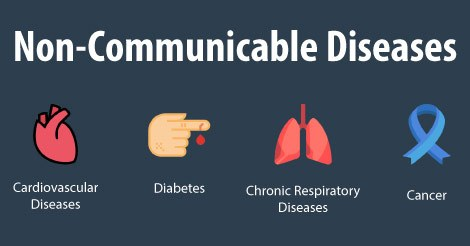
Context: NCDs accounted for 60% of all deaths in India during the 2022-2024 reporting period, as per the Sample Registration System (SRS) Statistical Report 2024.
More in News
- This marks an increase of 7.3 percentage points compared to 52.8% recorded in the 2015-2017 period.
- Cardiovascular diseases alone accounted for 32.1% of all deaths in 2022-2024, rising from 27.1% in 2015-2017.
- NCDs caused 64.8% of urban deaths and 58.8% of rural deaths in 2022-2024.
- Suicide remains the leading cause of death in the 15-29 age group, accounting for 19% of deaths in that group.
- In EAG States and Assam, NCDs accounted for 53.9% of deaths, compared to 63.5% in other states.
About NCDs
- NCDs are chronic, non-infectious illnesses that do not spread from person to person.
- They are characterised by long duration, slow progression, and need for prolonged treatment.
- NCDs account for around 74% of all deaths globally.
- 86% of premature deaths (before age 70) occur in low- and middle-income countries.
- These countries also account for 77% of all NCD cases worldwide.
- Major Types of NCDs
- Cardiovascular Diseases (CVDs): Include heart attacks, strokes, and hypertension.
- Cancer: Characterised by uncontrolled cell growth, contributing to 9.3 million cases annually.
- Chronic Respiratory Diseases: Include asthma and Chronic Obstructive Pulmonary Disease (COPD).
- Type-2 Diabetes: A metabolic disorder causing elevated blood sugar levels.
- Mental Health Disorders: Include depression and anxiety, increasingly recognised as NCDs.
Wetlands
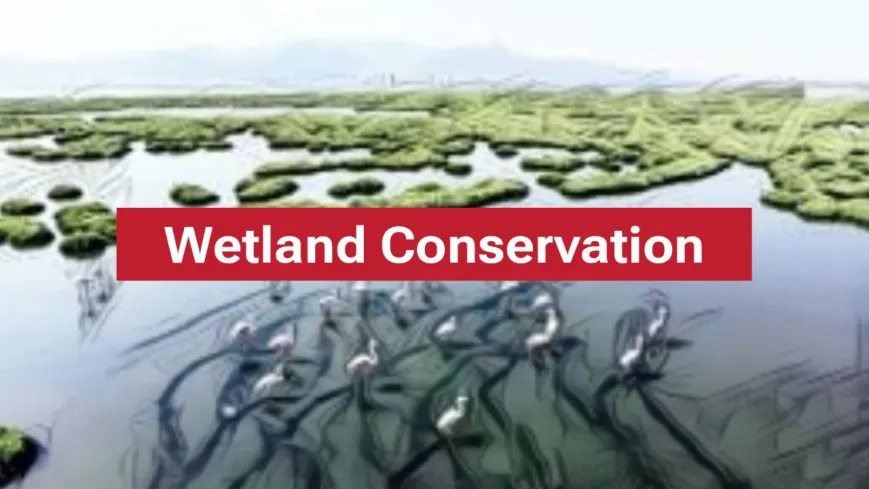
What is a Wetland?
- A wetland is an area where water is the primary factor influencing the environment and associated life.
- It includes areas where the water table is at or near the surface or land is seasonally or permanently submerged.
Wetlands (Conservation and Management) Rules, 2010
- These were India’s first comprehensive wetland protection rules under the Environment Protection Act, 1986.
- Wetlands include marshes, fens, peatlands, lakes, reservoirs, lagoons, estuaries, and man-made wetlands up to a depth of 6 metres, including their catchment areas.
- Prohibited activities include reclamation, industrialisation, and dumping of hazardous or solid waste.
- Regulated activities such as water withdrawal and dredging require prior approval from authorities.
- Central Wetlands Regulatory Authority (CWRA) was established to monitor activities and evaluate state submissions.
- Approved wetlands could be notified as “Protected Wetlands.”
- Appeals against CWRA decisions can be filed before the National Green Tribunal (NGT).
- Limitations of 2010 Rules
- Smaller wetlands, jheels, tanks, and rural water bodies were excluded from coverage.
- No State or District-level Wetlands Regulatory Authorities were mandated.
- CWRA lacked representation from local communities, farmers, and fishing associations.
Wetlands (Conservation and Management) Rules, 2017
- State Wetlands Authority to be established in each state and UT, headed by the State Environment Minister.
- CWRA was replaced by a Central Advisory Committee for policy guidance and Ramsar site nominations.
- A digital wetland inventory must be created and updated every ten years.
- Prohibited activities include industrial expansion, conversion for non-wetland use, hazardous waste disposal, and untreated effluent discharge.
- State governments hold protection powers; the Central Government retains monitoring authority.
Organisation for the Prohibition of Chemical Weapons (OPCW)
About OPCW
- OPCW is the implementing body of the Chemical Weapons Convention (CWC).
- Headquarters are located in The Hague, Netherlands.
- OPCW was awarded the Nobel Peace Prize in 2013.
- It reports on its inspections and activities to the UN through the office of the Secretary-General.
Functions
- It receives declarations from states-parties detailing chemical weapons stockpiles and industrial activities.
- It conducts inspections to verify compliance with the CWC.
- It performs testing of sites and victims of suspected chemical weapons attacks.
About Chemical Weapons Convention (CWC)
- CWC is a multilateral treaty that bans chemical weapons and requires their destruction within a specified period.
- It entered into force on April 29, 1997.
- It currently has 193 states-parties and is open to all nations.
- States-parties must declare their chemical weapons stockpiles, production facilities, and related industrial information to OPCW in writing.
RBI Dividend

Context: RBI approved a dividend transfer of ₹2.87 lakh crore to the government, covering roughly 20% of the latter’s fiscal deficits.
RBI Dividend- Key Facts
- RBI pays dividends to the government under RBI Act, 1934 (Section 47).
- Dividend is paid after setting aside a minimum Contingency Risk Buffer (CRB) as per the Bimal Jalan Committee recommendations.
- The maximum contingency buffer was raised from 6.5% to 7.5% of RBI’s asset position.
- RBI maintained a 7.5% CBR last year and this year as well.
How RBI Earns Profits
- RBI earns income from interest on domestic and foreign investments in various bonds.
- It also earns by selling dollars at a higher rate to defend the rupee when it depreciates.
- A falling rupee generates higher dividends for the government — a unique feature of many emerging market economies.
Bimal Jalan Committee
- The Bimal Jalan Committee recommended the framework for determining RBI’s surplus transfer to the government.
- It established the Contingency Risk Buffer (CRB) range for maintaining RBI’s financial resilience.
Key Concerns
- RBI profits are more volatile than tax revenues, making dividend-based fiscal reliance risky.
- Reliance on RBI dividends even during good economic years creates fiscal profligacy risks.
- Perception of RBI-government nexus in dividend transfers raises concerns about central bank independence.
