

UPSC Prelims
5 Topics
Prelims Pinpointer
Prelims Pinpointer — August 13, 2026
Five high-yield Prelims facts from today’s news — BNSS police custody, Judges Inquiry Committee, MMDR Amendment Bill, India-Germany green hydrogen, and Europe’s total solar eclipse
⚖️ Police Custody (BNSS)
👨⚖️ Judges Inquiry Committee
⛏️ MMDR Amendment Bill
🌱 Green Hydrogen
🌒 Total Solar Eclipse
⚖️
Police Custody Under BNSS

News Context
- The Supreme Court clarified provisions of police custody remand under the BNSS (Bharatiya Nagarik Suraksha Sanhita), 2023.
- The SC held that police custody can be sought within the first 40 or 60 days of the total remand period, not necessarily at the very beginning.
Key Facts for Prelims
- Section 187 of BNSS (formerly Section 167 of CrPC) governs remand of accused persons when investigation cannot be completed within 24 hours.
- Police custody cannot exceed 15 days in total within the permissible period.
| Offence Category | Judicial Custody | Police Custody Limit |
|---|---|---|
| Death / life imprisonment / 10+ years | 60 days | First 40 days |
| Other offences | 40 days | First 15 days |
Police Custody vs Default Bail
- Default Bail (Section 479 BNSS, formerly Section 167(2) CrPC): If investigation is not completed within 60 or 90 days, the accused gets the right to bail.
- 60-day limit applies to offences punishable with death, life imprisonment, or imprisonment exceeding 10 years; 90-day limit applies to all other offences.
- Default bail is a fundamental right, not a mere procedural entitlement.
BNSS vs CrPC — Concepts for Prelims
| Feature | CrPC (old) | BNSS (new) |
|---|---|---|
| Remand provision | Section 167 | Section 187 |
| Default bail | Section 167(2) | Section 479 |
| Police custody period | 15 days at start only | 15 days within first 40/60 days |
| Trial commencement | Not specified | 60-day timeline specified |
👨⚖️
Judges Inquiry Committee
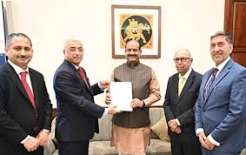
Justice Varma Case: Key Facts for Prelims
- A Judges Inquiry Committee investigated Justice Yashwant Varma over discovery of “burnt currency notes” at his official residence (March 2025).
- The committee found charges “proved”, holding his explanations “evasive and unsatisfactory.”
- Justice Varma resigned on April 9, 2026 as a judge of the Allahabad High Court.
- The committee held that a statutory inquiry cannot depend on the “unilateral” decision of a judge to withdraw, especially after evidence has substantially come on record.
- The committee report was tabled in Parliament in August 2026.
Judges Inquiry Committee — Key Facts
- It is an ad-hoc statutory judicial tribunal constituted to investigate misbehaviour or incapacity of a Supreme Court or High Court judge.
- Parliament cannot debate or vote on a removal motion without the committee completing its inquiry.
- Constitutional anchor: Article 124(4) for Supreme Court judges; Article 217(1)(b) for High Court judges.
- Statutory framework: Section 3 of the Judges (Inquiry) Act, 1968.
Committee Composition — Concepts for Prelims
- Constituted by the Lok Sabha Speaker or Rajya Sabha Chairman.
- Consists of exactly three members: a sitting Supreme Court judge, a sitting High Court Chief Justice, and an eminent jurist.
- The committee can proceed in the judge’s absence if reasonable opportunity to participate was given.
⛏️
Mines and Minerals Amendment Bill, 2026
News Context
- The MMDR Amendment Bill, 2026 was introduced in Lok Sabha to further liberalise India’s mining sector and boost domestic mineral production.
- The Bill focuses on critical minerals, deep-sea mining, and streamlining composite licence processes.
Key Facts for Prelims
- The Bill proposes captive mines to sell up to 100% of their production in the open market (earlier capped at 50%).
- Introduces Critical Mineral Blocks for expedited auction to ensure domestic supply chain security.
- Provides for exploration licences for deep-sea and offshore mineral extraction.
- Proposes District Mineral Foundation (DMF) funds to be utilised more flexibly for mining-affected districts — not abolished.
- Expands the National Mineral Exploration Trust (NMET) role to promote exploration of critical and deep-seated minerals.
MMDR Act, 1957 — Key Facts
- MMDR Act, 1957 is the principal legislation governing mining activities in India.
- Major minerals are regulated by the Central Government; minor minerals by State Governments.
- Key amendments: 2015 (introduced auctions), 2021 (critical minerals, captive mines liberalisation), 2023 (deep-sea exploration).
🌱
India-Germany Green Hydrogen Partnership
News Context
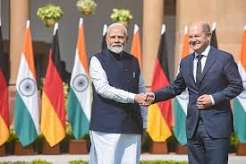
- India and Germany signed agreements to strengthen green hydrogen cooperation under the Indo-German Green Hydrogen Task Force.
- Germany’s KfW Development Bank committed €300 million to support India’s green hydrogen projects.
Key Facts for Prelims
- Green hydrogen is produced by electrolysis of water using renewable energy sources.
- India’s National Green Hydrogen Mission was approved in January 2023 with an outlay of ₹19,744 crore.
- India targets producing 5 million metric tonnes of green hydrogen annually by 2030.
Production Methods — Concepts for Prelims
| Type | Production Method | Emission |
|---|---|---|
| Green | Electrolysis using renewables | Zero |
| Blue | Natural gas + CCS | Low |
| Grey | Natural gas (no CCS) | High |
| Pink | Nuclear electrolysis | Near zero |
SIGHT (Strategic Interventions for Green Hydrogen Transition) is the key financial-incentive component of India’s National Green Hydrogen Mission for electrolyser and hydrogen production.
🌒
Total Solar Eclipse: Studying the Sun’s Corona
News Context
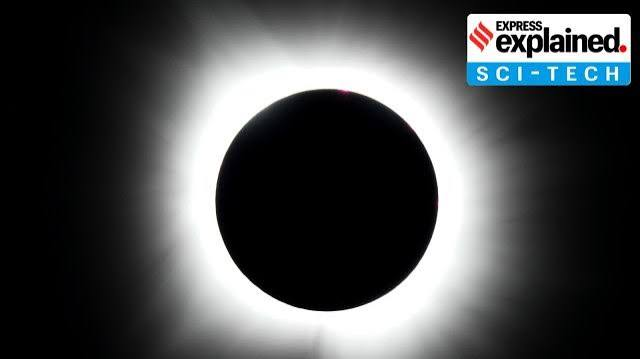
- Europe witnessed its first total solar eclipse in 27 years on August 12-13, 2026.
- Path of totality passed over north Russia, Greenland, west Iceland, northern Spain, and northeast Portugal.
- CESSI (IISER Kolkata) predicted large-scale streamers and petal-like magnetic field structures during the eclipse.
Solar Corona — Key Facts
- The corona is the Sun’s outermost atmosphere, extending millions of km into space.
- Scientists use a coronagraph to artificially block the solar disc and study the corona.
- A total eclipse makes the inner corona visible as a halo around the Moon.
- The corona triggers solar flares and Coronal Mass Ejections (CMEs), which can disrupt satellites, GPS and communication systems.
Solar Cycle — Concepts for Prelims
- The solar cycle is an approximately 11-year cycle during which the Sun’s activity rises and falls.
- Activity is measured by changes in sunspot numbers; solar maxima is when the Sun is most active.
- Current solar cycle began in 2020; the Sun has already passed its maxima phase.
