

UPSC Mains
GS Paper II & III
Federalism & Water Resources
River-Linking is Not the Solution: Rethinking India’s Approach to Water Sharing and Conservation
At the Southern Zonal Council meeting, the Union Home Minister called for inter-linking major rivers such as the Brahmaputra, Godavari and Cauvery — reviving the debate on whether river-linking or conservation is the real answer to India’s water crisis.
Ken-Betwa Link Cost
₹44,000 crore
NPP Links Identified
30 (16 Peninsular + 14 Himalayan)
Groundwater Extraction
India is world’s largest user
📰
Why in News
- At the Southern Zonal Council meeting in Mamallapuram, Tamil Nadu, the Union Home Minister called for early resolution of water-sharing disputes and suggested inter-linking major rivers such as the Brahmaputra, Godavari and Cauvery.
- The proposal renewed the debate over whether Interlinking of Rivers (ILR) can solve India’s water problems, or whether conservation and demand management are better solutions.
Evidence from Ongoing Disputes (Why Water Issues Are Hard)
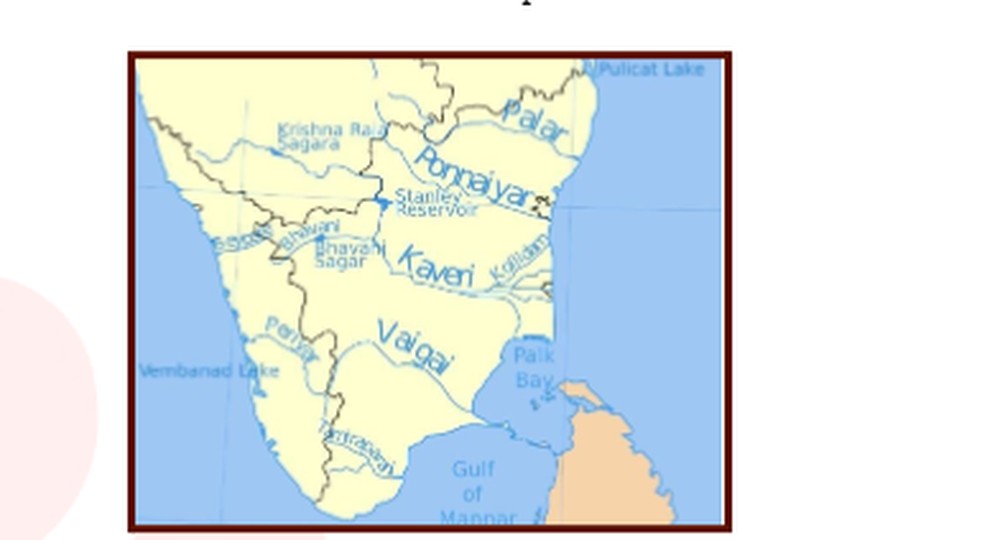
- The Pennaiyar Dispute (Tamil Nadu vs. Karnataka): Tamil Nadu sought a tribunal in November 2019 over alleged violation of the 1892 inter-State agreement. Despite two negotiation committees and 11 meetings, no resolution. In February 2026, the Supreme Court directed the Centre to form a tribunal within a month (later extended six months) — still not in place. The Centre even asked if the dispute could go to the existing Mahadayi Tribunal instead, which the author calls illogical.
- The Mekedatu Dam Dispute: The Centre has not even replied to Tamil Nadu’s March demand for a tribunal on Karnataka’s proposed Mekedatu dam on the Cauvery.
⚠️
Why River-Linking is a Complex Problem
- The “Surplus Water” Myth: Proponents argue only “surplus” water will be diverted — but the very idea of “surplus” is scientifically contested, as river flows vary seasonally and support downstream ecology.
- Rise of New Claimants: Once linking begins, beneficiary regions may demand water even during distress/drought years, potentially depriving original beneficiaries and creating new disputes.
- Ecological Damage: Kerala strongly opposes the Pamba-Achankovil-Vaippar link, fearing damage to the Vembanad wetland (a Ramsar site). The Ken-Betwa project submerges part of the Panna Tiger Reserve.
- Displacement & Social Cost: The ₹44,000 crore Ken-Betwa Link Project has triggered agitations by tribal populations in Chhatarpur over displacement.
- Federal Friction: Water is a State subject (List II, Entry 17), but inter-State rivers fall under Union jurisdiction (List I, Entry 56) — linking rivers across States inevitably raises Centre-State tensions.
The Track Record
- In ~130 years, India has completed only a handful of inter-basin transfer projects, mostly in South India (Mullaperiyar Dam, Parambikulam-Aliyar, Krishna Water Supply Project, Indira Gandhi Canal Project).
- Under the National Perspective Plan (NPP), 1980, the NWDA identified 30 links (16 Peninsular + 14 Himalayan).
- Ken-Betwa is the first and only link to enter implementation — already mired in environmental and displacement disputes.
🔍
Analytical Insight
- Supply-Side vs. Demand-Side Paradigm: India has long chased supply-side solutions (dams, canals, diversions). The sustainable path is demand-side management — conserving and using existing water judiciously.
- The Groundwater Crisis: Indiscriminate extraction, encouraged by free/subsidised farm electricity, is driving India toward ecological disaster — it is already the world’s largest groundwater user.
- Federalism & Trust Deficit: Water disputes are as much about inter-State trust and politics as hydrology; cooperative federalism via Zonal Councils is the real need.
- Institutional Failure: Delays in tribunal formation and decades-long pendency expose the inefficiency of the 1956 Act — hence the proposed Inter-State River Water Disputes (Amendment) Bill for a single permanent tribunal.
- Climate Change Dimension: Erratic monsoons and glacial melt make the “surplus-deficit” logic of ILR increasingly unreliable — a basin surplus today may be a deficit tomorrow.
India’s water problem is mainly due to mismanagement and inefficient use, not just scarcity — conservation, not construction, is the real prescription.
✅
Way Forward
Prioritise Water Conservation
Make conservation the mantra of all stakeholders — the core prescription.
Curb Groundwater Over-Extraction
Reform free-power-for-agriculture schemes; promote metering, solar pumps, crop diversification.
Promote Efficient Irrigation
Scale up micro-irrigation (drip/sprinkler) under Per Drop More Crop / PMKSY.
Rainwater Harvesting
Revive traditional systems; strengthen Jal Shakti Abhiyan – “Catch the Rain.”
Strengthen Dispute Resolution
Constitute tribunals promptly; build a single permanent tribunal with strict timelines.
Cooperative Federalism
Use Zonal Councils and River Basin Organisations for basin-level, consensus-based management.
India’s water problem is mainly due to mismanagement and inefficient use, not just scarcity. River-linking carries ecological, financial, social and federal risks, and cannot replace good water governance — conserve water, use it wisely, and resolve disputes fairly.
📰
Source: The Hindu
