

The Gulf Is Calling: India’s Shift from Multi-Alignment to Active Security Guarantor in West Asia
Context
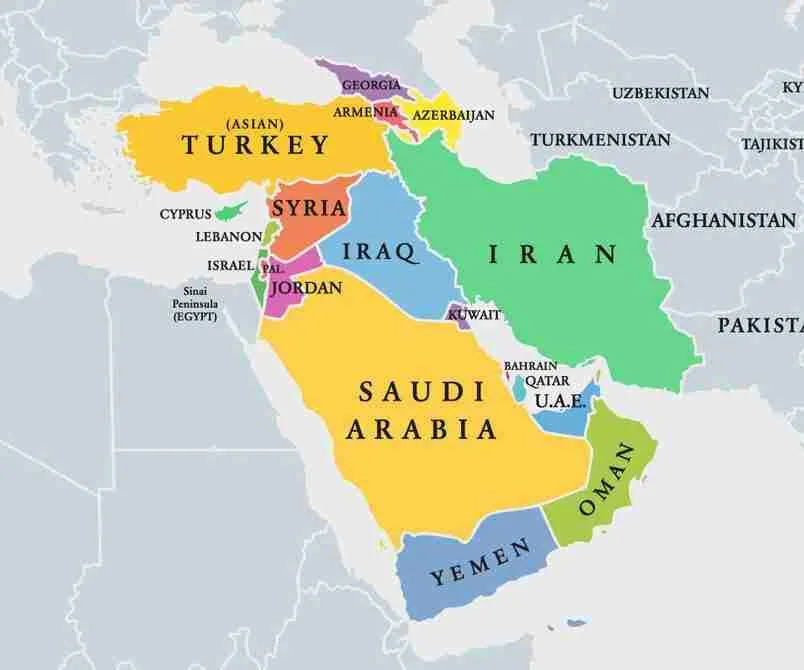
- The Mecca Joint Defence Agreement (MJDA) among Saudi Arabia, Türkiye and Pakistan marks a major shift in West Asia’s security landscape.
- Along with conflicts involving Iran, attacks on Gulf infrastructure, and the Red Sea crisis, it raises the question: should India remain a passive beneficiary of regional stability, or become an active contributor to it?
Why “Multi-Alignment” Worked
- India treated West Asia mainly as an economic hinterland — a source of energy, outbound labour/remittances, and a maritime-terrestrial bridge — while balancing ties across Riyadh, Tehran, Tel Aviv and Abu Dhabi (“Look West”/”Think West” policy).
- It worked because the US stood as the region’s undisputed security guarantor, letting India enjoy economic benefits without the security burden.
Why the Old Model Is Now Obsolete
- Declining US role: reduced US security commitments are creating a vacuum; Gulf states seek alternative partners.
- Demand for reliable security: countries want partners offering real military support during crises, not just non-alignment.
- The Mecca Agreement: combines Saudi finance, Turkish defence tech, and Pakistani military capability — Pakistan’s role is a major concern for India.
- Vulnerable infrastructure: ports, energy grids and pipelines are exposed to drones and asymmetric warfare — investment alone cannot ensure security.
Why West Asia Matters to India
- Energy Security: the Gulf is India’s single largest crude source; disruption of the Strait of Hormuz would be economically devastating.
- Diaspora: ~9 million Indians live/work in GCC states, with over 3.5 million in the UAE alone.
- Remittances: the Gulf sends a very large share of India’s annual remittance inflows.
- Trade & Connectivity: among the fastest-growing trade regions; Gulf hubs are critical air corridors to Europe/Africa.
- Maritime Chokepoints: Strait of Hormuz, Gulf of Oman, Gulf of Aden, Bab-el-Mandeb, and the piracy-prone Somali coast.
India as “Net Security Provider”: Concept and Credibility Test
- Rests on SAGAR (2015) → upgraded to MAHASAGAR (2025), and India’s ambition as “First Responder” in the IOR.
- Hard-power record: Operation Sankalp (since 2019) protecting Gulf shipping; a large naval task group during the Red Sea crisis with MQ-9B drones and MARCOS; the MV Ruen rescue (March 2024); decades of anti-piracy patrols off Somalia.
India’s Existing Toolkit: Minilaterals and Corridors
I2U2
India, Israel, UAE, USA — the “West Asian Quad”; project-driven on food, clean energy, water, tech — not a formal security alliance.
IMEC
India-Middle East-Europe Economic Corridor (G20 Delhi, 2023) — a strategic counter to China’s BRI, linking Indian ports to the Gulf and Europe.
Bilateral Compacts
Deepening UAE and Saudi ties — extending into defence manufacturing, maritime security, interoperability, cybersecurity, counter-terrorism.
The Gap
These are overwhelmingly economic/connectivity-driven — India must now add a hard-power layer to this architecture.
Analytical Insight
Why India Should Take a More Assertive Role
- Strategic autonomy needs capability — diplomacy alone cannot protect citizens, energy and trade routes.
- Avoiding a security vacuum other powers (China, Türkiye, Pakistan-led groupings) would fill.
- A leading power must contribute to regional stability, not just consume it.
Why India Should Remain Cautious
- Limited military capacity — an ageing fleet and budget constraints could be overburdened by open-ended commitments.
- Risk of entanglement in Gaza, Iran, Yemen, Sudan-type conflicts.
- Preserving strategic autonomy — formal alliances could constrain balancing Iran, Israel and Arab states, and protecting Chabahar/INSTC.
Way Forward
The era of passive Indian engagement in West Asia is over. India must strengthen security and defence partnerships to protect its energy, trade, diaspora and strategic interests — while avoiding unnecessary military entanglements. A calibrated, issue-based approach can make India an indispensable security partner without becoming a treaty-bound ally.
