

Why in News: The U.S., under President Trump, has imposed 25% tariffs and additional penalties on imports from India. This follows a stalemate in mini trade deal negotiations.
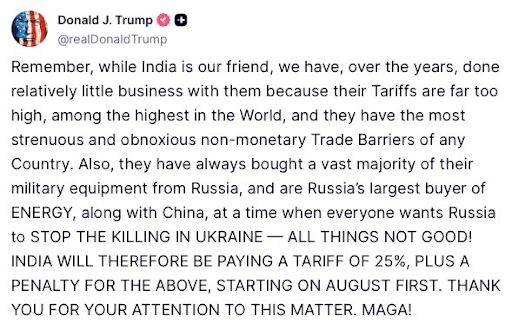
Tariff Announcement: Reasons Behind U.S. Tariff Imposition on India
1. Trade Deficit
- The U.S. goods trade deficit with India was $45.7 billion in 2024, up 5.4% from 2023.
- The Trump administration sees this as an unfair trade imbalance.
2. Non-Monetary Trade Barriers
- U.S. objects to India’s agricultural subsidies and SPS (Sanitary & Phytosanitary) measures.
- These are seen as barriers to U.S. exports, though India defends them as necessary for food safety and farmer welfare.
3. BRICS Participation
- India’s role in BRICS is seen as challenging dollar dominance.
- U.S. wary of alternative trade/payment systems being discussed in BRICS.
4. India-Russia Ties
- India’s defence and energy imports from Russia invite U.S. scrutiny.
- Proposed Russian Sanctions Act, 2025 may impose up to 500% tariffs on countries buying Russian oil.
5. Undefined Penalties
- U.S. has kept future penalties unclear, possibly to increase negotiating pressure.
Key Issues:
1. Trade Deadlock
- Mini-trade deal stalled despite prolonged talks.
- U.S. demands: lower tariffs, wider market access.
- India’s stance: protection of sensitive sectors like agriculture & dairy.
2. Geopolitical Undercurrents
- U.S. links India’s defense and energy ties with Russia to trade issues.
- Trump’s remarks reflect frustration and pressure tactics.
3. Economic Impact
- The U.S. accounts for ~20% of India’s exports.
- New tariffs place Indian goods at a disadvantage vs. ASEAN nations (e.g., Vietnam, Indonesia).
- Sectoral trade bodies raise concern.
Opportunities for India:
- Chance to diversify export markets and strengthen Make in India.
- Push for FTA with other blocs (EU, EFTA, etc.).
- Reassess and simplify domestic trade policies to stay competitive.
Challenges:
- Balancing strategic autonomy (Russia ties) with economic interests (U.S. trade).
- Resolving tariff barriers without compromising domestic industry.
- Navigating unpredictable U.S. leadership and pressure.
Conclusion
- The U.S. tariff on India reflects rising geopolitical tensions in trade. India must balance autonomy with economic interests through diversification, resilience, and diplomatic engagement. Strategic diplomacy is key in this evolving trade landscape.
UPSC Relevance
- GS II: India-U.S. relations, strategic autonomy, multilateral diplomacy.
- GS III: Trade barriers, agricultural policy, impact on exports.
Mains Practice Question
Q. “The imposition of tariffs by the U.S. on India highlights how trade policy is increasingly influenced by geopolitical considerations.” Critically analyze the implications of this shift for India’s economic sovereignty and its strategic autonomy. (250 words)
