Why in News: Recent developments in next-generation malaria vaccines, including India’s first indigenous dual-stage vaccine (AdFalciVax), along with innovative vector control methods, have renewed hopes for malaria elimination by 2030.
About Malaria
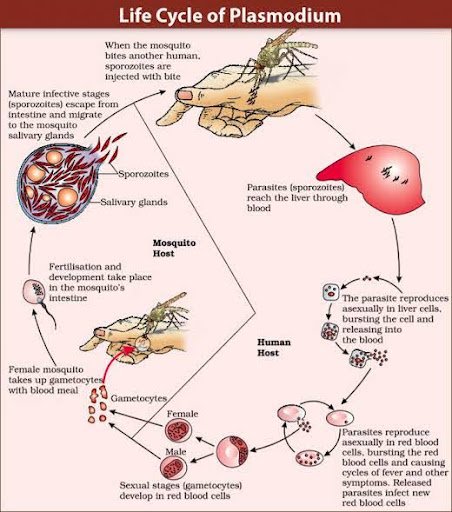
Definition: Malaria is a life-threatening febrile illness caused by Plasmodium parasites, transmitted through bites of infected female Anopheles mosquitoes.
Transmission: Not contagious person-to-person but can spread via infected blood transfusion or contaminated needles.
Main Species: Plasmodium falciparum (most deadly) and Plasmodium vivax (relapse-prone).
Symptoms: Appear 10–15 days after infection; include fever, chills, headache.
Severe Symptoms: Seizures, breathing difficulties, jaundice, dark urine, possible death if untreated.
Introduction
Despite achieving an 80% reduction in malaria cases between 2015 and 2023, the disease continues to persist in specific tribal and remote regions, posing challenges to India’s goal of malaria elimination by 2030.
Context:
- India launched AdFalciVax, its first indigenous dual-stage malaria vaccine, with promising pre-clinical results.
- WHO approved the R21/Matrix-M vaccine developed by Oxford–Serum Institute with up to 77% efficacy.
Challenges in Malaria Elimination
1. Parasite Adaptability
- Plasmodium falciparum and P. vivax are adapting to resist existing drugs.
- P. vivax relapse and latency in the liver complicate treatment and elimination.
2. Vector Resistance
- Mosquitoes are increasingly surviving insecticide exposure, making control efforts less effective.
3. Geographical Pockets of High Prevalence
- Tribal areas like Lawngtlai (Mizoram) and Narayanpur (Chhattisgarh) report over 56 and 22 cases per 1,000 people, respectively.
4. Asymptomatic and Mixed Infections
- Carriers with no symptoms act as hidden reservoirs.
- Mixed infections (e.g., in Jharkhand) complicate diagnosis and treatment protocols.
5. Limited Vaccine Efficacy
- RTS,S vaccine offers only 55% protection in the first year.
- Vaccine protection wanes rapidly, necessitating boosters.
Emerging Solutions and Innovations
1. Vaccine Development
- R21/Matrix-M: WHO-approved, 77% efficacy, low cost, Indian-made.
- PfSPZ and PfSPZ-LARC2: Whole-parasite, IV-based vaccines showing up to 79% protection.
- PfRH5: Blood-stage vaccine offering cross-strain protection.
Transmission-Blocking Vaccines (TBVs):
- Pfs230D1 and Pvs230D1M reduce transmission within mosquitoes.
- India’s AdFalciVax: Dual-stage vaccine combining prevention and blocking transmission.
2. Technological Platforms
mRNA Vaccines:
- Encode malaria antigens (e.g., Pfs25) for rapid development and high efficacy.
- CureVac–NIH candidate blocked transmission in mice for over six months.
Immune Enhancement:
- Use of ferritin nanoparticles, CpG, and MPLA adjuvants to enhance and prolong immune response.
3. Genetic Vector Control
CRISPR Gene Drives:
- Induce infertility in mosquitoes or shorten lifespan of infected carriers.
Way Forward
- Accelerate Clinical Trials: Speed up multi-stage trials for promising candidates like AdFalciVax.
- Strengthen Surveillance: Detect and treat asymptomatic carriers effectively.
- Integrated Vector Management: Combine vaccine use with improved mosquito control.
- Invest in R&D and Infrastructure: Promote domestic biotech innovation with consistent funding.
- Training and Capacity Building: Equip healthcare workers with tools for diagnosis and treatment.
- Policy Coordination: Ensure synergy between regulators, scientists, and manufacturers.
Conclusion
- India stands at a decisive moment in its malaria elimination campaign. Scientific breakthroughs, especially in vaccine development, offer promising tools.
UPSC Relevance
GS Paper II: Health Sector Reforms, Government Schemes, Issues in Public Health
GS Paper III: Science and Technology in Disease Control, Biotechnology, Health Research
Mains Practice Question
Q. “India’s fight against malaria is no longer about high burden but hidden pockets and evolving parasites.” Discuss the challenges and innovative solutions shaping India’s malaria elimination roadmap by 2030. (250 words)