

Why in News: A major baby-selling racket was uncovered at Universal Srushti Fertility Centre in Secunderabad, Telangana, where couples were duped with non-biological babies, surrogates exploited, and laws blatantly violated.
The Case: Summary of Events
Victims:
- Unrelated babies were exchanged across states (e.g., Assam couple’s baby given to Rajasthan couple).
- The clinic had no valid license and used falsified documents.
- Surrogates were sourced unethically—vulnerable women coerced into carrying pregnancies, often under false pretenses or without payment.
- 15+ couples were cheated with babies not biologically theirs.
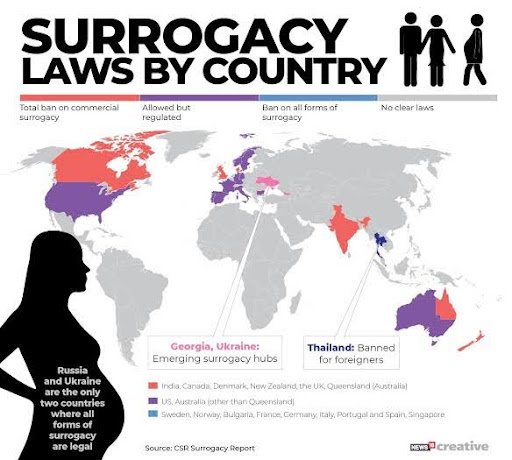
What is Surrogacy?
- Surrogacy is an arrangement in which a woman (called the surrogate mother) carries and delivers a child for another individual or couple who are unable to conceive or carry a pregnancy on their own.
Types of Surrogacy
1. Traditional Surrogacy
- The surrogate’s own egg is fertilised with the sperm of the intended father.
- The child is biologically related to both the surrogate and the intended father.
2. Gestational Surrogacy
- An embryo created using the gametes of the intended parents (or donors) is implanted into the surrogate.
- The child has no biological link to the surrogate mother.
Surrogacy (Regulation) Act, 2021: Key Provisions
Type Permitted
- Only altruistic surrogacy is allowed.
- Commercial surrogacy is strictly prohibited.
Conditions for Surrogacy
- Medical necessity for the intending couple.
- Not for sale, prostitution, or exploitation.
- Only for conditions specified by regulations.
Eligibility: Intending couple must have:
- Certificate of Essentiality and Eligibility.
- Single woman (widow/divorcee) aged 35–45 can also avail.
Surrogate mother:
- Married, aged 25–35, with at least one biological child.
- Can be surrogate only once.
- Must have medical & psychological fitness certificate.
Surrogacy Clinics
- Must register and adhere to prescribed standards.
Child’s Rights
- Considered biological child of intending parents.
- Entitled to all legal rights and privileges.
Abortion
- Surrogate mother cannot be forced to abort except under prescribed conditions.
Regulatory Bodies
National Board:
- Chaired by Union Health Minister.
- Advises government, monitors implementation, sets standards, supervises state boards.
State Boards:
- At state/UT level to implement and monitor provisions.
Amendment to Surrogacy (Regulation) Rules, 2022
1. Use of Donor Gametes Allowed:
- If either partner in the couple is medically unfit to produce gametes.
- Certification required from the District Medical Board.
2. Restrictions Continue:
- Surrogacy still not allowed if both partners require donor gametes.
- The intention is to retain a partial biological connection to the child.
3. For Widowed/Divorced Women:
- Can avail surrogacy using their own eggs and donor sperm.
- Reinforces the principle of at least one biological link.
Key Concerns and Issues
1. Exploitation of Surrogates
- Health risks and psychological toll on women.
- Lack of sufficient compensation in altruistic model.
- Altruistic model risks familial coercion, especially within patriarchal setups
2. Commodification and Commercialization
- Ethical concerns of treating surrogacy as a market transaction.
- Risks of turning women’s wombs into tools for rent.
3. Legal Ambiguities
- Unclear parentage and citizenship status, especially in international cases.
- Weak protection for rights of surrogate, intending parents, and the child.
4. Surrogacy Tourism and Foreigners
- India was once a hub due to low costs.
- Risks of exploiting poor Indian women and leaving behind stateless children.
5. Implementation Gaps
- Delays in setting up regulatory bodies.
- Lack of awareness and inconsistent enforcement of rules.
6. Ethical & Legal Concerns
- Ban on commercial surrogacy may push it underground, increasing risk of illegal and unsafe practices.
- Denial of reproductive autonomy—Devika Biswas v. UoI (2016): Article 21 includes reproductive rights.
Solutions to Address Surrogacy Issues in India
1. Legal Clarity & Regulation
- Frame clear laws on parentage, citizenship, and rights of all parties.
2. Ethical Oversight
- Regulate surrogacy clinics/agencies for transparency.
- Ensure fair compensation, medical care, and legal safeguards.
3. Surrogate Protection
- Mandate informed consent and counseling.
- Ensure comprehensive healthcare and emotional support during and post-pregnancy.
4. Promote Ethical Altruistic Surrogacy
- Prevent coercion within families; safeguard reproductive autonomy.
Frame checks to avoid misuse under the guise of altruism.
5. Encourage Alternatives
- Promote adoption, fostering, and ARTs as inclusive family-building options.
UPSC Relevance:
GS Paper II – Governance, Government policies and interventions, Issues relating to Health, Rights of vulnerable sections.
GS Paper I – Role of women and issues related to gender equality.
Mains Practice Question:
Q. In the absence of robust regulatory mechanisms, surrogacy in India remains vulnerable to ethical violations and legal ambiguities.” Discuss the need for comprehensive regulation of surrogacy in India.
