


PRELIMS
Collusive Litigation

Why in News: The Supreme Court of India has taken suo motu cognisance of collusive litigation involving officials of the Bengaluru Development Authority (BDA) over land acquisition in Bengaluru North Taluk.
Court: Supreme Court of India
Action: Suo motu cognisance of collusive litigation involving Bengaluru Development Authority (BDA)
Land Involved: 3 acres 33 guntas in Bengaluru North Taluk
Legal Provision Used: Directed registry to initiate petition under Article 32 of the Constitution
Extraordinary Powers Invoked: Article 142
What is Collusive Litigation?
- A false legal conflict where parties cooperate secretly to mislead the court
- Undermines adversarial system and may bypass legislative processes
- Can be used to manipulate judicial outcomes
SC’s Observations:
- Found collusion between BDA officials and appellants
- Noted denial of benefits to common citizens from land acquisition
- Judicial process was misused to favour select parties
Judicial Principles & Precedents:
Courts can set aside collusive decrees even suo motu
Cited Priyanka Srivastava vs State of UP (2015):
- Non-filing of affidavit is a curable defect, but must be rectified before final orders
- Simultaneous civil & criminal proceedings on same matter allowed
Under Article 227, High Courts can intervene
- Colluding parties cannot challenge the decree
Burden of proof lies on party alleging collusion
Implications:
- Reinforces judicial scrutiny on land acquisition and statutory authority conduct
- Warns against abuse of legal processes by government bodies
- Emphasises transparency and accountability
- Strengthens public interest protection in legal proceedings
Parliamentary Committee Recommendations on ESG Framework
Why in News :Parliamentary Standing Committee on Finance released key recommendations to strengthen the Environmental, Social, and Governance (ESG) framework in India.
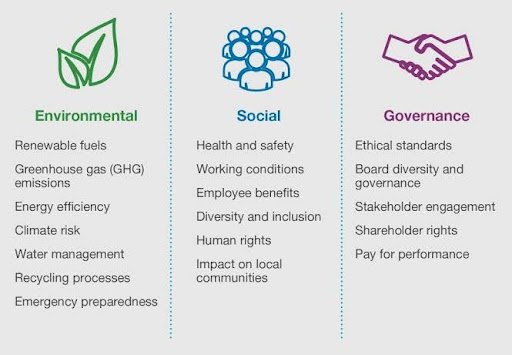
What is ESG?
ESG stands for Environmental, Social, and Governance – a set of standards to assess a company’s impact on society and the environment.
Key Observations:
No explicit mention in Companies Act, 2013, but ESG is implicitly addressed through:
- Energy Conservation
- POSH Act
- Maternity Benefit Act
- Corporate Social Responsibility (CSR), etc.
Challenges Identified:
- Greenwashing
- Inconsistent adoption across sectors
- MSMEs struggle with ESG compliance
Key Recommendations:
1. Dedicated ESG Oversight Body:
- To be set up under the Ministry of Corporate Affairs (MCA)
- Responsible for compliance, disclosures, and penalties for greenwashing
2. Amend Companies Act, 2013:
- Provide explicit legal backing for ESG integration
3. Sector-Specific Guidelines:
- Tailored support for MSMEs
4. Independent ESG Committees:
- On the lines of audit committees for internal ESG monitoring
5. ESG Chapter in MCA Annual Report:
- To be included from FY 2025-26
Other Related ESG Initiatives:
Business Responsibility and Sustainability Reporting (BRSR):
- Mandatory for top 1000 listed companies
BRSR Core (by SEBI):
- Tool to monitor greenwashing
National Guidelines on Responsible Business Conduct (NGRBCs):
- Released by MCA
CSR Mandate:
- Under Section 135, Companies Act, 2013
- 2% of average net profit (last 3 years) to be spent on CSR by qualifying companies.
FSSAI & Ayush Ministry Release List of ‘Ayurveda Aahara’ Food Preparations
Why in News : FSSAI and the Ayush Ministry have released a list of approved Ayurveda Aahara food items, marking a significant step in integrating Ayurvedic dietary wisdom with modern food regulations.

Definition:
Ayurveda Aahara = Foods based on Ayurvedic dietary guidelines, using natural ingredients, herbs, and suited to seasonal and bodily balance
Key Highlights:
- List issued under Note (1) of Schedule B of Food Safety and Standards (Ayurveda Aahara) Regulations, 2022
- Recipes, ingredients, and processes drawn from authoritative Ayurvedic texts in Schedule A
- FSSAI allows Food Business Operators (FBOs) to propose new products for inclusion under Category A, with classical text references
Significance:
- Brings traditional food wisdom into the mainstream
- Promotes preventive health and sustainable living
- Aims to build consumer trust and industry clarity in Ayurvedic food products.
Bond Switching – Government’s Debt Management Tool

Why in News : Bank of Baroda study reveals that the Government saved ₹560 crore in interest costs through Bond Switching, helping manage rising debt maturity efficiently.
Meaning:
- A process where the government replaces short-term bonds with longer-duration sovereign bonds
- Example: Bonds maturing in FY27, FY28, FY29 replaced with bonds maturing after FY32
Objective:
- Smoothen the debt maturity profile
- Reduce repayment pressure
- Support market development
Mechanism:
- Conducted either with market participants or directly with the Reserve Bank of India (RBI)
Benefit:
- As per Bank of Baroda study, saved ₹560 crore in interest costs
Uttarkashi Flash Floods
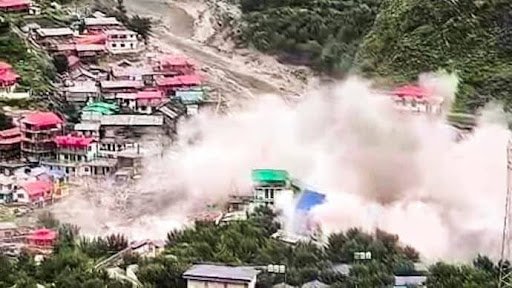
Why in News: Flash floods in Uttarkashi’s Dharali town on August 5, 2025, caused by torrential rain, left at least 4 dead and over 60 feared trapped or missing.
Date of Incident:
- August 5, 2025
Location:
- Dharali, Uttarkashi district, Uttarakhand
- Located at 8,600 feet above sea level
- On the banks of Kheer Ganga river
Cause:
- Flash flood triggered by torrential rainfall
- Suspected cloudburst in the region.
Impact:
- Videos show giant waves sweeping through the area
- Area turned into a sludge-filled riverbed
- Heavy loss of life and property feared
About Flash Floods
Definition:
- Sudden, high-intensity floods occurring within <6 hours of heavy rainfall
Causes:
- Intense rainfall (cloudburst)
- Dam/levee failure
- Glacial lake outburst
- Debris or ice jam
Contributing Factors in India:
- Steep terrain (like Himalayas)
- Soil erosion and loose sediment
- Urbanisation and obstruction of natural water flow
Features:
- Rapid rise in water levels
- Carries debris, mud, and rocks
- Overwhelms drainage and inundates low-lying areas
- Common in narrow, steep river valleys
Relevance to Climate Change & Disaster Management:
- Increased frequency due to changing rainfall patterns
- Emphasises need for early warning systems, disaster preparedness, and river basin management
