

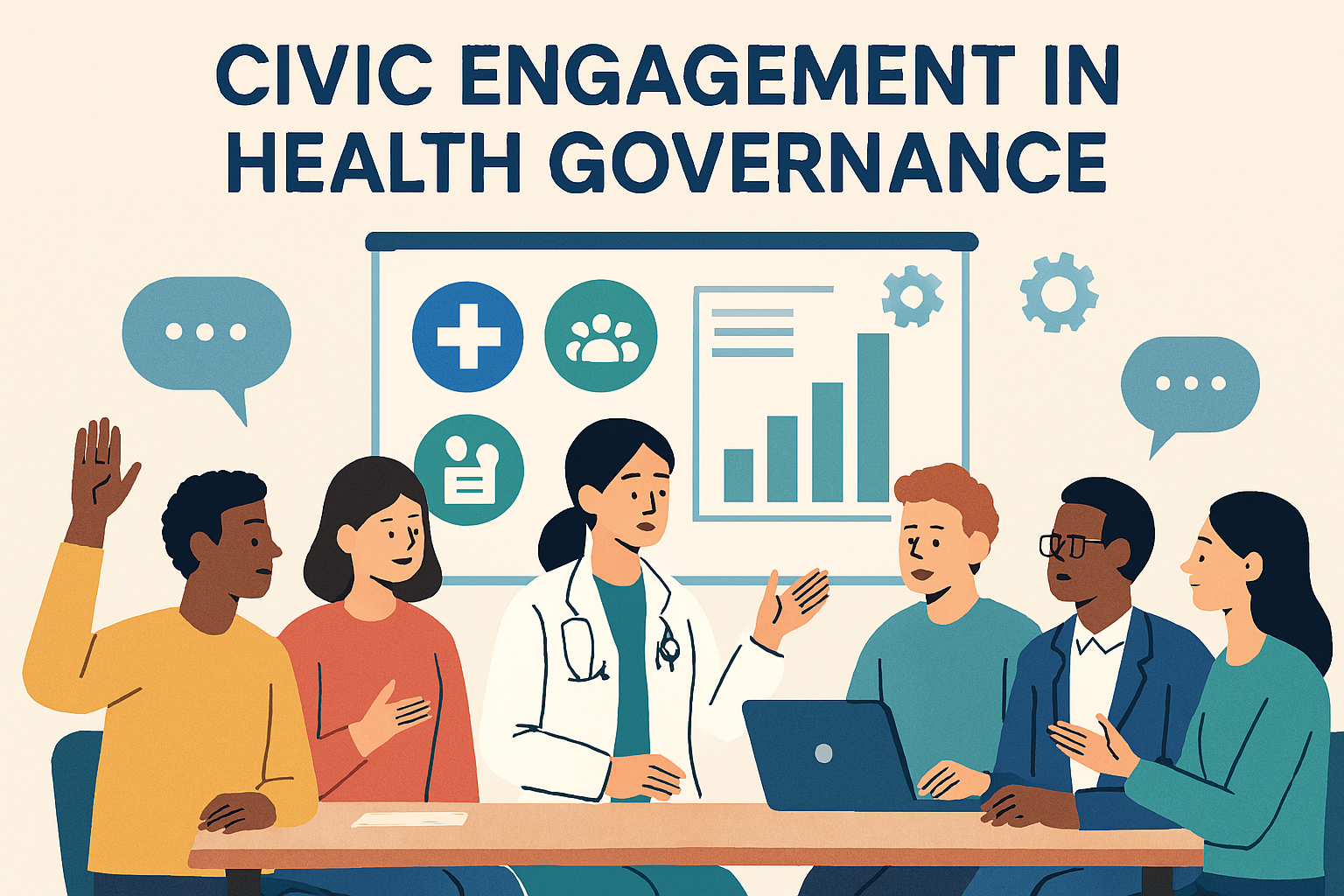
Why in News: States like Tamil Nadu and Karnataka have launched doorstep healthcare schemes for non-communicable diseases, highlighting the need to strengthen citizen participation in health governance to ensure inclusive, accountable, and effective healthcare delivery.
Context:
- Tamil Nadu’s Makkalai Thedi Maruthuvam (Medicine at People’s Doorstep) and Karnataka’s Gruha Arogya schemes provide doorstep healthcare for non-communicable diseases.
- However, this raises an important question: To what extent can citizens actively engage with and influence health governance at different levels?
Importance of Citizen Engagement in Health Governance
- Upholds democracy: Enables people to participate in health decisions, affirming their rights and dignity.
- Increases accountability: Challenges elite control, reduces corruption, and improves system responsiveness.
- Improves health outcomes: Builds trust and cooperation between communities and health workers.
- Empowers marginalized groups: Includes women and disadvantaged sections in decision-making.
- Strengthens governance: Shifts citizens from passive recipients to active co-creators of health policies.
- Addresses inequalities: Focuses on root causes of health inequities, not just awareness.
- Builds trust: Promotes ongoing collaboration for better healthcare delivery.
Institutional Mechanisms for Public Engagement in Health Governance in India
1. Village Health Sanitation and Nutrition Committees (VHSNCs)
- Established under the National Rural Health Mission (NRHM) since 2005.
- Aim to involve rural communities in planning and monitoring health, sanitation, and nutrition at the village level.
- Include representation from women and marginalized groups.
2. Rogi Kalyan Samitis (Patient Welfare Committees)
- Function at health facilities to improve hospital management and patient services.
- Facilitate community participation in health service delivery.
- Ensure accountability and responsiveness of health institutions to local needs.
3. Mahila Arogya Samitis (Women’s Health Committees)
- Urban-based women’s groups promoting health awareness and participation.
4. Ward Committees
- Urban local governance bodies that serve as platforms for civic participation in health and sanitation matters.
5. NGO-led Committees
- Non-governmental organizations facilitate community engagement by forming health committees.
- Bridge gaps between communities and health systems, advocating for inclusive participation.
Challenges in Current Public Engagement in Health Governance
1. Passive Mindset of Policymakers and Providers
- Communities are viewed as passive recipients, not active participants.
- Focus is on target-based outcomes (e.g., number of beneficiaries) rather than meaningful engagement.
2. Limited Community Participation
- Despite policies promoting bottom-up planning, real community involvement in decision-making is rare.
3. Hierarchical and Medicalized System
- Leadership often based on seniority, not public health expertise.
- Disconnect between health administrators and community realities.
4. Resistance from Health System Actors
- Concerns over increased workload and accountability pressures.
- Regulatory capture by dominant medical and capitalist interests hinders inclusive governance.
5. Weak and Ineffective Engagement Platforms
- Many committees and forums either not established or dysfunctional.
- Issues include ambiguous roles, infrequent meetings, underutilized funds, and poor coordination.
6. Social and Structural Barriers
- Deep-rooted social hierarchies limit participation of marginalized groups.
- Citizens often resort to protests, media, and legal actions due to lack of formal channels.
Way Forward for Civic Engagement in Health Governance
1. Mindset Shift
- Treat communities as active partners, not just beneficiaries.
- Value participation as much as outcomes.
2. Empower Communities
- Share health rights info and build civic awareness.
- Include marginalized groups and equip citizens for effective participation.
3. Sensitize Health Workers
- Look beyond poor awareness; address structural health inequities.
- Collaborate with communities as partners.
4. Strengthen Engagement Platforms
- Activate committees with clear roles, regular meetings, and proper fund use.
- Improve coordination across sectors.
5. Promote Inclusivity and Accountability
- Address social hierarchies and power imbalances.
- Build trust through transparency and accountability.
6. Support Through Policy
- Institutionalize and resource community engagement in health governance.
UPSC RELEVANCE
GS Paper 2: Governance, Constitution, Polity, Social Justice & International Relations
- Citizen participation as a pillar of democratic governance
MAINS Practice Question
Q. Analyze the challenges faced in institutionalizing public engagement in India’s health governance system. Suggest measures to strengthen participatory governance.
