


PRELIMS
Blue Pinkgill Mushroom Discovery
Why in News: Rare fungi species, including the Blue Pinkgill mushroom (Entoloma hochstetteri), native to New Zealand, and the shuttlecock mushroom (Clathrus delicatus) have been recently discovered in Telangana’s forests.
Location: Kagaznagar forest division, Komaram Bheem Asifabad district, Telangana.
Mushroom: Blue Pinkgill (Entoloma hochstetteri).
- Appearance: Bright blue cap and stems, pink to purplish gills; pink to salmon spore print.
- Pigments: Contains rare azulene pigments (uncommon in fungi).
- Native Habitat: Originally native to New Zealand broadleaf forests.
- Season: Appears mainly during monsoon due to moist soil conditions.
- Significance: First confirmed sighting in India; indicates favourable ecological conditions in Telangana.

Other Notable Fungal Discovery
Shuttlecock Mushroom (Clathrus delicatus):
- Recorded for the first time in Eastern Ghats (Kawal Tiger Reserve, Telangana).
- Previously known from Western Ghats only.
Ecological & Scientific Importance
- Highlights rich fungal biodiversity of Telangana forests.
- Suggests ecological connectivity between Eastern and Western Ghats.
- Fungi play a key role in nutrient cycling and forest ecosystem health.
- Monsoon crucial for fungal growth and fruiting.
- Encourages further mycological research and forest conservation efforts.
Removal of Stray Dogs
Why in News: The Supreme Court of India has ordered the permanent capture and removal of stray dogs from Delhi-NCR streets to prevent rabies, protect public health, and ensure safety—especially for children—after repeated incidents of dog bites and fatalities.

What?
- Supreme Court directs Delhi, Noida, Gurgaon, and Ghaziabad authorities to permanently capture and relocate stray dogs to shelters, focusing on preventing rabies and protecting public safety.
Reason:
- Protect children and citizens from stray dog bites and rabies; safety prioritized over sentiments.
India’s Stray Dog Scenario:
- Over 60 million stray dogs in India.
- 3 million dog bites annually; around 5,000 deaths.
- Rabies kills at least 2 people every 3 hours.
- Stray dogs cause environmental pollution through feces and urine.
Pet Dog Industry:
- 30 million pet dogs (2024), growing 10-15% annually.
- Rs 300 crore industry expected to double by 2030.
Past Control Efforts:
- Killing methods (electrocution, poisoning) ineffective; spurred breeding.
- Since 1992, Animal Birth Control (ABC) through sterilisation preferred.
- 2023 ABC Rules replaced 2001 rules; sterilisation targets rarely met.
Feeding Strays Issues:
- Feeding without adoption leads to territorial, aggressive behavior.
- Abandoned or proxy-fed dogs more aggressive than true strays.
- Supreme Court may hold feeders accountable.
Key Court Orders:
- Mandatory capture and sheltering of strays with no release.
- Shelters house 5,000 dogs within 6–8 weeks, with CCTV and staff.
- All dogs to be sterilised and vaccinated.
- Rapid response helpline for dog bites, with medical assistance ensured.
- Strict action against obstruction and release violations.
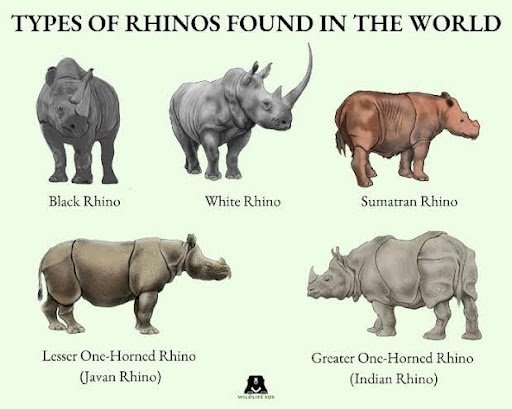
Greater One-Horned Rhino
Why in News: IUCN-TRAFFIC report commends India’s enhanced monitoring and anti-poaching efforts, which have significantly reduced poaching of the Greater One-Horned Rhino.
About:
- Largest of the five rhino species with a single horn and thick, armor-like skin.
Diet:
- Grazes on grass, leaves, fruits, and aquatic plants.
Habitat & Range:
- Found primarily in India and Nepal; inhabits forests, grasslands, and inland wetlands.
Threats:
- Loss of genetic diversity, habitat loss, and degradation.
Protection Status:
- IUCN Red List: Vulnerable
- CITES: Appendix I (strictest protection)
- Wildlife Protection Act, 1972 (India): Schedule I
Conservation Efforts:
- National Conservation Strategy for the Indian One-Horned Rhinoceros (2019)
- Indian Rhino Vision (IRV) 2020
Recent Update:
- The IUCN-TRAFFIC report praises India’s improved monitoring and surveillance leading to a sharp decline in poaching incidents.
TRAFFIC:
- NGO focusing on wildlife trade regulation, jointly run by WWF and IUCN.
Armenia–Azerbaijan Peace Agreement
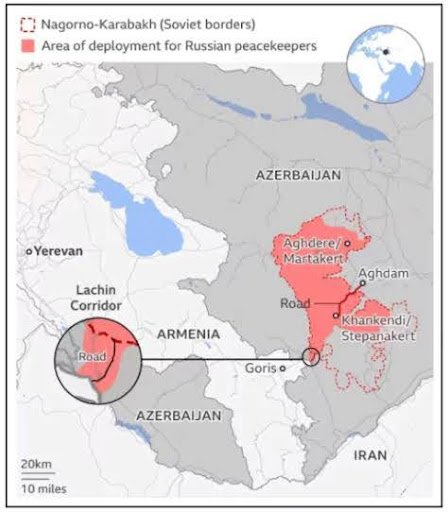
Why in News: The US brokered a peace deal between Armenia and Azerbaijan to end their long-standing conflict over Nagorno-Karabakh
Purpose: To end decades-long conflict between Armenia and Azerbaijan over Nagorno-Karabakh.
Key Provisions:
- Cessation of hostilities and establishment of diplomatic relations.
- “Trump Route for International Peace and Prosperity” (TRIPP): A new transit route connecting Azerbaijan to its exclave Nakhchivan through Armenian territory, with exclusive US development rights.
- Separate US cooperation agreements with both countries on energy, technology, and economy.
Conflict Background:
- Nagorno-Karabakh: Mountainous region inside Azerbaijan, majority ethnic Armenian population.
- 1980s: Region declared independence with Armenian support.
- 1991: Both nations gained independence; conflict persisted.
- 2023: Azerbaijan regained control; nearly 100,000 Armenians displaced.
India’s Interest:
- Supports the peace deal as an important diplomatic achievement.
- Armenia: Only country in the region with which India has a Friendship and Cooperation Treaty (1995).
- Azerbaijan: Lies on the International North-South Transport Corridor linking India and Russia via Central Asia.
Dhirio – Bull Fighting
Why in News: Goa Assembly legislators recently demanded legalisation of Dhirio (bull fighting), a traditional but banned sport involving bulls fighting each other, citing cultural significance despite concerns over animal cruelty.
What is Dhirio?
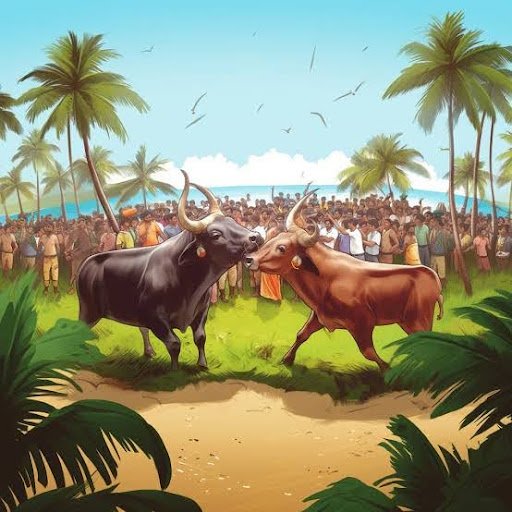
- Traditional bull fighting sport in Goa, locally called Dhirio or Dhiri.
When is it held?
- After the harvest season, often during church festivals.
How is it conducted?
- Two trained bulls lock horns and fight until one is pushed out or runs away. Unlike Spanish bullfighting, the bulls are not killed.
Historical Significance:
- Dates back to Harappan civilization; was practiced for sport and entertainment.
Cultural Significance:
- Traditionally held in paddy fields and football grounds; an important local cultural event.
Current Legal Status:
- Banned by Goa High Court in 1997 citing Prevention of Cruelty to Animals Act, 1960.
Issues:
- Involves animal cruelty causing physical and psychological harm; fights sometimes turn deadly.
Challenges:
- Despite the ban, fights continue secretly; popular for betting.
Recent Development:
- Goa Assembly legislators from all parties demand legalisation of Dhirio.
