

Why in News: The proposed 50% U.S. tariffs on Indian exports worth $40 billion threaten sectors like textiles, leather, footwear, and gems — industries that employ millions of women, exposing the gendered dimension of India’s economic vulnerabilities.
Context & Background
- India’s economy: $4.19 trillion, poised to be the 3rd largest globally.
- External shock: Tariff threat may shave off ~1% of GDP.
- Internal weakness: Persistently low Female Labour Force Participation Rate (FLFPR: 37–41.7%), far below global average (~50%) and China (60%).
- IMF: Closing the gender gap could raise India’s GDP by 27%.
Economic Development and Employment Generation
- Trade exposure: U.S. is India’s largest export market (18%).
- Sectoral impact: ~50 million workers (majority women) employed in vulnerable sectors.
- Comparative gap: China cushioned U.S. tariffs with scale & diversification; India remains exposed.
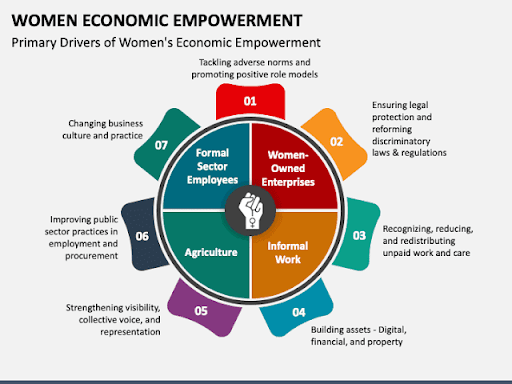
Inclusive Growth and Issues Relating to Women
- Urban women face barriers: safety, transport, sanitation, care burden.
- Rural women: rising participation but often unpaid or low productivity work.
- Low FLFPR mirrors Italy/Greece, where long-term growth stagnated.
- Economic empowerment of women = strategic growth imperative, not just social justice.
Demographic Dividend & Population Issues
- India’s demographic window till ~2045.
- Without women’s integration, risk of wasted dividend and old-age dependency trap.
Comparative Policy Lessons
- U.S. WWII: Women mobilised with childcare + equal pay.
- China: State-backed care/education → FLFPR 60%.
- Japan: Raised FLFPR from 63% → 70% (+4% GDP per capita).
- Netherlands: Flexible part-time work with full benefits.
Indian Innovations (Schemes & Case Studies)
- Karnataka’s Shakti Scheme (2023): Free bus travel → 40% surge in female ridership → better access to jobs/education.
- Urban Company platform: 15,000+ women earn ₹18k–25k/month + insurance, skilling, maternity benefits.
- Rajasthan’s Indira Gandhi Urban Employment Guarantee Scheme: 65% jobs to women; neighbourhood-based flexible work.
Challenges
- Patriarchal norms & cultural barriers.
- Unpaid care economy remains invisible.
- Wage gap, credit inaccessibility, high informalisation.
- Weak implementation of maternity/creche provisions.
- Poor safety, sanitation, and transport infrastructure.
Way Forward
- Policy reforms – Expand gender budgeting, tax incentives for women entrepreneurs, enforce equal pay.
- Social infrastructure – Universal childcare & eldercare centres, safe transport.
- Labour reforms – Formalise gig/part-time work with social security; promote flexible/remote work.
- Cultural shift – Shared domestic responsibilities, STEM skilling for girls.
- Institutional mechanisms – Strengthen NITI Aayog’s Women Economic Empowerment framework.
UPSC Relevance
GS Paper I
- Role of women and women’s organisation,
GS Paper III
- Indian economy and issues relating to growth, development and employment.
Mains Practice Question
Q. Discuss how low female labour force participation acts as a structural drag on India’s economic growth. Suggest policy measures to turn gender empowerment into an economic advantage.
