

Why in News: The Supreme Court (Aug 25, 2025) asked the Union government to frame guidelines for regulating social media, after complaints that comedians had made derogatory remarks against persons with disabilities, raising concerns about regulating commercial speech on digital platforms.
Introduction
- The rapid rise of digital platforms has democratised expression but also blurred the lines between free speech and commercial speech.
- Stand-up comedy, influencer marketing, satire, and online commentary increasingly mix profit motives with expression.
- The Supreme Court, in August 2025, urged the Union government to frame guidelines for regulating social media, following complaints against derogatory remarks by comedians on persons with disabilities.
- This raises a key constitutional and policy question: Should commercial speech on digital platforms be regulated, and if so, how?
Why the Debate?
- Trigger: SC directive in response to derogatory stand-up content targeting vulnerable groups.
- Context: Growth of digital economy, influencer culture, and commercialisation of online speech.
- Concerns: Potential harm to dignity of individuals, social disharmony, and discriminatory narratives.
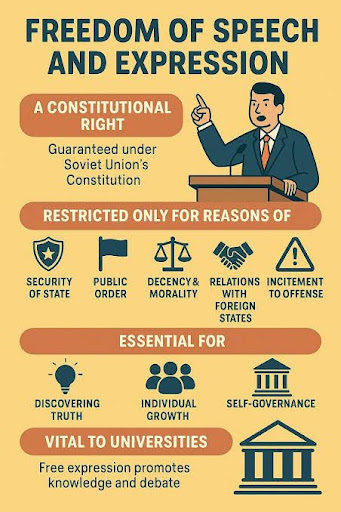
- Challenge: Balancing Article 19(1)(a) freedom with permissible restrictions under Article 19(2).
Constitutional and Legal Position
1. Free Speech under Article 19(1)(a)
- Includes not just political or artistic expression but also commercial speech (e.g., Tata Press v. MTNL, 1995).
- The Supreme Court in Sakal Papers v. Union of India (1962) upheld that economic aspects of speech (newspaper circulation) are part of free expression.
2. Restrictions under Article 19(2)
- Grounds: security of state, public order, decency, morality, defamation, etc.
- Individual dignity not explicitly mentioned, though upheld indirectly in Subramanian Swamy v. Union of India (2016) (criminal defamation).
3. Existing Legal Framework
- Bharatiya Nyaya Sanhita (BNS) & IT Act, 2000: FIRs already possible against offensive digital content.
- Section 69A, IT Act: Blocking of websites/content by govt.
- Blocking Rules, 2009: Framework for takedowns.
Critics argue that these existing mechanisms already allow regulation, but they are often opaque and lack natural justice safeguards.
Arguments For Regulation
1. Protecting Vulnerable Groups
- Derogatory or discriminatory jokes may stigmatise disabled, women, or marginalised groups.
- Ensures dignity and inclusivity in digital public sphere.
2. Commercialisation of Speech
- Influencers and comedians earn from platforms; accountability must match commercial benefit.
- Consumer protection aspect—commercial advertisements are already regulated, similar rules could apply here.
3. Preventing Harm & Hate Speech
- Satire/comedy can cross into hate or humiliation.
- Protects against misinformation or harmful narratives.
4. Judicial Mandate for “Complete Justice”
- Courts are empowered to issue directions in cases of regulatory vacuum.
- SC has intervened in past to balance free speech with dignity (e.g., criminal defamation).
Arguments Against Regulation
1. Chilling Effect on Free Speech
- Over-regulation may silence comedians, satirists, and artists.
- Fear of litigation → self-censorship.
2. Dignity as an Independent Ground is Problematic
- Vague, subjective, and undefined in law.
- Risks arbitrary censorship.
3. Existing Framework Sufficient
- IT Act + BNS + Defamation laws already cover offensive content.
- Additional laws may duplicate or overlap.
4. Risk of State Overreach
- Govt.-framed guidelines could be misused to suppress dissent and inconvenient voices.
- Broadcasting Services (Regulation) Bill had drawn criticism for excessive govt. control.
5. Marketplace of Ideas
- Even profit-driven speech contributes to democracy and reflection.
- Courts have upheld that free speech includes content that “may offend, shock, or disturb” (Justice Oka Bench, 2024).
Ethical Dimension
- Freedom vs Responsibility: Freedom of speech carries responsibility not to harm dignity or perpetuate stereotypes.
- Utilitarianism: Regulation must maximise social good without stifling creativity.
- Justice & Fairness: Protect vulnerable groups from humiliation.
- Integrity & Accountability: Commercial creators must be accountable for monetised speech.
Safeguards if Regulation is Adopted
1. Clarity in Law: Only Parliament-enacted law, not executive orders, should define limits.
2. Proportionality Test: Restrictions must be least restrictive means to achieve legitimate aim.
3. Transparent Review Mechanisms: Independent appellate body for content takedowns.
4. Stakeholder Consultation: Include artists, comedians, digital platforms, civil society, not just state and industry.
5. Notice and Hearing: Content creators must be given notice before takedown.
6. Distinguish Harmful Speech vs Offensiveness: Focus on preventing discrimination/hate, not regulating taste or satire.
Way Forward
- Strengthen self-regulation codes for digital platforms and influencers.
- Promote awareness and sensitivity training for creators.
- Empower independent digital ombudsman to address complaints.
- Encourage civil remedies (apology, compensation) over criminalisation.
- Uphold India’s constitutional values: protect speech, punish hate.
Conclusion
Commercial speech on digital platforms is integral to modern free expression. While offensive content must be addressed, blanket regulation risks sliding into censorship and silencing dissent. The challenge lies in finding a middle path: protecting vulnerable groups and public order while safeguarding India’s constitutional guarantee of free speech.
UPSC Relevance
GS Paper 2 (Polity & Governance):
GS Paper 3 (Technology, Media & Society): Regulation of digital platforms, influencers, and online content.
Mains Practice Question
Q. Should commercial speech on digital platforms be regulated? Discuss with reference to constitutional freedoms and reasonable restrictions under Article 19.
