
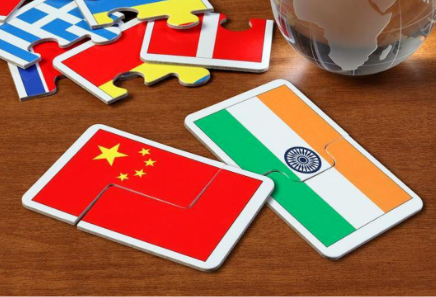
Policy Context and Trigger
- Finance Ministry plans to lift 2020 curbs on Chinese firms bidding government contracts.
- Restrictions followed the Galwan Valley clash, shaping India’s cautious investment posture.
- Current debate questions whether Chinese FDI can advance economic growth without compromising security.
Strategic Framework for Accepting FDI
- Experts stress the need for a clear national roadmap aligning FDI with industrial and security priorities.
- Sensitive and non-sensitive sectors must be formally demarcated by national security authorities.
- Country-neutral investment rules are preferred over China-specific prohibitions for systemic consistency.
Economic Opportunities from Chinese Investment
- Manufacturing expansion could integrate India deeper into global and regional supply chains.
- Increased FDI may boost exports and reduce dependence-driven trade deficit with China.
- Successful precedents include Chinese smartphone firms like Xiaomi and Oppo operating profitably in India.
- Chinese EV manufacturers are identified as potential investors with strong domestic market interest.
National Security Red Lines
- Coastal and port projects near naval installations are flagged as high-security risk zones.
- Digital economy sectors pose risks from data flows and potential system “kill switches”.
- Consumer goods are viewed as comparatively lower-risk investment areas.
Supply Chain Realities and Constraints
- Efficient supply chains require low-tariff regimes enabling repeated cross-border component movement.
- India must identify competitive niches within fragmented global production networks.
- Non-tariff barriers, including quality control orders, shape component import feasibility.
China’s Strategic Incentives
- China faces excess industrial capacity and a $1.2 trillion trade surplus.
- Overseas investment helps establish external supply chains and hedge against China-focused tariffs.
- India offers fast-growing consumer markets and geopolitical “India Premium” attractiveness.
Structural Challenges for India
- Infrastructure and logistics remain constraints for export-oriented manufacturing platforms.
- Environmental factors, including pollution concerns, deter multinational production relocation.
- Southeast Asia often appears more business-friendly for Chinese export-oriented investments.
Lessons from Electronics Manufacturing
- Apple’s India production required special concessions to Chinese component suppliers.
- Broader replication of such sector-specific investment facilitation remains uncertain.
- China continues to supply intermediate components indirectly through ASEAN-based export routes.