
Why in News: In his Independence Day 2025 speech, Prime Minister Narendra Modi emphasised India’s need to become self-reliant in frontier technologies like semiconductors, AI, clean energy, and space. This renewed focus has revived the debate on reforming India’s colonial-era bureaucracy (the “steel frame”).
India’s Technology Landscape
- High Tech Growth: India has become the world’s largest data consumer and a hub for fintech and digital awareness. Cities like Bengaluru, Hyderabad, Pune, and Gurugram have emerged as centres for IT and mid-tech growth.
- Gap in Deep-Tech: India lags behind global leaders (e.g., Nvidia, IBM) in deep-tech areas such as AI, quantum computing, robotics, aerospace, and bioengineering.
- Need for Next Generation Research: Despite R&D facilities, India lacks critical mass and ecosystem support to match global standards.
The Colonial Legacy in Bureaucracy
1. Westminster Bureaucracy Model: Post-independence, India continued with the colonial system designed to serve British rulers.
2. Indian Civil Services Design: The “steel frame” built under colonial rule has often led to unaccountable and rigid governance.
3. Judiciary and Bureaucracy: While individuals have excelled, systemic inefficiencies and red tape persist.
4. Limited Reform: Despite repeated calls, colonial-era practices and structures still dominate India’s governance model.
Reform Efforts and Challenges
- Lateral entry initiatives introduced to bring domain experts have faced systemic resistance.
- A Deregulation Commission was created to cut redundant compliances, but impact is limited.
- The Second Administrative Reforms Commission (ARC) and Mooly Committee suggested reforms, but most remain unimplemented.
- Global comparisons: China and US emphasise political leadership over bureaucracy; UK is rethinking the Westminster model.
- Red tape and bureaucratic inertia continue to slow India’s policy and technology implementation.
The Way Forward
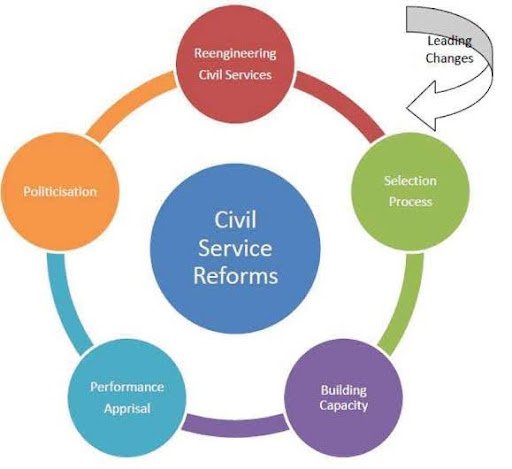
- Overhaul the Civil Services: Reduce colonial structures and make bureaucracy accountable, transparent, and responsive.
- Promote Lateral Entry: Allow domain experts into policymaking positions for specialised sectors.
- Encourage Innovation: Build strong ecosystems for deep-tech research with policy and financial support.
- Reduce Red Tape: Deregulation and simplification of procedures must accompany digitalisation.
- Political Will and Leadership: Strong, sustained leadership is needed to push reforms and overcome institutional inertia.
Conclusion
For India to achieve its ambition of becoming a global leader in frontier technologies and realise the vision of Viksit Bharat @2047, reforms in the colonial-era steel frame bureaucracy are critical
UPSC Relevance
- GS Paper II (Polity & Governance): Civil services reforms, colonial legacy, accountability and transparency in administration.
Mains Practice Question
Q. India’s deep-tech ambitions require not just investment in research and innovation but also reforms in its colonial-era bureaucratic structure. Discuss.