
Why in News: Deception in modern warfare is in focus after reports that the Indian Air Force used AI-enabled X-Guard Fibre-Optic Towed Decoys (FOTDs) during Operation Sindoor on Rafale jets, confusing Pakistan Air Force missiles.
Introduction
- Deception has been an integral part of warfare for centuries, traditionally involving camouflage, feints, and misinformation.
- In modern times, with the rise of precision-guided weapons, drones, and electronic surveillance, deception has evolved into highly sophisticated systems.
Decoys now serve as a strategic asset by confusing enemy sensors, wasting their munitions, and buying time for real combat platforms to evade or retaliate.
Evolution of Deception Techniques
- Earlier: Camouflage nets, dummy formations, and smoke screens.
- Cold War era: Inflatable and radar-reflective decoys to simulate tanks and aircraft.
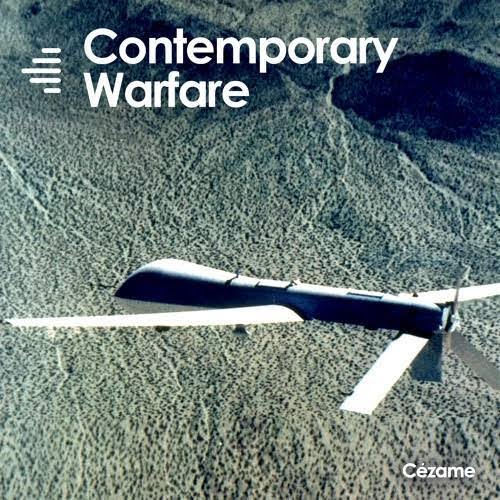
- Contemporary warfare: AI-enabled, multi-spectrum electronic deception systems that replicate the radar, thermal, and acoustic signatures of real platforms.
- Integration of digital technologies and electronic warfare suites has made decoys central to survivability in modern combat.
Airborne Deception: The X-Guard FOTD System
- Indian Deployment: Believed to have been used by the Indian Air Force (IAF) during Operation Sindoor on Rafale jets.
Functionality:
- The X-Guard Fibre-Optic Towed Decoy (FOTD), developed by Israel’s Rafael, weighs 30 kg and trails ~100 m behind the aircraft.
- Mimics Rafale’s Radar Cross-Section (RCS), Doppler velocity, spectral signature, and even its electronic countermeasures.
- Provides 360° jamming capability and works with Rafale’s SPECTRA EW suite, creating a multi-layered defence.
Impact: Reportedly confused Pakistan Air Force (PAF) J-10C fighters and their PL-15E missiles, which locked onto decoys instead of Rafales.
Procurement: IAF is fast-tracking emergency
acquisition of additional X-Guard units.
Comparable Systems
- Leonardo BriteCloud: Used on Eurofighter Typhoon, Gripen-E, F-16.
- Raytheon/BAE AN/ALE-50/55: Used on U.S. F/A-18E/F Super Hornet.
- Adaptations available for UAVs (Israeli Heron, U.S. MQ-9 Reaper).
Land-Based Decoys
- Historical Use: Inflatable dummy tanks/artillery since the Gulf War (1991).
Ukraine Conflict:
- Deployed wooden and 3D-printed decoys of HIMARS, artillery, and radar to waste Russian drones and missile stocks.
- Russia: “Inflatech” decoys can simulate full formations in minutes.
- U.S. Army: Tested decoy vehicles to fool Javelin ATGMs.
- China: Invested heavily in battlefield deception and camouflage systems.
- India: April 2025 RFI issued for decoys replicating T-90S/SK tanks, including thermal and acoustic signatures, to counter drone threats.
Naval Decoys and Countermeasures
- Traditional Measures: Floating chaff, flares, and acoustic decoys to mislead missiles and submarines.
Advanced Systems:
- Nulka Active Missile Decoy (Australia–U.S.): self-propelled, mimics radar signature of a larger ship, lures away radar-guided missiles.
- Integrated with layered EW suites on modern warships.
- Navies now employ comprehensive deception packages combining passive and active measures.
India’s Use of Decoys
- Airborne: Operation Sindoor reportedly demonstrated IAF’s successful use of X-Guard decoys on Rafales.
- Land Forces: Developing T-90 decoys with realistic signatures for battlefield deception.
- Naval Domain: Indian Navy employs chaff, acoustic countermeasures, and is exploring advanced offboard active decoys similar to Nulka.
- Overall: India is increasingly integrating decoys into tri-service warfare, though still dependent on foreign technology in some domains.
Conclusion
Deception techniques have evolved from basic camouflage to AI-enabled, multi-domain decoy systems.In an era of precision and surveillance dominance, deception has re-emerged as a decisive tool of survival and strategy.
UPSC Relevance
GS Paper III (Internal Security & Defence Technology)
- Evolution of electronic warfare, decoys, and countermeasures.
Mains Practice Question
Q. In the age of precision-guided munitions and AI-enabled targeting, deception systems have re-emerged as critical tools of survival. Critically examine the role of decoys in modern warfare with reference to India’s deployment of the X-Guard Fibre-Optic Towed Decoy, Ukraine’s war experience, and naval countermeasures. Suggest measures for India to indigenise such technologies.