

Context
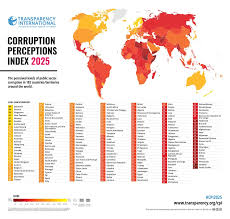
- India ranked 91st in the Corruption Perceptions Index (CPI) 2025. India scored 39, remaining below the global average.
- The index is published annually by Transparency International assessing public sector corruption globally.
Findings and Global Trends
- CPI evaluates 182 countries on a scale of 0 (highly corrupt) to 100 (very clean).
- Global average dropped to 42, reflecting declining governance standards.
- Over two-thirds nations scored below 50, indicating systemic corruption challenges.
- Asia-Pacific region witnessed slow anti-corruption progress.
- Political funding opacity weakened democratic accountability.
- Denmark ranked cleanest (score 89).
- Somalia and South Sudan ranked lowest (score 9).
- Report flagged India among countries unsafe for journalists probing corruption.
Drivers of Corruption in India
- Administrative and Institutional Drivers
- Bureaucratic red tape creates rent-seeking opportunities.
- Complex approvals encourage bribery for procedural clearances.
- Enforcement remains weak with low conviction rates.
- Political and Governance Factors
- Opaque electoral funding sustains money power influence.
- Political finance transparency reforms remain incomplete.
- Protection and Accountability Deficits
- Whistleblowers and journalists face threats and harassment.
- Investigations into mining and resource mafias remain risky.
- Socio-Cultural Dimensions
- Normalisation of petty bribery (“speed money”) persists.
- Citizens pay intermediaries to avoid bureaucratic delays.
Government Initiatives
- Digital Governance Reforms
- Expansion of e-governance reduced human interface.
- Direct Benefit Transfer (DBT) curtailed leakages and middlemen.
- Legal and Institutional Measures
- Prevention of Corruption (Amendment) Act 2024 strengthened penalties.
- Introduced provisions for asset forfeiture.
- Central Vigilance Commission upgraded with forensic and AI tools.
- Technological Transparency Tools
- Blockchain systems introduced in land records and procurement.
- Digital trails enhanced transaction accountability.
Way Forward
- Ensure functional autonomy of anti-corruption agencies.
- Establish fast-track courts for time-bound corruption trials.
- Strengthen protection for journalists and whistleblowers.
- Reform political finance systems for transparency.
- Expand ethics and integrity training in governance institutions.
Conclusion
- India’s improved rank signals gradual reform progress. However, a score of 39 reflects persistent structural corruption. Corruption continues to erode citizen trust and service delivery. Sustained institutional accountability is vital for inclusive development and democratic credibility.
