
Why in News: The debate on banning online real-money gaming has gained momentum as several states and courts flagged its adverse impact on youth mental health, with rising cases of addiction, financial losses, family distress, and suicides linked to such platforms.
Introduction
- The exponential rise of online gaming in India, particularly real-money gaming, has sparked an intense policy debate.
- While advocates emphasize its economic potential, critics point to the adverse implications for mental health and social well-being.
- The issue assumes critical importance as India’s demographic dividend lies in its youth, who are most vulnerable to digital addictions.
- The central question is: Should online real-money gaming be viewed merely as entertainment, or as a behavioural health challenge demanding regulatory intervention?
Online Real-Money Gaming: A Psychological Trap
- Online gaming platforms deploy psychological reward loops such as:
- Variable rewards (like slot machines)
- Instant gratification mechanisms
- Escalating challenges and social competition
- These features are not accidental but designed to keep users hooked, leading to compulsive play.
- For adolescents, whose impulse control and executive decision-making are still developing (as per developmental psychology), the risks are significantly higher.
Impact on Children and Adolescents
1. Academic & Social Performance
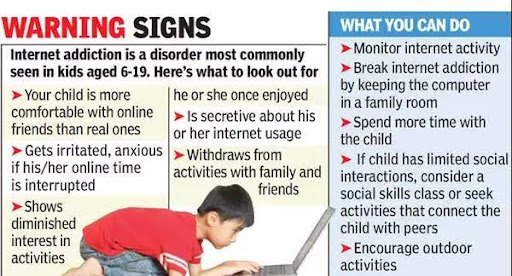
- Declining grades, absenteeism, and reduced attention span.
- Family atmosphere often becomes secretive and tense, with arguments over hidden expenditures.
2. Financial Strain
- Cases of minors draining parents’ bank accounts, borrowing money, or even indulging in theft to continue playing.
3. Mental Health Fallout
- Anxiety, depression, irritability, loss of sleep, and suicidal ideation when unable to stop.
- WHO has already recognized “Gaming Disorder” as a diagnosable condition (ICD-11).
4. Behavioural Spillover
- Secrecy, aggression, and social withdrawal.
- In extreme cases, suicides linked to gaming losses have been reported in several states of India.
Societal and Family Consequences
- Strained parent-child relationships due to secrecy, financial losses, and mistrust.
- Emotional distress at the household level leading to breakdown of communication.
- Addiction displacement: when access is blocked, children may shift towards other harmful behaviours such as compulsive pornography use, substance abuse, or excessive social media.
Ban as a Preventive Measure
- A ban is not merely a restrictive step; it serves as a protective shield.
- It removes immediate access to harmful platforms, relieving families of conflicts and financial stress.
- However, bans alone may only provide short-term relief. Without guidance and counselling, suppressed addictive tendencies can reappear in other forms—known in psychology as psychical displacement.
To ensure long-term effectiveness, India must adopt a multi-pronged approach:
Policy and Regulation
- Strong, uniform national legislation on real-money gaming (to avoid state-wise loopholes).
- Age-gating, advertisement restrictions, and penalties for platforms exploiting minors.
Education and Awareness
- Campaigns in schools and colleges about digital addiction.
- Curriculum-level integration of responsible digital citizenship.
Healthcare Integration
- Regular mental-health screenings in schools.
- Access to child-friendly counselling and therapy.
- Training teachers and parents to identify early warning signs.
Parental Role
- Guided digital use at home.
- Constructive alternatives like sports, arts, and skill development to channel energies.
Ethical and Philosophical Dimensions
- John Stuart Mill’s harm principle: Liberty may be curtailed when individual choices harm themselves and others. Online real-money gaming crosses this line.
- Amartya Sen’s capability approach: True freedom lies in the ability to lead a flourishing life. Addiction narrows capabilities, making regulation a moral necessity.
- Indian ethos: Ancient Indian philosophy emphasizes samyam (self-control) and swasthya (wholeness). Any digital activity that disrupts balance is contrary to this vision.
Way Forward
- Treat online gaming addiction as a public health challenge, not just an economic or legal issue.
- Develop a comprehensive national digital mental health strategy integrating regulation, healthcare, and awareness.
- Encourage technology companies to incorporate ethical design—such as play-time warnings, expenditure caps, and parental control tools.
- Support research and data collection on the scale and socio-psychological impact of gaming addiction in India.
- Foster a safe digital environment where entertainment coexists with well-being.
UPSC Relevance
- GS-II (Governance, Social Justice, Health): Regulation of digital platforms
- GS-IV (Ethics, Integrity, Aptitude): Ethical dilemmas of liberty vs harm
Mains Practice Question
Q. The rise of online real-money gaming in India has transformed entertainment into a behavioural health challenge. Discuss the social, ethical, and governance dimensions of this issue. Suggest a holistic policy framework to safeguard the youth without stifling digital innovation.