
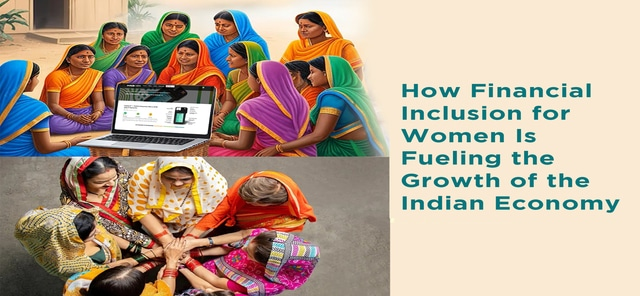
Context: In the recent years, India has shifted from financial inclusion to financial prosperity for women. However, despite near-universal banking access through JAM trinity, women lag in wealth creation and asset ownership.
Present Status of Financial Inclusion
- Expansion of Banking Access
- Over 53% of 51+ crore Pradhan Mantri Jan Dhan Yojana (PMJDY) accounts belong to women, closing gender gap in banking.
- Further, the JAM trinity enabled direct and transparent financial access.
- Direct Benefit Transfers (DBT)
- Welfare schemes like PMAY-G and LPG subsidies credited directly to women. It has strengthened financial identity and reduced leakages.
- Digital Financial Inclusion
- The growth of UPI and smartphones enabled rural women to join the digital economy.
- It reduced dependence on informal high-interest credit systems.
- Role of Self-Help Groups (SHGs)
- Schemes like Lakhpati Didi (target: 3 crore women earning ₹1 lakh annually) strengthen grassroots economy.
- Issues Faced in Wealth Creation
- Low Participation in Investments: Less than 10% of women invest in market-linked instruments, compared to over 20% of men.
- Preference for Low-Risk Assets: Savings concentrated in gold, fixed deposits, and cash, limiting wealth growth.
- Limited Financial Security: Weak retirement planning, asset ownership, and long-term wealth accumulation.
Challenges to Women’s Financial Prosperity
- Economic Barriers
- Low female labour force participation (LFPR) limits income surplus.
- Further, the persistent gender pay gap reduces investable income.
- Sociological Constraints
- Women manage household expenses but lack control over investment decisions.
- Earnings often prioritised for family welfare over personal wealth creation.
- Structural and Legal Issues
- Limited ownership of land/property, restricting access to credit.
- Lack of collateral for business expansion.
- Financial Literacy Deficit
- High digital literacy (UPI usage) but low financial literacy (risk, returns, compounding).
Way Forward
- Transform SHGs into Wealth Platforms: Convert SHGs into micro-investment hubs for mutual funds and assets.
- Promote Financial Literacy: Launch targeted investment awareness campaigns in local languages.
- Encourage Asset Ownership: Incentivise property ownership in women’s names through lower stamp duties. Also there is a need to introduce women-centric savings and investment schemes.
- Strengthen Institutional Support: Develop gender-sensitive financial products addressing career breaks. Thus enhancing the role of FinTech and banking sector in inclusive wealth creation.
Conclusion
- India has successfully achieved financial inclusion for women, but true empowerment lies in wealth ownership. Moving women from account holders to asset owners is essential for inclusive growth. Women’s financial prosperity is not just a social goal, but a critical driver of India’s economic transformation.