

Gender Equality in India
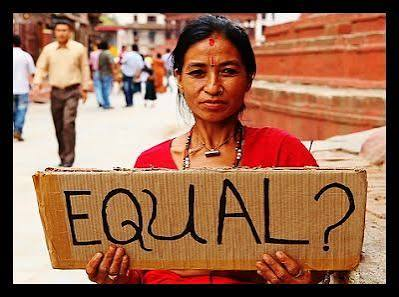
Context and Background
- Thousands of women gathered at Jantar Mantar demanding justice for Pahalgam widows. The police used tear gas and lathi charges to disperse peaceful women protesters.
- Women protesters were detained without women police personnel present, violating DK Basu guidelines.
India’s Founding Promise of Gender Equality
- The Constitution guarantees equality under Articles 14, 15 and 16 without gender discrimination.
- Article 51A(e) makes it a Fundamental Duty to renounce practices derogatory to women’s dignity.
- India’s founding generation included women like Sarojini Naidu, Sucheta Kriplani and Hansa Mehta in the Constituent Assembly.
- The Preamble’s promise of justice and equality was explicitly intended to include women equally.
Evolution of Women’s Electoral Participation
- Women’s voter turnout has steadily risen and now matches or exceeds men in many states.
- The 106th Constitutional Amendment (Nari Shakti Vandan Adhiniyam 2023) reserves 33% seats for women in Parliament and State Assemblies.
- Implementation is linked to delimitation, making actual realisation contingent on future census.
- Women’s political participation has grown but decision-making power at higher levels remains limited.
The Gendered Double Standard Exposed
Protest Criminalisation
Women exercising constitutional rights of assembly and speech were treated as security threats.
Absent Women Police
Detaining women without women officers violates the Supreme Court’s DK Basu directions.
Victim Erasure
Pahalgam widows seeking justice were further victimised by state action — a cruel irony.
Selective Sympathy
The state expressed sympathy for women as victims but suppressed them as active citizens.
Dignity Violation
Force against grieving women violated Article 21’s right to life and dignity.
What This Reveals About Contemporary Gender Equality
Formal vs Substantive Equality
Legal guarantees exist but substantive equality in public life remains elusive.
Conditional Acceptance
Women are celebrated when conforming to expected roles but suppressed when they assert political agency.
Institutional Bias
Police and state institutions continue to reflect deeply embedded patriarchal attitudes.
Safety Paradox
India talks about women’s safety, but the state itself becomes unsafe for protesting women.
Representation Without Power
Rising electoral participation has not yet translated into institutional accountability for women’s concerns.
