

India and the Strait of Hormuz: Strategic Dependence
Why in News
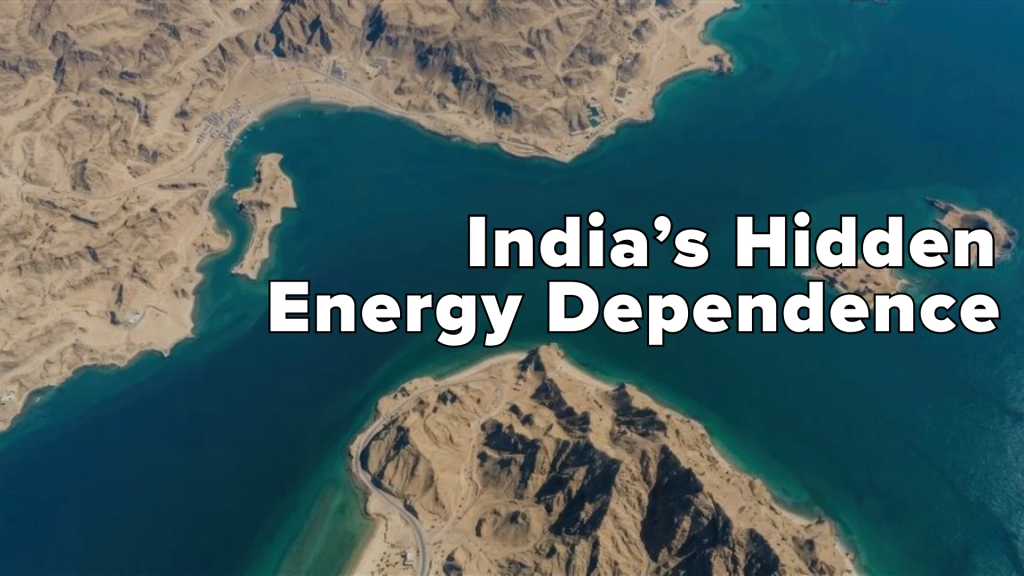
- The recent Iran-US-Israel conflict exposed India’s critical dependence on the Strait of Hormuz.
- Iran set up the Persian Gulf Strait Authority as the sole authority handling Strait of Hormuz transits.
- Further, the shipping companies must now account for Iran as a decisive stakeholder in the Strait.
Strategic Significance of Strait of Hormuz
- The Strait of Hormuz disruption imposed costs far beyond the battlefield on the global economy.
- Iran’s control over the Strait was as consequential as economic sanctions against adversaries.
- Previously, vessels transiting the Strait neither paid tolls nor reported to Iran or Oman.
- The new MoU mandates Iranian talks with Oman and Gulf states on maritime administration.
- The MoU also envisages lifting sanctions on Iran and on ships serving Iranian trade.
India’s Critical Vulnerabilities Exposed
- Energy Security:
- India’s LPG strategy relies heavily on imports moving through the Strait of Hormuz.
- India has a limited fleet of Indian-flagged carriers and tightly scheduled supply chains.
- There is little long-term cavern storage creating serious vulnerability during disruptions.
- Similar vulnerabilities affected other fuel supplies beyond LPG during the conflict.
- Weak Shipping Sector:
- Historically, nations like UK, Japan, US and China combined economic power with maritime dominance.
- India’s weak shipping sector directly reflects its limited geopolitical reach and strategic depth.
- Indian seafarers generate billions of dollars in foreign exchange while facing piracy and geopolitical risks.
- Missing Contingency Planning:
- Despite Strait of Hormuz being vital to India’s energy security, no credible contingency plan existed.
- India gave up on Chabahar which offered precisely an alternative maritime and land corridor opportunity.
Global Lessons and UAE Model
- Many countries are reassessing their dependence on the Strait of Hormuz after this conflict.
- The UAE is pursuing a “zero Hormuz dependency” strategy by strengthening alternative infrastructure and routes.
- Iran appears to have secured strategic gains despite heavy damage inflicted by Israel and the US.
Way Forward
- Diversify Supply Chains: Invest in alternative maritime and land corridors to reduce Strait dependence urgently.
- Chabahar Revival: Reviving the Chabahar port project offers India a critical alternative trade and energy route.
- Strategic Storage: Build long-term strategic petroleum and LPG cavern storage to buffer supply disruptions.
- Indigenous Shipping: Strengthen Indian-flagged carrier fleet to reduce dependence on foreign shipping companies.
- Strategic Partnerships: Deepen partnerships with Gulf states, Oman and Central Asia to secure alternative energy corridors.
- Reducing Hormuz dependence is no longer just an economic goal but a strategic national necessity.
Source: The Hindu
