
Why in News: India is set to celebrate its second National Space Day on August 23, but despite major missions like Chandrayaan-3, Gaganyaan, and plans for the Bharat Antariksh Station, the country still lacks a comprehensive national space law, making it urgent to create a legal framework in space activities.
Introduction
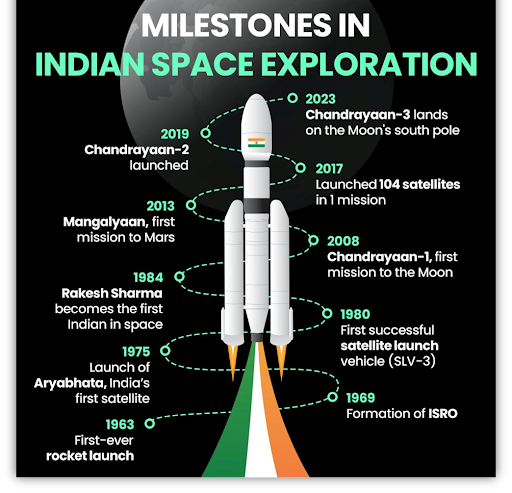
- India is on the cusp of historic milestones in space exploration — Chandrayaan-3, Gaganyaan, and the proposed Bharat Antariksh Station.
- However, while technological achievements grow rapidly, the legal architecture for space activities remains underdeveloped.
- A strong, comprehensive national space law is critical to provide predictability, accountability, and a secure environment for both government and private sector activities.
Global Legal Framework
Outer Space Treaty (OST), 1967
- Declares that outer space is the province of all mankind; prohibits national appropriation.
- Mandates that states bear international responsibility for activities of both government and private entities.
- Establishes liability of states for damages caused by space activities.
- Requires peaceful use of outer space and cooperation among nations.
- Not self-executing: Treaties provide guiding principles but need domestic legislation for effective implementation.
Why National Legislations are Important
- Translate treaty obligations into enforceable domestic law.
- Provide legal clarity, licensing procedures, liability frameworks, and insurance rules.
- Encourage private investment and innovation by ensuring a stable regulatory environment.
- Prevent regulatory gaps in dual-use technologies (civil + defence).
India’s Approach to Space Legislation
1. Incremental and methodical strategy.
2. Existing developments:
- Catalogue of Indian Standards for Space Industry – ensures safety in space operations.
- Indian Space Policy, 2023 – defines activities for non-governmental entities.
- IN-SPACe Norms, Guidelines and Procedures (NPG) – framework for authorisation of space activities.
3. Missing element: a comprehensive “Space Activities Law” incorporating provisions of OST into domestic law.
4. Current limitation: IN-SPACe lacks statutory authority, making its decisions vulnerable to procedural challenges.
Industry Perspectives and Challenges
- Need for statutory authority: IN-SPACe requires clear legal mandate as the central regulator.
- Licensing clarity: Rules, processes, timelines, and fees must be streamlined to avoid multi-ministry delays.
- FDI rules: Clear policies (e.g., 100% FDI in satellite components) would boost investment.
- Liability frameworks: India bears international responsibility → private firms must hold affordable third-party insurance.
- Insurance challenge: High-value space assets make insurance expensive; startups require affordable frameworks.
- IP rights protection: Law must secure innovation without excessive government control, to prevent talent migration.
- Safety and sustainability: Mandatory accident investigation, space debris management rules, and independent appellate mechanisms needed.
Importance of Affordable Insurance for Startups
- High-value satellites and payloads make space activities inherently risky.
- Without insurance, startups cannot survive a single accident.
- Affordable frameworks distribute risks and build investor confidence.
- Encourages innovation by protecting small firms from catastrophic liability.
- Aligns India with global practices, where liability and insurance are essential for private sector participation.
Conclusion
A strong legal framework will allow India to not only celebrate achievements like Chandrayaan and Gaganyaan, but also secure its position as a leader in the future global space economy.
UPSC Relevance
GS Paper 3 – Science & Technology
- Space technology and its applications for development.
- Private sector participation in strategic sectors.
Mains Practice Question
Q.“Space is the province of all mankind, yet its exploration requires clear national frameworks.” In light of the Outer Space Treaty (1967), critically examine the need for a comprehensive national space law in India. (15 marks)