
Why in News: As per Poshan Tracker data (June 2025), 37% of children under five are stunted in India — almost unchanged from 38.4% in 2016, despite POSHAN Abhiyaan (2018) and the ambitious Mission 25 by 2022 targets.
Introduction
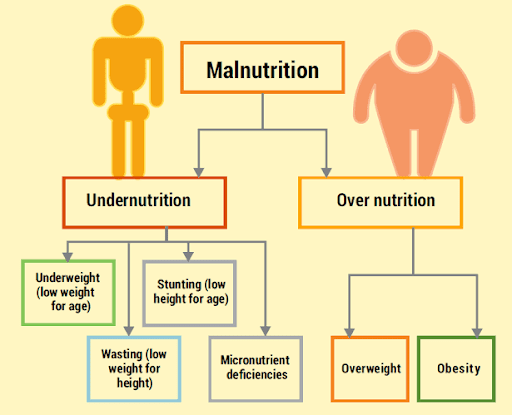
- Stunting: A child is too short for their age due to chronic/recurrent malnutrition.
- POSHAN Abhiyaan (2018): Target → reduce stunting by 2% points annually.
- Mission 25 by 2022: Ambition to bring stunting down to 25% by 2022.
- Reality (2025): Stunting at 37% (only 1% lower than 2016’s 38.4%).
- Indicates deep systemic challenges in maternal and child health.
Key Factors Contributing to Stunting
1. Maternal Health and Teenage Pregnancies
- Nearly half of stunted children are already small at birth.
Teen mothers: Higher risk of low birth weight, poor postnatal care.
- Despite legal restrictions, child marriages persist → 7% of women (15–19 years) had begun childbearing (2019-21).
2. Maternal Education
Strong link between education and child nutrition:
- 46% stunting among children of uneducated mothers.
- 26% among children of mothers with 12+ years of schooling.
- Educated mothers more likely to access antenatal care, delay pregnancies, follow good nutrition.
3. Caesarean Deliveries (C-sections)
- Rise from 9% (2005-06) → 22% (2021).
- Indirectly contributes by disrupting early breastfeeding, esp. colostrum feeding.
- Mothers post-surgery often separated from newborns in NICU/SNCU.
4. Breastfeeding Practices
- Only 64% of infants <6 months exclusively breastfed.
- Class divide:
- Educated women with maternity leave → better rates.
- Informal workers (e.g., domestic help) forced to resume work early.
5. Poor Maternal and Child Diets
- Dominance of carbohydrate-heavy diets (rice, wheat).
- Low access to protein and micronutrient-rich foods (pulses, eggs, vegetables).
- Only 11% of children (6–23 months) met minimum acceptable diet standards (2019-21).
6. Anaemia
- 57% women (15–49 yrs) and 67% children <5 yrs anaemic (2019-21).
- Maternal anaemia → underweight babies → higher stunting risk.
7. Sanitation and Hygiene
- 19% households still practice open defecation (2019-21).
- Unsafe water and poor sanitation → recurrent infections, poor nutrient absorption.
- Creates a vicious cycle: malnutrition ↔ frequent illness ↔ further malnutrition.
Consequences of Stunting
- Delayed physical growth
- Cognitive delays and weaker learning abilities.
- Reduced productivity and employability.
- Perpetuation of intergenerational poverty.
- Higher healthcare burden.
Conclusion
India’s persistent stunting crisis is not merely a nutritional issue but a multi-dimensional problem. Addressing it requires a holistic, inter-sectoral approach linking health, education, nutrition, water, sanitation, and social equity.
Upsc Relevance
- GS Paper II: Issues relating to development and management of health, education, and human resources; government policies for vulnerable sections (POSHAN Abhiyaan).
- GS Paper III: Poverty, hunger, malnutrition, health, human development indicators.
Mains Practice Question
Q. Despite ambitious schemes such as POSHAN Abhiyaan and Mission 25 by 2022, child stunting in India remains high. Analyse the multidimensional factors behind this persistence and suggest measures to break the intergenerational cycle of malnutrition. (10/15 marks)