
Context
- News of the India–United States trade deal generated widespread relief across Indian industries.
- The announcement was made through social media, marking a departure from formal diplomatic channels.
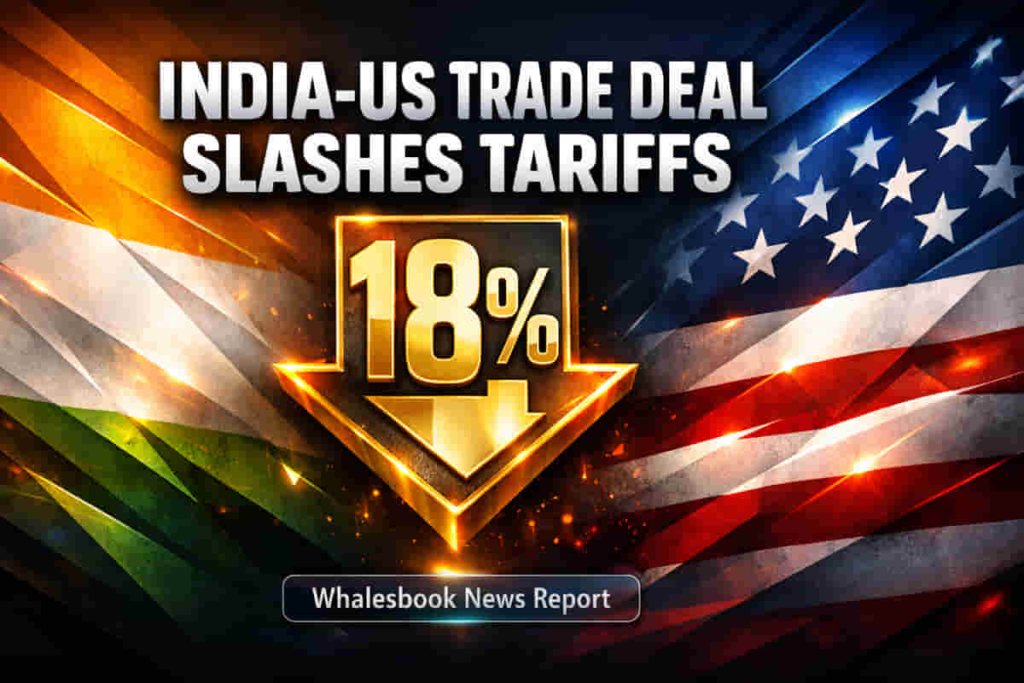
- U.S. tariffs on Indian imports were announced to be reduced from 50% to 18%.
- There is no confirmed timeline for implementation, despite claims of immediate effect.
Nature and Scope of the Deal
- Ambiguity remains whether this is a mini-deal, first tranche, or broader bilateral agreement.
- The Commerce Minister stated that detailed terms will be shared soon.
- Uncertainty persists over tariff concessions, investment commitments, and purchase obligations by India.
Strategic and Geopolitical Concerns
- U.S. claims that India may stop purchasing Russian oil remain officially unaddressed.
- Russian oil accounts for about one-third of India’s imports, making alternatives difficult.
- Such a move could strain India–Russia relations, especially in defence cooperation.
- Purchasing Venezuelan crude poses additional refining and logistical challenges.
- Any major realignment is expected to be debated in Parliament before implementation.
Domestic and Market Impact
- The announcement has boosted stock markets and strengthened the rupee.
- Labour-intensive sectors gained optimism after prolonged exposure to high U.S. tariffs.
- Beneficiary sectors include textiles, apparel, footwear, leather, and engineering goods.
External Trade Linkages
- These sectors also anticipate gains from the India–European Union trade agreement this year.
- U.S. tariffs may still remain higher than South-East Asian competitors under MFN status.
- The new deal is expected to improve competitiveness and narrow tariff differentials.
Policy Support
- Targeted provisions in Union Budget 2026 aim to strengthen export-oriented industries.
- The combined effect is expected to bridge competitiveness gaps and stabilise trade prospects.