
Why in News: Concerns over erosion of federalism, misuse of constitutional offices, rising inequality, and threats to democratic dissent have sparked debates on defending India’s constitutional democracy.
Introduction
- Independence Day is not only a celebration of India’s political freedom from British rule but also a reminder of the values and principles that shaped our Republic — democracy, secularism, harmony, and social progress.
- It is a time for reflection on the nation’s journey since 1947 and an assessment of how faithfully we have upheld the ideals of our founding leaders.
Essence of Nationalism and Its Distortions
A) True Meaning of Nationalism
- Vision for a prosperous, inclusive nation with equality before law and equal access to resources.
- True nationalism demands improving the living standards of the weakest sections and ensuring collective dignity.
B) Present Socio-Economic Realities
- While India has made progress in social and economic indicators, wealth inequality has sharply increased.
- A small privileged elite accumulates most resources, while large sections face:
- Inflation, unemployment, malnutrition
- Economic exclusion in a market-driven, competitive order
- Farmers, once called the “soul of the nation” by Mahatma Gandhi, struggle to sustain themselves, with many driven to distress and suicide.
- Neoliberal policies have contributed to economic stagnation and deepening inequality.
C) Regressive Nationalism
- Legitimate criticism and dissent are increasingly labelled “anti-national”.
- Divisive forces manipulate nationalism to promote majoritarian communal identity, causing:
- Polarisation
- Attacks on minorities
- Suppression of free speech and dissent
- Such trends betray the inclusive spirit of the nationalist movement.
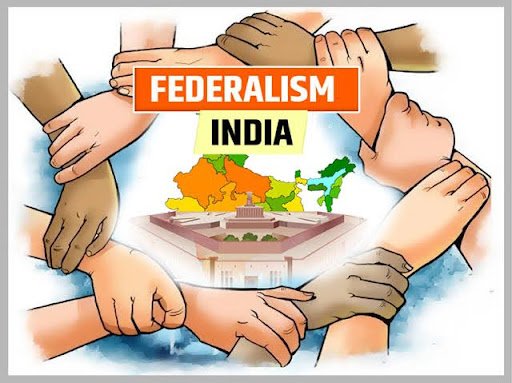
Federalism: Constitutional Vision vs Present Reality
Constitutional vision:
- The Constitution provided for a cooperative federalism:
- Centre: Defence, foreign affairs
- States: Agriculture, education, health, public order.
- Both levels were meant to strengthen each other, not compete.
- As B.R. Ambedkar stated: States are partners, not appendages, in the Union.
Present Reality
1) Erosion of State Autonomy
Recent moves by the Centre undermine State powers:
- Proposal for ‘One Nation, One Election’ may shorten elected State governments’ terms.
- Increasing intrusion of central agencies into State governance.
- Weakening of autonomous institutions like the Election Commission.
- These steps risk reducing States to administrative extensions of the Union.
2) Misuse of the Governor’s Office
Political Interference
- Governors, meant to uphold constitutional balance, are being used as political instruments in Opposition-led States.
- Practices include:
- Withholding assent to duly passed Bills for extended periods.
- Obstructing policy implementation without constitutional reasoning.
Impact on Education
- In Kerala and other States, Governors acting as Chancellors have:
- Blocked or cancelled recruitment in universities.
- Ignored recommendations of statutory bodies.
- Result: Academic paralysis affecting students, faculty, and research.
The Call to Action
1) Safeguarding the Legacy
We must be a moment to recommit to:
- Constitutional principles
- Federal balance
- Secular, democratic pluralism
2) Resisting Authoritarian Trends
- Oppose centralisation that weakens State autonomy.
- End misuse of constitutional offices for partisan gain.
- Protect dissent as a legitimate democratic right.
3) Upholding the Founders’ Vision
- India’s struggle was to create a Union of free peoples, bound by shared ideals, not coercion.
- Democracy must remain vibrant, inclusive, and respectful of diversity.
Conclusion
The Republic’s strength lies in its people, its Constitution, and its diversity. To honour our national heritage, we must defend democratic values and federal principles.
UPSC RELEVANCE
GS Paper II: Governance, Constitution, Federalism, Role of Citizens, Fundamental Rights.
Mains Practice Question
Q. Independence Day is a reminder of India’s constitutional values. Examine the contemporary challenges to democracy, federalism, and secularism in India and suggest measures to uphold them. (250 words)