

UPSC Mains
GS Paper III
Indian Economy
India’s Demographic Dividend: Powering the World’s Ageing Economies Through Skilled Talent Mobility
With ~450 million Indians aged 18–35 and $110.47 billion in FY26 remittances, India could become the world’s talent hub for ageing economies — if it builds ethical, skilled mobility frameworks in time
Youth Population (18–35)
~450 million
FY 2025–26 Remittances
$110.47 billion, +26% YoY
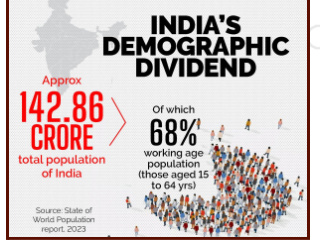
Working-Age Share
68% of 142.86 crore
📰
Why in News
- India’s large young population is gaining importance as developed countries face ageing populations and labour shortages. With ~450 million Indians aged 18–35 and remittances at $110.47 billion in FY 2025-26, India could become a global skilled-talent hub.
Background: The Global Demographic Shift
- Many developed countries face low birth rates and shrinking workforces, creating shortages in healthcare, infrastructure and the digital economy. India’s young, English-speaking, digitally literate population is its biggest strategic economic asset.
🧭
Key Dimensions of the Issue
1. Scale of India’s Demographic Advantage
- ~450 million people aged 18–35 — the largest reservoir of young human capital in the world at a time when most economies are ageing.
2. From Raw Talent to Employable Talent
- Youth need language capability, technical training, certification and professional discipline — the difference between a demographic dividend on paper and one actually realised.
3. Remittances as an Economic Indicator
- $110+ billion in FY26 remittances, growing 26% YoY — often exceeding FDI inflows in certain years.
4. From “Brain Drain” to “Brain Circulation”
- A dynamic model where skilled workers move abroad temporarily, send remittances/knowledge back, and often return — a two-way flow rather than a one-way loss.
5. The Political Challenge
- Rising anti-immigration politics (Germany’s AfD, Austria’s Freedom Party, the term “remigration”) show permanent migration is becoming politically difficult even where economically necessary.
6. Circular Mobility as the Solution
- Temporary, structured mobility models — Singapore’s two-permit system, Hong Kong’s helper/skilled-worker system, Gulf kafala-linked frameworks — show temporariness makes large-scale mobility politically acceptable.
7. The institutional gap: Fragmented recruitment and opaque intermediaries have historically exposed low-skill migrant workers to exploitation, fraud and unsafe conditions — trusted institutions and ethical mobility frameworks are essential.
Significance for India
Converts demographic dividend into gains, boosts remittance earnings, generates employment, builds soft power — but this is a time-bound opportunity before the population ages.
Challenges
Skill mismatch, anti-migration sentiment abroad, worker exploitation, unregulated recruitment, and lack of qualification recognition.
🧭
Way Forward
Standardised skilling
Government-backed certification aligned to global labour-market needs, especially healthcare and construction.
Bilateral labour agreements
Expand agreements to create legal, safe, transparent migration pathways.
Regulate recruitment
Strengthen oversight of agencies and provide effective grievance redressal.
Talent mobility as economic diplomacy
Treat mobility alongside trade and investment in building long-term partnerships.
Conclusion: India stands at a rare demographic moment that could become genuine global economic and strategic power — but this depends on building the institutions, skilling infrastructure, and ethical mobility frameworks needed to convert raw potential into protected, circular talent flows.
📰
Source: The Hindu
