
Why in News: The entrance examination system in India is under scrutiny due to rising student suicides, financial misconduct in coaching centres, ED raids, and closures of major institutes, highlighting the urgent need to reform an overly competitive and unequal admission process.
Introduction
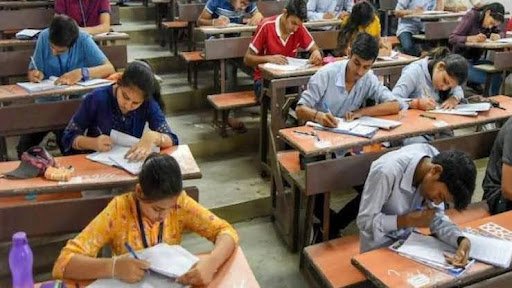
- Every year, nearly 70 lakh students in India compete for undergraduate seats through entrance examinations such as the Joint Entrance Examination (JEE), National Eligibility cum Entrance Test (NEET), Common University Entrance Test (CUET), and Common Law Admission Test (CLAT).
- With a fixed number of seats, the competition is intense, fuelling a booming coaching industry and a culture of relentless pressure.
- Recent controversies, such as branch closures and financial misconduct at a major JEE coaching centre, Enforcement Directorate raids, and increasing cases of student suicides, highlight the deep cracks in the system.
- It is time to rethink undergraduate admissions with fairness, equity, and student well-being at the centre.
The Coaching Crisis and Its Toll
- The sheer scale of aspirants — 15 lakh for JEE alone — has created a coaching empire, with centres charging ₹6–7 lakh for two-year programmes.
- Students as young as 14 sacrifice holistic development and a normal adolescence for a gruelling routine of solving advanced problems from books like Irodov and Krotov, which go far beyond B.Tech requirements.
- This rat race breeds stress, depression, and alienation, depriving teenagers of peer bonding, sports, and creativity.
- Some state governments have enacted laws to regulate coaching centres.
- Yet the root issue lies not in coaching itself but in an entrance examination system that over-qualifies students and distorts the idea of merit.
Flaws in the Current Examination Model
- Examinations aim to filter 15 lakh aspirants for ~18,000 IIT seats, but distinctions like 91% vs. 97% in Class 12 or 99.5 vs. 99.9 percentile in JEE are unreasonable and arbitrary.
- A decent Class 12 score of 70%–80% in physics, chemistry, and mathematics is adequate for B.Tech readiness.
- The system demands extraordinary performance because of:
- Limited seats,
- Vast applicant numbers,
- Disparities in institutional quality.
- This creates a false hierarchy, overemphasising minor score differences, sidelining capable students, favouring the wealthy, and deepening urban-rural, gender, and regional imbalances.
Consequences of the Present System
- Psychological: Immense pressure, stress, and mental health challenges.
- Social: Privileges wealthier families who can afford elite coaching, creating an illusion of meritocracy.
- Philosophical: As Michael Sandel notes, meritocracy fuels toxic obsession with individual superiority while ignoring the roles of privilege and luck. He even suggests lotteries for elite admissions to correct these distortions.
Global Experiences
The Dutch Lottery Model
- Used since 1972 (reinstated in 2023) for medical school admissions.
- Applicants above a minimum academic threshold enter a lottery; higher grades improve odds.
- Promotes fairness, diversity, and reduced pressure, recognising that overly precise metrics are often unfair and costly.
- Outcomes prove that lotteries are viable when capacity is limited.
China’s “Double Reduction” Policy (2021)
- Banned for-profit tutoring in school subjects; nationalised coaching overnight.
- Aimed to reduce financial burden, address inequality, and protect student well-being.
- Tackled issues of unchecked growth of coaching centres, very similar to India’s challenges.
Policy Alternatives for India
Simplifying Admissions
- Trust the Class 12 board examinations as adequate filters.
- Fix eligibility threshold (e.g., 80% in PCM) for B.Tech.
- Group students into categories (90%+, 80–90%) and use a weighted lottery for seat allocation.
- Integrate reservations for gender, region, and rural backgrounds within the lottery, similar to the Dutch model.
Promoting Social Equity
- Reserve 50% of IIT seats for rural students from government schools.
- Would promote social mobility and structural equality.
Reforming Coaching
- If entrance exams continue, ban or nationalise coaching.
- Provide free online lectures and study materials to ensure equal access.
Reducing Institutional Hierarchies
- Introduce annual student exchange programmes across IITs to encourage national integration and cultural exposure.
- Incentivise faculty transfers to ensure uniform academic standards.
- Reinforce the equal value of a B.Tech degree from any IIT, dismantling hierarchies.
The Path Forward
- Scrapping entrance examinations in favour of lottery-based admissions would:
- Free students from the coaching treadmill.
- Allow holistic growth through school learning, sports, and creativity.
- Reduce financial barriers and privilege-driven advantages.
- Give all eligible students a fair chance.
- Most importantly, it would allow youth to be youth — not machines chasing percentiles at a tender age.
Conclusion
India’s education system stands at a crossroads: continue the toxic, exam-driven race that scars students and privileges wealth, or embrace fairness and inclusivity by reforming admissions
UPSC Relevance
GS Paper II – Governance, Polity & Social Justice
- Issues relating to development and management of education sector.
Mains Practice Question
Q. The entrance examination system in India creates more stress than opportunities. Critically examine with reference to equity, access, and quality in higher education.